












Protons solvated in noble-gas matrices: Interaction with nitrogen
Literature Information
Publication Date
2006-04-28
DOI
10.1039/B603822K
Impact Factor
3.676
Authors
Antti Lignell, Leonid Khriachtchev, Hanna Lignell, Markku Räsänen
View Original
Abstract
The interaction of a (NgHNg)+ cation (Ng = Ar and Kr) with a nitrogen molecule is studied. The structure, energetics, and vibrational properties of these complexed systems are computationally studied at the MP2/6-311++G(2d,2p) level of theory. The computations reveal two stable structures, linear and T-shaped configurations, with BSSE corrected interaction energies of the order of −1000 cm−1. The (NgHNg)+⋯N2 complexes are characterized experimentally by IR absorption spectroscopy in solid Ar and Kr matrices. The spectra show that only one complex structure is present, as evidenced by the single nitrogen-induced ν3 band. According to the computational results, the linear structure is more probable in the experiments. However, our results show that the one-to-one complex at the present computational level does not accurately agree with the matrix-isolation experiments, the differences originating possibly from the influence of the surrounding matrix. Based on the current data, the mechanism of cation decay in noble-gas matrices is discussed. The observed similar decay of (NgHNg)+ and its N2 complex indicates that the solvated proton is unable to tunnel and is therefore immobile in noble-gas matrices. The observations for the cation decay are consistent with the electron neutralization mechanism.
Related Literature
Mapping the frontier electronic structures of triphenylamine based organic dyes at TiO2 interfaces
Maria Hahlin, Michael Odelius, Martin Magnuson, Erik M. J. Johansson, Stefan Plogmaker, Daniel P. Hagberg, Licheng Sun, Hans Siegbahn, Håkan Rensmo
2010-12-20
Paper
DOI: 10.1039/C0CP01491E
Stepwise vs. concerted pathways in scandium ion-coupled electron transfer from superoxide ion to p-benzoquinone derivatives
Tomonori Kawashima, Kei Ohkubo
2011-01-06
Paper
DOI: 10.1039/C0CP00916D
Capture and dissociation in the complex-forming CH+H2 → CH2+H, CH+H2 reactions
Miguel González, Amaia Saracibar, Ernesto Garcia
2011-01-06
Paper
DOI: 10.1039/C0CP01188F
Magnetic field effects on exciplex-forming systems: the effect on the locally excited fluorophore and its dependence on free energy
Günter Grampp
2010-12-22
Paper
DOI: 10.1039/C0CP01517B
Dispersion of linear and nonlinear optical susceptibilities and the hyperpolarizability of 3-methyl-4-phenyl-5-(2-pyridyl)-1,2,4-triazole
S. Auluck, I. V. Kityk
2010-12-17
Paper
DOI: 10.1039/C0CP01601B
The role of calcium in membrane condensation and spontaneous curvature variations in model lipidic systems
Anan Yaghmur, Barbara Sartori, Michael Rappolt
2010-11-03
Paper
DOI: 10.1039/C0CP01036G
Improved light olefin yield from methyl bromide coupling over modified SAPO-34 molecular sieves
Aihua Zhang, Shouli Sun, Zachary J. A. Komon, Neil Osterwalder, Sagar Gadewar, Peter Stoimenov, Daniel J. Auerbach, Galen D. Stucky, Eric W. McFarland
2011-01-04
Paper
DOI: 10.1039/C0CP01985B
Synthesis and characterization of nanogels of poly(N-isopropylacrylamide) by a combination of light and small-angle X-ray scattering
Thomas Alsted, Walter Richtering, Jan Skov Pedersen
2010-10-07
Paper
DOI: 10.1039/C0CP01359E
You might also like
Compound Q&A
How is Ethyl 4-chlorothieno[2,3-b]pyridine-5-carboxylate (CAS: 59713-58-5) typically synthesized?
Ethyl 4-chlorothieno[2,3-b]pyridine-5-carboxylate (CAS: 59713-58-5) can be synth...
59713-58-5Ethyl 4-chlorothieno...
Compound Q&A
What regulatory guidelines apply to 5-Methyl-1H-indole-3-carbaldehyde (CAS: 52562-50-2)?
5-Methyl-1H-indole-3-carbaldehyde (CAS: 52562-50-2) is subject to various regula...
52562-50-25-Methyl-1H-indole-3...
Compound Q&A
What are the physical and chemical properties of (1,3-Dimethyl-2,4-dioxo-1,2,3,4-tetrahydro-5-pyrimidinyl)boronic acid (CAS: 223418-73-3)?
(1,3-Dimethyl-2,4-dioxo-1,2,3,4-tetrahydro-5-pyrimidinyl)boronic acid is a white...
223418-73-3(1,3-Dimethyl-2,4-di...
Compound Q&A
How should waste containing Sulfocostunolide A (CAS: 1016983-51-9) be handled?
Waste containing Sulfocostunolide A (CAS: 1016983-51-9) should be handled with c...
1016983-51-9Sulfocostunolide A
Compound Q&A
What precautions should be taken when handling Murraxocin (CAS: 88478-44-8)?
When handling Murraxocin (CAS: 88478-44-8), ensure proper personal protective eq...
88478-44-8Murraxocin
Compound Q&A
What are the physical and chemical properties of Formvar (CAS: 63148-64-1)?
Formvar (CAS: 63148-64-1) is an alkyd resin characterized by a high molecular we...
63148-64-1Formvar(R)
Compound Q&A
Is (S)-4-benzyl-2-((benzyloxy)methyl)morpholine (CAS: 205242-66-6) safe?
(S)-4-benzyl-2-((benzyloxy)methyl)morpholine is generally safe when handled with...
205242-66-6(S)-4-benzyl-2-((ben...
Compound Q&A
What industries use Methyl 1-(5-bromo-2-pyrimidinyl)cyclopropanecarboxylate (CAS: 1447607-69-3)?
Methyl 1-(5-bromo-2-pyrimidinyl)cyclopropanecarboxylate (CAS: 1447607-69-3) is p...
1447607-69-3Methyl 1-(5-bromo-2-...
Compound Q&A
Is 2-Methyl-1-phenyl-1-propanamine hydrochloride (CAS: 24290-47-9) safe?
2-Methyl-1-phenyl-1-propanamine hydrochloride (CAS: 24290-47-9) is generally con...
24290-47-92-Methyl-1-phenyl-1-...
Compound Q&A
How is 3-(4-Bromophenyl)-2-methylpropanoic acid (CAS: 66735-01-1) typically synthesized?
3-(4-Bromophenyl)-2-methylpropanoic acid is synthesized through a multi-step pro...
66735-01-13-(4-Bromophenyl)-2-...
Source Journal
Physical Chemistry Chemical Physics

CiteScore:
5.5
Self-citation Rate:
10.3%
Articles per Year:
3036
Physical Chemistry Chemical Physics (PCCP) is an international journal co-owned by 19 physical chemistry and physics societies from around the world. This journal publishes original, cutting-edge research in physical chemistry, chemical physics and biophysical chemistry. To be suitable for publication in PCCP, articles must include significant innovation and/or insight into physical chemistry; this is the most important criterion that reviewers and Editors will judge against when evaluating submissions. The journal has a broad scope and welcomes contributions spanning experiment, theory, computation and data science. Topical coverage includes spectroscopy, dynamics, kinetics, statistical mechanics, thermodynamics, electrochemistry, catalysis, surface science, quantum mechanics, quantum computing and machine learning. Interdisciplinary research areas such as polymers and soft matter, materials, nanoscience, energy, surfaces/interfaces, and biophysical chemistry are welcomed if they demonstrate significant innovation and/or insight into physical chemistry. Joined experimental/theoretical studies are particularly appreciated when complementary and based on up-to-date approaches.
Recommended Compounds

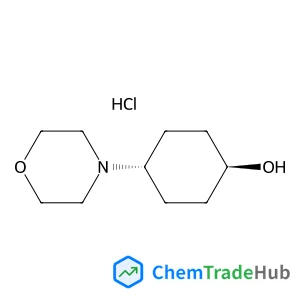
trans-4-(4-Morpholinyl)cyclohexanol hydrochloride (1:1)
CAS Number:
1588441-09-1
Molecular Formula:
C10H20ClNO2

Recommended Suppliers





Disclaimer
This page provides academic journal information for reference and research purposes only. We are not affiliated with any journal publishers and do not handle publication submissions. For publication-related inquiries, please contact the respective journal publishers directly.
If you notice any inaccuracies in the information displayed, please contact us at support@chemtradehub.com. We will promptly review and address your concerns.