


![N-[(9H-Fluoren-9-ylmethoxy)carbonyl]serine structure](https://static.chemtradehub.com/structs/737/73724-45-5-b0dc.webp "N-[(9H-Fluoren-9-ylmethoxy)carbonyl]serine structure")
Efficient protein digestion with peptide separation in a micro-device interfaced to electrospray mass spectrometry
Literature Information
Publication Date
2006-03-22
DOI
10.1039/B600752J
Impact Factor
4.616
Authors
Haider Al-Lawati, Paul Watts, Kevin J. Welham
View Original
Abstract
A highly efficient protein digestion device has been fabricated using commercially available immobilized trypsin on agarose beads, packed into a silica capillary and connected either directly to an electrospray mass spectrometer via a ‘microtight T’ connector, from which aqueous acetic acid (0.2%) was pumped, or via a monolithic column connected to the mass spectrometer ion source. Six proteins with molecular mass ranging from 2848 to 77703 Da were digested completely using this system. In the second set of experiments a short monolithic separation column was placed after the immobilized trypsin capillary and partial separation of the generated peptides was obtained. The detection limits were increased from the µmol to pmol range by utilization of this separation column. Gradient elution, using a binary HPLC pump and a flow splitter, was used to optimize the peptide separation. This provided significantly enhanced resolution of the tryptic peptides but increased the analysis time to 30 minutes.
Recommended Journals

Bioorganic & Medicinal Chemistry Letters

Journal of the Indian Institute of Science

Chinese Journal of Chemistry

Journal of Chemical Sciences

Cellulose

Journal of Asian Natural Products Research

Atomization and Sprays

Biocatalysis and Biotransformation

Herald of the Russian Academy of Sciences

Acta Metallurgica Sinica-English Letters
Related Literature
Structure and dysprosium dopant engineering of gadolinium oxide nanoparticles for enhanced dual-modal magnetic resonance and fluorescence imaging
Jinchang Yin, Chaorui Li, Deqi Chen, Jiajun Yang, Huan Liu, Wenyong Hu, Yuanzhi Shao
2017-01-23
Paper
DOI: 10.1039/C6CP06712C
Controlling the termination and photochemical reactivity of the SrTiO3(110) surface
Yisi Zhu, Paul A. Salvador, Gregory S. Rohrer
2017-02-24
Paper
DOI: 10.1039/C6CP08608J
Combined static and dynamic quenching in micellar systems—closed-form integrated rate laws verified using a versatile probe
Tim Kohlmann, Robert Naumann, Christoph Kerzig, Martin Goez
2017-03-01
Paper
DOI: 10.1039/C6CP08491E
Interpretation of Tolman electronic parameters in the light of natural orbitals for chemical valence
G. Attilio Ardizzoia, Stefano Brenna
2017-01-25
Paper
DOI: 10.1039/C6CP07793E
Erbium ion implantation into diamond – measurement and modelling of the crystal structure
Pavla Nekvindová, David Sedmidubský, Michal Hušák, Zdeněk Remeš, Marián Varga, Alexander Kromka, Roman Böttger, Jiří Oswald
2017-01-26
Paper
DOI: 10.1039/C6CP08851A
Successive lithiation of acetylene, ethylene and benzene: a comprehensive computational study of large static second hyperpolarizability
Avijit Mondal, Kaushik Hatua, Ria Sinha Roy, Prasanta K. Nandi
2017-01-16
Paper
DOI: 10.1039/C6CP07845A
Spectroscopic and microscopic investigations of tautomerization in porphycenes: condensed phases, supersonic jets, and single molecule studies
P. Fita, L. Grill, A. Listkowski, H. Piwoński, S. Gawinkowski, M. Pszona, J. Sepioł, E. Mengesha, T. Kumagai
2017-01-16
Perspective
DOI: 10.1039/C6CP07955E
Correlation of the structural information obtained for europium-chelate ensembles from gas-phase photoluminescence and ion-mobility spectroscopy with density-functional computations and ligand-field theory
Jean-François Greisch, Jiří Chmela, Michael E. Harding, Dirk Wunderlich, Bernhard Schäfer
2017-01-27
Paper
DOI: 10.1039/C6CP04656H
Drug–DNA complexation as the key factor in photosensitized thymine dimerization
M. Consuelo Cuquerella, Virginie Lhiaubet-Vallet, Miguel A. Miranda, Francisco Bosca
2017-01-20
Communication
DOI: 10.1039/C6CP08485K
Spin–orbit coupling in nearly metallic chiral carbon nanotubes: a density-functional based study
Volodymyr V. Maslyuk, Rafael Gutierrez
2017-03-03
Paper
DOI: 10.1039/C7CP00059F
You might also like
Compound Q&A
What are the main uses of 1H-Indazole-6-carbonitrile (CAS: 141290-59-7)?
1H-Indazole-6-carbonitrile finds applications in pharmaceuticals, where it serve...
141290-59-71H-Indazole-6-carbon...
Compound Q&A
How should waste containing Dioctyl (2E)-2-butenedioate (CAS: 2997-85-5) be handled?
Waste containing Dioctyl (2E)-2-butenedioate (CAS: 2997-85-5) should be collecte...
2997-85-5Dioctyl (2E)-2-buten...
Compound Q&A
What industries use Sodium [(1,2-benzoxazol-3-ylmethyl)sulfonyl]azanide (CAS: 68291-98-5)?
Sodium [(1,2-benzoxazol-3-ylmethyl)sulfonyl]azanide is primarily used in pharmac...
68291-98-5Sodium [(1,2-benzoxa...
Compound Q&A
Are there alternatives to Dimethyl 4-(4,4,5,5-tetramethyl-1,3,2-dioxaborolan-2-yl)-2,6-pyridinedicarboxylate (CAS: 741709-66-0) in synthesis?
Dimethyl 4-(4,4,5,5-tetramethyl-1,3,2-dioxaborolan-2-yl)-2,6-pyridinedicarboxyla...
741709-66-0Dimethyl 4-(4,4,5,5-...
Compound Q&A
How should waste containing 2-Fluoro-6-hydrazinopyridine (CAS: 80714-39-2) be handled?
Waste containing 2-Fluoro-6-hydrazinopyridine (CAS: 80714-39-2) should be manage...
80714-39-22-Fluoro-6-hydrazino...
Compound Q&A
What is 6-Formyl-2-pyridinecarboxylic acid (CAS: 499214-11-8)?
6-Formyl-2-pyridinecarboxylic acid is an organic compound with the molecular for...
499214-11-86-Formyl-2-pyridinec...
Compound Q&A
What is the market or research trend for 3-(3,4-dimethoxyphenyl)-2,5-dimethyl-N-(2-morpholin-4-ylethyl)pyrazolo[1,5-a]pyrimidin-7-amine (CAS: 900874-91-1)?
Research trends for this compound indicate a focus on its potential applications...
900874-91-13-(3,4-dimethoxyphen...
Compound Q&A
How is 9H-Tribenzo[b,d,f]azepine (CAS: 29875-73-8) typically synthesized?
9H-Tribenzo[b,d,f]azepine is typically synthesized via a multi-step process invo...
29875-73-89H-Tribenzo[b,d,f]az...
Compound Q&A
How is 1-Cyclopropyl-7-ethoxy-6-fluoro-8-methoxy-4-oxo-1,4-dihydro-3-quinolinecarboxylic acid (CAS: 1797982-51-4) typically synthesized?
1-Cyclopropyl-7-ethoxy-6-fluoro-8-methoxy-4-oxo-1,4-dihydro-3-quinolinecarboxyli...
1797982-51-41-Cyclopropyl-7-etho...
Compound Q&A
How should waste containing Methyl 3-oxo-1,2,3,4-tetrahydro-6-quinoxalinecarboxylate (CAS: 671820-52-3) be handled?
Waste containing Methyl 3-oxo-1,2,3,4-tetrahydro-6-quinoxalinecarboxylate (CAS: ...
671820-52-3Methyl 3-oxo-1,2,3,4...
Source Journal
Analyst

CiteScore:
7.8
Self-citation Rate:
5.6%
Articles per Year:
653
Analyst publishes analytical and bioanalytical research that reports premier fundamental discoveries and inventions, and the applications of those discoveries, unconfined by traditional discipline barriers.
Recommended Compounds
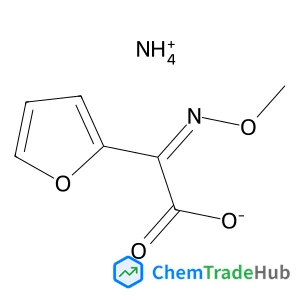
Ammonium (Z)-2-(furan-2-yl)-2-(methoxyimino)acetate
CAS Number:
97148-39-5
Molecular Formula:
C7H10N2O4
Recommended Suppliers





Disclaimer
This page provides academic journal information for reference and research purposes only. We are not affiliated with any journal publishers and do not handle publication submissions. For publication-related inquiries, please contact the respective journal publishers directly.
If you notice any inaccuracies in the information displayed, please contact us at support@chemtradehub.com. We will promptly review and address your concerns.