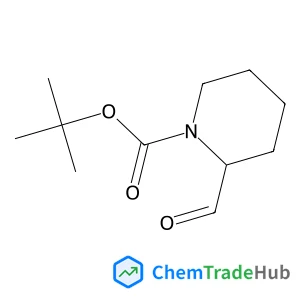
2-Methyl-2-propanyl (2R)-2-formyl-1-piperidinecarboxylate
CAS Number:
134526-69-5
Molecular Formula:
C11H19NO3
Aqif A. Chaudhry, Saba Haque, Suela Kellici, Paul Boldrin, Ihtesham Rehman, Fazal A. Khalid, Jawwad A. Darr
Nano-particle hydroxyapatite (HA) rods, were rapidly synthesised using a three pump continuous hydrothermal process (using a water feed at up to 400 °C and at 24 MPa): the product was obtained as a highly crystalline and phase pure material, without the need for an ageing step or subsequent heat treatment.
Chris R. Miller, Robert Vogel, Peter P. T. Surawski, Simon R. Corrie, Andreas Rühmann, Matt Trau
DOI: 10.1039/B509503D
Masa-aki Morikawa, Nobuo Kimizuka
DOI: 10.1039/B507818K
Takumi Furuta, Minatsu Sakai, Hiroyasu Hayashi, Tomohiro Asakawa, Fumi Kataoka, Satoshi Fujii, Takashi Suzuki, Yasuo Suzuki, Kiyoshi Tanaka, Nathan Fishkin, Koji Nakanishi
DOI: 10.1039/B507917A
Kazuhisa Fujimoto, Yu Muto
DOI: 10.1039/B508189K
Hideharu Mori, Hideyuki Iwaya, Atsushi Nagai, Takeshi Endo
DOI: 10.1039/B509212D
Dimitri M. Khramov, Christopher W. Bielawski
DOI: 10.1039/B508679E
Mitsunobu Nakamura, Yukinori Ohtoshi, Kazushige Yamana
DOI: 10.1039/B507808C
Yutaka Takaguchi, Yuuki Sako, Mitsuhiro Tamura
DOI: 10.1039/B508793G
6-(3-Fluorophenyl)picolinic acid is generally considered safe for laboratory use...
(3R)-3-Pyrrolidinol is used in the pharmaceutical industry as a precursor for dr...
When handling (4R,5R)-4,5-Diethoxycarbonyl-2,2-dimethyldioxolane (CAS: 59779-75-...
1-(6-Chloroimidazo[1,2-b]pyridazin-3-yl)ethanone is often synthesized via a mult...
The market for N-Ethyl-3,4-dimethylbenzylamine (CAS: 39180-83-1) remains steady,...
Tert-butyl 3-(pyrrolidin-1-yl)azetidine-1-carboxylate is a chemical compound wit...
1-Bromo-3-chloro-2,4-dimethoxybenzene (CAS: 1228956-93-1) falls under the classi...
The safety of 8-Bromo-2-methyl-3,4-dihydroisoquinolin-1(2H)-one (CAS: 1368622-07...
Benzyl [(3S)-2,6-dioxo-3-piperidinyl]carbamate is generally safe when handled wi...
1-{[4-(4,4,5,5-Tetramethyl-1,3,2-dioxaborolan-2-yl)phenyl]sulfonyl}pyrrolidine s...

ChemComm publishes urgent research which is of outstanding significance and interest to experts in the field, while also appealing to the journal’s broad chemistry readership. Our communication format is ideally suited to short, urgent studies that are of such importance that they require accelerated publication. Our scope covers all topics in chemistry, and research at the interface of chemistry and other disciplines (such as materials science, nanoscience, physics, engineering and biology) where there is a significant novelty in the chemistry aspects. Major topic areas covered include: Analytical Chemistry Catalysis Chemical Biology and medicinal chemistry Computational Chemistry and Machine Learning Energy and sustainable chemistry Environmental Chemistry Green Chemistry Inorganic Chemistry Materials Chemistry Nanoscience Organic Chemistry Physical Chemistry Polymer Chemistry Supramolecular Chemistry
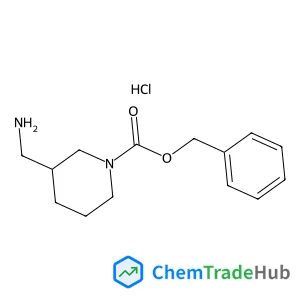
![2-Methyl-2-propanyl [(2S)-1-hydroxy-3-(4-hydroxyphenyl)-2-propanyl]carbamate structure](https://static.chemtradehub.com/structs/833/83345-46-4-eec2.webp "2-Methyl-2-propanyl [(2S)-1-hydroxy-3-(4-hydroxyphenyl)-2-propanyl]carbamate structure")