













First osmium-catalysed ketamination of alkenes
Literature Information
Publication Date
2005-06-01
DOI
10.1039/B505278P
Impact Factor
6.222
Authors
Amparo Villar, Claas H. Hövelmann, Martin Nieger, Kilian Muñiz
View Original
Abstract
Conditions for a first oxidative conversion of alkenes into 2-amino ketones are described, which yield racemic products within a direct oxidation pathway and 2-amino ketones with up to 99% enantiomeric excess from the corresponding enantiopure amino alcohols.
Related Literature
Development of a tripartite solvent blend for sustainable chromatography
Florence M. Chardon, Nicole Blaquiere, Georgette M. Castanedo, Stefan G. Koenig
2014-07-11
Communication
DOI: 10.1039/C4GC00884G
Hydrothermal decarboxylation of amino acid derived imidazolium zwitterions: a sustainable approach towards ionic liquids
Sarah Kirchhecker, Markus Antonietti, Davide Esposito
2014-05-08
Communication
DOI: 10.1039/C4GC00564C
Flow approaches towards sustainability
Luigi Vaccaro, Daniela Lanari, Assunta Marrocchi, Giacomo Strappaveccia
2014-04-24
Tutorial Review
DOI: 10.1039/C4GC00410H
Efficient fixation of CO2 into cyclic carbonates catalysed by silicon-based main chain poly-imidazolium salts
Jinquan Wang, Jiayu Leong, Yugen Zhang
2014-07-31
Communication
DOI: 10.1039/C4GC01060D
Influence of precursor type on non-toxic hybrid inks for high-efficiency Cu2ZnSnS4 thin-film solar cells
Kyujin Kim, Inhyuk Kim, Yunjung Oh, Daehee Lee, Kyoohee Woo, Sunho Jeong, Jooho Moon
2014-07-10
Paper
DOI: 10.1039/C4GC00896K
Hydrothermal saline promoted grafting: a route to sulfonic acid SBA-15 silica with ultra-high acid site loading for biodiesel synthesis
C. Pirez, A. F. Lee, J. C. Manayil, C. M. A. Parlett, K. Wilson
2014-07-24
Communication
DOI: 10.1039/C4GC01139B
Towards non-toxic solvents for membrane preparation: a review
A. Figoli, T. Marino, S. Simone, E. Di Nicolò, X.-M. Li, T. He, S. Tornaghi, E. Drioli
2014-07-03
Tutorial Review
DOI: 10.1039/C4GC00613E
Ruthenium complexes of tetradentate bipyridine ligands: highly efficient catalysts for the hydrogenation of carboxylic esters and lactones
Wei Li, Jian-Hua Xie, Ming-Lei Yuan, Qi-Lin Zhou
2014-06-13
Communication
DOI: 10.1039/C4GC00835A
Catalyst-free sulfonylation of activated alkenes for highly efficient synthesis of mono-substituted ethyl sulfones in water
Yu Yang, Lin Tang, Sheng Zhang, Xuefeng Guo, Zhenggen Zha, Zhiyong Wang
2014-07-10
Communication
DOI: 10.1039/C4GC00932K
You might also like
Compound Q&A
How should 2-Methylbenzene-1,4-diamine dihydrochloride (CAS: 615-45-2) be stored?
2-Methylbenzene-1,4-diamine dihydrochloride (CAS: 615-45-2) should be stored in ...
615-45-22-Methylbenzene-1,4-...
Compound Q&A
Is (1S,4S)-2,5-Diazabicyclo[2.2.1]heptane dihydrobromide (CAS: 132747-20-7) safe?
(1S,4S)-2,5-Diazabicyclo[2.2.1]heptane dihydrobromide is generally considered sa...
132747-20-7(1S,4S)-2,5-Diazabic...
Compound Q&A
What industries use (6-Chloropyridazin-3-YL)methanamine (CAS: 871826-15-2)?
(6-Chloropyridazin-3-YL)methanamine finds applications in the pharmaceutical ind...
871826-15-2(6-Chloropyridazin-3...
Compound Q&A
What are the main uses of 2-Fluoro-3-methylphenol (CAS: 77772-72-6)?
2-Fluoro-3-methylphenol is primarily used in the synthesis of pharmaceuticals, p...
77772-72-62-Fluoro-3-methylphe...
Compound Q&A
What precautions should be taken when handling 3-Methoxy-4-nitrobenzonitrile (CAS: 177476-75-4)?
When handling 3-Methoxy-4-nitrobenzonitrile, it is important to wear appropriate...
177476-75-43-Methoxy-4-nitroben...
Compound Q&A
What precautions should be taken when handling 1,3-Oxazolo[4,5-b]pyridine-2(3H)-thione (CAS: 211949-57-4)?
When handling 1,3-Oxazolo[4,5-b]pyridine-2(3H)-thione (CAS: 211949-57-4), it is ...
211949-57-4[1,3]Oxazolo[4,5-b]p...
Compound Q&A
What regulatory guidelines apply to 4-Ethynylbenzamide (CAS: 90347-86-7)?
4-Ethynylbenzamide (CAS: 90347-86-7) falls under various regulatory guidelines i...
90347-86-74-Ethynylbenzamide
Compound Q&A
What are the main uses of 3-(2-Ethylphenyl)-2-thioxo-4-imidazolidinone (CAS: 186822-57-1)?
3-(2-Ethylphenyl)-2-thioxo-4-imidazolidinone is primarily used as an intermediat...
186822-57-13-(2-Ethylphenyl)-2-...
Compound Q&A
What is (2-Fluoro-6-methoxyphenyl)acetic acid (CAS: 500912-19-6)?
(2-Fluoro-6-methoxyphenyl)acetic acid, also known as 4-fluoro-3-methoxybenzoic a...
500912-19-6(2-Fluoro-6-methoxyp...
Compound Q&A
What is the market or research trend for 2-[4-(Hydroxymethyl)phenoxy]ethanol (CAS: 102196-18-9)?
Market trends for 2-[4-(Hydroxymethyl)phenoxy]ethanol (CAS: 102196-18-9) indicat...
102196-18-92-[4-(Hydroxymethyl)...
Source Journal
Chemical Communications

CiteScore:
8.6
Self-citation Rate:
4.7%
Articles per Year:
2458
ChemComm publishes urgent research which is of outstanding significance and interest to experts in the field, while also appealing to the journal’s broad chemistry readership. Our communication format is ideally suited to short, urgent studies that are of such importance that they require accelerated publication. Our scope covers all topics in chemistry, and research at the interface of chemistry and other disciplines (such as materials science, nanoscience, physics, engineering and biology) where there is a significant novelty in the chemistry aspects. Major topic areas covered include: Analytical Chemistry Catalysis Chemical Biology and medicinal chemistry Computational Chemistry and Machine Learning Energy and sustainable chemistry Environmental Chemistry Green Chemistry Inorganic Chemistry Materials Chemistry Nanoscience Organic Chemistry Physical Chemistry Polymer Chemistry Supramolecular Chemistry
Recommended Compounds
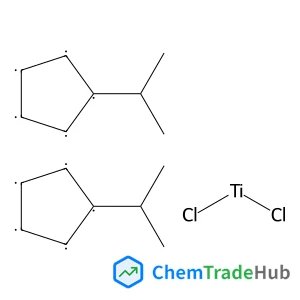
BIS(I-PROPYLCYCLOPENTADIENYL)TITANIUM DICHLORIDE
CAS Number:
12130-65-3
Molecular Formula:
C16H22Cl2Ti


4,4,5,5-Tetramethyl-2-(1-propyn-1-YL)-1,3,2-dioxaborolane
CAS Number:
347389-75-7
Molecular Formula:
C9H15BO2

Recommended Suppliers






Disclaimer
This page provides academic journal information for reference and research purposes only. We are not affiliated with any journal publishers and do not handle publication submissions. For publication-related inquiries, please contact the respective journal publishers directly.
If you notice any inaccuracies in the information displayed, please contact us at support@chemtradehub.com. We will promptly review and address your concerns.