












The absorption spectrum of water near 750 nm by CW-CRDS: contribution to the search of water dimer absorption
Literature Information
Publication Date
2005-05-24
DOI
10.1039/B502172C
Impact Factor
3.676
Authors
Samir Kassi, Peter Macko, Olga Naumenko, Alain Campargue
View Original
Abstract
The absorption spectrum of natural water vapour around 750 nm has been recorded with a typical sensitivity of 3 × 10⁻¹⁰ cm−1 using a cw cavity ring down spectroscopy set up based on a Ti:sapphire laser. The 13 312.4–13 377.7 cm−1 spectral interval was chosen as it corresponds to the region where water dimer absorption was recently measured (K. Pfeisticker et al., Science, 2003, 300, 2078–2080). The line parameters (wavenumber and intensity) of a total of 286 lines of water vapor were measured by a one by one fit of the lines to a Voigt profile. For the main water isotopologue, 276 lines were measured with line intensities as weak as 5 × 10⁻²⁹ cm molecule−1i.e. about 50 times smaller than the weakest H216O line intensities included in the 2004 edition of the HITRAN database. On the basis of the predictions of Schwenke and Partridge, all but 16 lines could be assigned to different isotopologues of water (H216O, H218O, and HD16O) present in natural abundance in the sample. A total of 272 energy levels of H216O were determined and rovibrationally assigned to 18 upper vibrational states. Half of them had not been reported previously. The importance of the additional absorbance resulting from the observation of many new weak lines is discussed in relation to the detection of water dimer absorption and compared to the absorbance predicted by Schwenke and Partridge. The quality of the line parameters of water monomer is shown to be of crucial importance to identify the absorbance of the water dimer in the considered region.
Related Literature
Microfluidic compartments with sensing microbeads for dynamic monitoring of cytokine and exosome release from single cells
Kyung Jin Son, Ali Rahimian, Christian Siltanen, Tushar Patel, Alexander Revzin
2015-10-05
Paper
DOI: 10.1039/C5AN01648G
Serum protein biomarkers relevant to hepatocellular carcinoma and their detection
Eric Waidely, Abdul-Rahman Obaid Al-Yuobi, A. S. Bashammakh, Mohammad S. El-Shahawi, Roger M. Leblanc
2015-11-11
Critical Review
DOI: 10.1039/C5AN01884F
Bipolar electrode-electrochemiluminescence (ECL) biosensor based on a hybridization chain reaction
Meisheng Wu, Ning Xu, Jingtang Qiao, Jinghan Chen, Longsheng Jin
2019-06-26
Paper
DOI: 10.1039/C9AN01022J
Raman technologies in cancer diagnostics
Lauren A. Austin, Conor L. Evans
2015-10-22
Critical Review
DOI: 10.1039/C5AN01786F
A specific electrochemiluminescence sensor for selective and ultra-sensitive mercury(ii) detection based on dithiothreitol functionalized copper nanocluster/carbon nitride nanocomposites
Huitao Liu, Xueqing Gao, Chunyuan Tian, Zhenguang Wang, Yanxiu Li
2019-06-04
Paper
DOI: 10.1039/C9AN00667B
Ultrasensitive detection of disease biomarkers using an immuno-wall device with enzymatic amplification
Keine Nishiyama, Seiya Nakamata, Koya Ishikawa, Masatoshi Maeki, Akihiko Ishida, Hirofumi Tani
2019-06-19
Paper
DOI: 10.1039/C9AN00480G
Proximity hybridization-regulated electrochemical stripping of silver nanoparticles via nanogold induced deposition for immunoassay
Jie Li, Jie Wu, Lin Cui, Mengmeng Liu, Feng Yan, Huangxian Ju
2015-10-20
Paper
DOI: 10.1039/C5AN01946J
Fluorescence polarization-based detection of cancer-related mutations using target-initiated rolling circle amplification
Woo Young Kwon, Byung Seok Cha, Seokjoon Kim, Sung Hyun Hwang, Ji Min Kim, Kalishwaralal Kalimuthu, Hyun Gyu Park, Ki Soo Park
2019-06-18
Communication
DOI: 10.1039/C9AN00429G
You might also like
Compound Q&A
How should waste containing (6-Bromo-2-naphthyl)oxy](dimethyl)(2-methyl-2-propanyl)silane be handled?
Waste containing (6-Bromo-2-naphthyl)oxy](dimethyl)(2-methyl-2-propanyl)silane (...
100751-65-3[(6-Bromo-2-naphthyl...
Compound Q&A
How is 7-Fluoro-4-isoquinolinecarboxylic acid (CAS: 1841081-40-0) typically synthesized?
7-Fluoro-4-isoquinolinecarboxylic acid can be synthesized via a multi-step proce...
1841081-40-07-Fluoro-4-isoquinol...
Compound Q&A
What are the physical and chemical properties of 2,3,5,6-Tetrabromothieno[3,2-b]thiophene (CAS: 124638-53-5)?
2,3,5,6-Tetrabromothieno[3,2-b]thiophene is a crystalline compound with a high m...
124638-53-52,3,5,6-Tetrabromoth...
Compound Q&A
Is 1-[4-(Benzylamino)-7,8-dihydro-5H-pyrano[4,3-d]pyrimidin-2-yl]-2-methyl-1H-indole-4-carboxamide (CAS: 1542705-92-9) safe?
1-[4-(Benzylamino)-7,8-dihydro-5H-pyrano[4,3-d]pyrimidin-2-yl]-2-methyl-1H-indol...
1542705-92-91-[4-(Benzylamino)-7...
Compound Q&A
What is the market or research trend for imidazo[5,1-d]-1,2,3,5-tetrazine-8-carboxylic acid, 3,4-dihydro-3-methyl-4-oxo- (CAS: 113942-30-6)?
The market for imidazo[5,1-d]-1,2,3,5-tetrazine-8-carboxylic acid, 3,4-dihydro-3...
113942-30-6Imidazo[5,1-d]-1,2,3...
Compound Q&A
What is 3-(Triisopropylsilyl)propiolaldehyde (CAS: 163271-80-5)?
3-(Triisopropylsilyl)propiolaldehyde is a synthetic organic compound with the CA...
163271-80-53-(Triisopropylsilyl...
Compound Q&A
What regulatory guidelines apply to 6-Nitro-2H-1,4-benzoxazin-3(4H)-one (CAS: 81721-87-1)?
6-Nitro-2H-1,4-benzoxazin-3(4H)-one (CAS: 81721-87-1) is subject to various regu...
81721-87-16-Nitro-2H-1,4-benzo...
Compound Q&A
How should waste containing (3-Fluorophenyl)(4-{[(2-methyl-2-propanyl)oxy]carbonyl}-1-piperazinyl)acetic acid (CAS: 885272-91-3) be handled?
Waste containing (3-Fluorophenyl)(4-{[(2-methyl-2-propanyl)oxy]carbonyl}-1-piper...
885272-91-3(3-Fluorophenyl)(4-{...
Compound Q&A
What are the physical and chemical properties of N,N'-4,4'-Biphenyldiyldiisonicotinamide (CAS: 55119-40-9)?
N,N'-4,4'-Biphenyldiyldiisonicotinamide is a white crystalline solid with a mole...
55119-40-9N,N'-4,4'-Biphenyldi...
Compound Q&A
What industries use 6-Bromo-8-fluoro-2-quinazolinol (CAS: 1036756-15-6)?
6-Bromo-8-fluoro-2-quinazolinol is primarily used in the pharmaceutical industry...
1036756-15-66-Bromo-8-fluoro-2-q...
Source Journal
Physical Chemistry Chemical Physics

CiteScore:
5.5
Self-citation Rate:
10.3%
Articles per Year:
3036
Physical Chemistry Chemical Physics (PCCP) is an international journal co-owned by 19 physical chemistry and physics societies from around the world. This journal publishes original, cutting-edge research in physical chemistry, chemical physics and biophysical chemistry. To be suitable for publication in PCCP, articles must include significant innovation and/or insight into physical chemistry; this is the most important criterion that reviewers and Editors will judge against when evaluating submissions. The journal has a broad scope and welcomes contributions spanning experiment, theory, computation and data science. Topical coverage includes spectroscopy, dynamics, kinetics, statistical mechanics, thermodynamics, electrochemistry, catalysis, surface science, quantum mechanics, quantum computing and machine learning. Interdisciplinary research areas such as polymers and soft matter, materials, nanoscience, energy, surfaces/interfaces, and biophysical chemistry are welcomed if they demonstrate significant innovation and/or insight into physical chemistry. Joined experimental/theoretical studies are particularly appreciated when complementary and based on up-to-date approaches.
Recommended Compounds
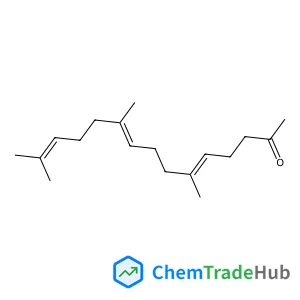
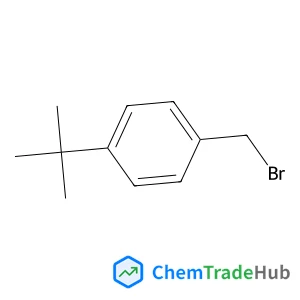
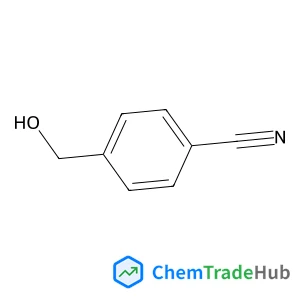
Recommended Suppliers





Disclaimer
This page provides academic journal information for reference and research purposes only. We are not affiliated with any journal publishers and do not handle publication submissions. For publication-related inquiries, please contact the respective journal publishers directly.
If you notice any inaccuracies in the information displayed, please contact us at support@chemtradehub.com. We will promptly review and address your concerns.