












Correlated ionic hopping processes in crystalline and glassy electrolytes resulting in MIGRATION-type and nearly-constant-loss-type conductivities
Literature Information
Publication Date
2004-11-30
DOI
10.1039/B414160C
Impact Factor
3.676
Authors
K. Funke, R. D. Banhatti, C. Cramer
View Original
Abstract
Solid electrolytes with disordered structures may be crystalline or glassy. Their complex ionic conductivity displays a characteristic frequency dependence. Modelling the dynamics of the mobile ions, we have developed the MIGRATION concept, the acronym standing for MIsmatch Generated Relaxation for the Accommodation and Transport of IONs. With the help of the MIGRATION concept it is possible to reproduce frequency-dependent experimental conductivities and permittivities including their scaling behaviour. Scaling is a property typically observed in and below the radio frequency regime. At sufficiently high frequencies and low temperatures, however, conductivity spectra of crystals and glasses are often found to contain a second component which displays the so-called nearly-constant-loss (NCL) behaviour. Suitably modifying the MIGRATION concept, we are able to explain this feature and to show that it is caused by a displacive or hopping ionic motion that stays completely localised. Here, as in the unmodified MIGRATION concept, interactions between the ions play an essential role. Experimentally, interesting differences are detected between the NCL-type dynamics in a crystalline and in a glassy ion conductor. In crystalline γ-RbAg4I5 we find the same elementary rates for the MIGRATION-type and NCL-type hopping movements of the ions, suggesting identical barrier heights for the respective processes. On the other hand, the two rates are found to differ markedly from each other in glassy AgI-AgPO3, not only with regard to their absolute value but also in their temperature dependence. We suggest that the NCL effect in the glass results from dynamic localised displacements involving both the silver ions and negatively charged entities such as iodide ions and/or non-bridging oxygen ions.
Related Literature
Magnetic and microwave absorption properties of self-assemblies composed of core–shell cobalt–cobalt oxide nanocrystals
Zhongzhu Wang, Hong Bi, Peihong Wang, Min Wang, Zhiwei Liu, Lei shen, Xiansong Liu
2014-12-11
Paper
DOI: 10.1039/C4CP04985C
Cyano-substituted oligo(p-phenylene vinylene) single-crystal with balanced hole and electron injection and transport for ambipolar field-effect transistors
Jian Deng, Jia Tang, Yuanxiang Xu, Liqun Liu, Yan Wang, Zengqi Xie, Yuguang Ma
2014-12-04
Paper
DOI: 10.1039/C4CP04265D
Changes in microstructure and physical properties of skutterudites after severe plastic deformation
Jiri Bursik, Jelena Horky, Ramakrishnan Anbalagan, Ramesh Chandra Mallik, Michael Zehetbauer
2014-12-18
Paper
DOI: 10.1039/C4CP05230G
Liquid crystal seed nucleates liquid–solid phase change in ceria nanoparticles
Thi X. T. Sayle, Lewis W. L. Sayle, Dean C. Sayle
2015-01-02
Paper
DOI: 10.1039/C4CP05499G
Phosphine and phosphine oxide groups in metal–organic frameworks detected by P K-edge XAS
F. L. Morel, S. Pin, T. Huthwelker, M. Ranocchiari
2014-12-19
Paper
DOI: 10.1039/C4CP05151C
Relaxation of a hydrophilic polymer induced by moisture desorption through the glass transition
2014-12-11
Paper
DOI: 10.1039/C4CP04966G
Characterization and preparation of bio-tubular scaffolds for fabricating artificial vascular grafts by combining electrospinning and a 3D printing system
Dong Nyoung Heo, Ji Sun Park, Jin Ho Lee, Jun Hee Lee, Wan Doo Kim, Il Keun Kwon, Su A. Park
2014-12-18
Communication
DOI: 10.1039/C4CP04801F
Exploring the binding mechanisms of MIF to CXCR2 using theoretical approaches
Lei Xu, Youyong Li, Dan Li, Peng Xu, Sheng Tian, Huiyong Sun, Hui Liu, Tingjun Hou
2014-12-11
Paper
DOI: 10.1039/C4CP05095A
Ruthenium based nanostructures driven by morphological controls as efficient counter electrodes for dye-sensitized solar cells
Jeesoo Seok, Ka Yeon Ryu, Jin Ah Lee, Nam-Suk Lee, Jeong Min Baik, Joo Gon Kim, Min Jae Ko, Kyungkon Kim, Myung Hwa Kim
2014-12-18
Communication
DOI: 10.1039/C4CP04506H
Fundamental frequency from classical molecular dynamics
Tomonori Yamada, Misako Aida
2014-12-03
Paper
DOI: 10.1039/C4CP04068F
You might also like
Compound Q&A
What precautions should be taken when handling 4-(2-Furylmethyl)thiomorpholine 1,1-dioxide (CAS: 79206-94-3)?
When handling 4-(2-Furylmethyl)thiomorpholine 1,1-dioxide (CAS: 79206-94-3), it ...
79206-94-34-(2-Furylmethyl)thi...
Compound Q&A
What precautions should be taken when handling 4-Chloro-N-[2-(4-morpholinyl)ethyl]benzamide (CAS: 71320-77-9)?
When handling 4-Chloro-N-[2-(4-morpholinyl)ethyl]benzamide (CAS: 71320-77-9), it...
71320-77-94-Chloro-N-[2-(4-mor...
Compound Q&A
How should waste containing 2-[2-(2-Methoxyethoxy)ethoxy]ethyl 4-methylbenzenesulfonate (CAS: 62921-74-8) be handled?
Waste containing this compound (CAS: 62921-74-8) should be handled according to ...
62921-74-82-[2-(2-Methoxyethox...
Compound Q&A
How should waste containing (S)-Methyl 2-amino-3-cyclohexylpropanoate be handled?
Waste containing (S)-Methyl 2-amino-3-cyclohexylpropanoate should be collected i...
40056-18-6(S)-Methyl 2-amino-3...
Compound Q&A
How is 5-({4-[(2S,4R)-4-Hydroxy-2-methyltetrahydro-2H-pyran-4-yl]-2-thienyl}sulfanyl)-1-methyl-1,3-dihydro-2H-indol-2-one (CAS: 166882-70-8) typically synthesized?
This compound can be synthesized using a multi-step process involving the conjug...
166882-70-85-({4-[(2S,4R)-4-Hyd...
Compound Q&A
Are there alternatives to (2E)-3-(3,4-Dichlorophenyl)acrylic acid (CAS: 7312-27-8) in synthesis?
There are several alternatives to (2E)-3-(3,4-Dichlorophenyl)acrylic acid in syn...
7312-27-8(2E)-3-(3,4-Dichloro...
Compound Q&A
How should Ethyl 6-(2-nitrophenyl)imidazo[2,1-b][1,3]thiazole-3-carboxylate (CAS: 925437-84-9) be stored?
Ethyl 6-(2-nitrophenyl)imidazo[2,1-b][1,3]thiazole-3-carboxylate (CAS: 925437-84...
925437-84-9Ethyl 6-(2-nitrophen...
Compound Q&A
How should waste containing 2-(1,3-Thiazol-2-yl)ethanamine (CAS: 18453-07-1) be handled?
Waste containing 2-(1,3-Thiazol-2-yl)ethanamine (CAS: 18453-07-1) should be coll...
18453-07-12-(1,3-Thiazol-2-yl)...
Compound Q&A
How is Methyl 5-iodo-2-methylbenzoate (CAS: 103440-54-6) typically synthesized?
Methyl 5-iodo-2-methylbenzoate can be synthesized through the iodination of meth...
103440-54-6Methyl 5-iodo-2-meth...
Compound Q&A
How is 5-Chloro[1,2,4]triazolo[1,5-a]pyridine (CAS: 1427399-34-5) typically synthesized?
5-Chloro[1,2,4]triazolo[1,5-a]pyridine is commonly synthesized via the condensat...
1427399-34-55-Chloro[1,2,4]triaz...
Source Journal
Physical Chemistry Chemical Physics

CiteScore:
5.5
Self-citation Rate:
10.3%
Articles per Year:
3036
Physical Chemistry Chemical Physics (PCCP) is an international journal co-owned by 19 physical chemistry and physics societies from around the world. This journal publishes original, cutting-edge research in physical chemistry, chemical physics and biophysical chemistry. To be suitable for publication in PCCP, articles must include significant innovation and/or insight into physical chemistry; this is the most important criterion that reviewers and Editors will judge against when evaluating submissions. The journal has a broad scope and welcomes contributions spanning experiment, theory, computation and data science. Topical coverage includes spectroscopy, dynamics, kinetics, statistical mechanics, thermodynamics, electrochemistry, catalysis, surface science, quantum mechanics, quantum computing and machine learning. Interdisciplinary research areas such as polymers and soft matter, materials, nanoscience, energy, surfaces/interfaces, and biophysical chemistry are welcomed if they demonstrate significant innovation and/or insight into physical chemistry. Joined experimental/theoretical studies are particularly appreciated when complementary and based on up-to-date approaches.
Recommended Compounds

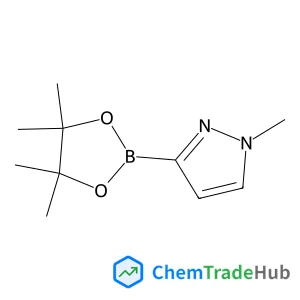
1-Methyl-3-(4,4,5,5-tetramethyl-1,3,2-dioxaborolan-2-yl)-1H-pyrazole
CAS Number:
1020174-04-2
Molecular Formula:
C10H17BN2O2

Recommended Suppliers






Disclaimer
This page provides academic journal information for reference and research purposes only. We are not affiliated with any journal publishers and do not handle publication submissions. For publication-related inquiries, please contact the respective journal publishers directly.
If you notice any inaccuracies in the information displayed, please contact us at support@chemtradehub.com. We will promptly review and address your concerns.