












Photodissociation dynamics of SOCl2
Literature Information
Publication Date
2004-11-25
DOI
10.1039/B412797H
Impact Factor
3.676
Authors
Tina S. Einfeld, Karl-Heinz Gericke, Jörg Grunenberg, Christof Maul, Lars V. Schäfer
View Original
Abstract
New theoretical and experimental results for the ultraviolet photodissociation dynamics of thionyl chloride (SOCl2) are presented and combined with existing data from a variety of sources in order to provide a unified view of the photodissociation dynamics of SOCl2. Time-dependent density functional theory on the basis of the hybrid-type B3LYP functional was employed to calculate vertical excitation energies for the SOCl2 parent molecule up to 6.3 eV. Three-dimensional (3D) imaging of photofragments was performed for a dissociation wavelength of 235 nm. Atomic chlorine fragments were observed in the 2P3/2 ground state [Cl] and the 2P1/2 excited spin–orbit state [Cl*] by employing resonance enhanced multi-photon ionization (REMPI) and time-of-flight (TOF) techniques. State-specific speed distributions and the speed dependence of the β anisotropy parameter were obtained from the full 3D momentum vector distribution by appropriate projection methods. Bimodal speed distributions for both spin–orbit states are evidence of a competition between the radical (SOCl2 → SOCl + Cl/Cl*) and the three-body decay channel (SOCl2 → SO + 2 Cl/Cl*). No evidence of the molecular fragmentation channel (SOCl2 → SO + Cl2) was found. With increasing fragment speed the β anisotropy parameter increases from 0.1 to 0.85 and 0.68 for Cl and Cl*, respectively, suggesting fragmentation via an excited A′ state for slow fragments and via an A″ state for fast fragments. The calculations allow for the first time to interpret all previous and new experimental data for the ultraviolet photodissociation of SOCl2 by assuming simultaneous excitation of several excited electronic states giving rise to competing dissociation channels.
Recommended Journals
Related Literature
Reliable contact fabrication on nanostructured Bi2Te3-based thermoelectric materials
Shien-Ping Feng, Ya-Huei Chang, Jian Yang, Bed Poudel, Bo Yu, Zhifeng Ren, Gang Chen
2013-03-15
Communication
DOI: 10.1039/C3CP50993A
Computational study of the spin-state energies and UV-Visspectra of bis(1,4,7-triazacyclononane) complexes of some first-row transition metal cations
Matija Zlatar, Maja Gruden-Pavlović, Mireia Güell
2012-11-23
Paper
DOI: 10.1039/C2CP43735J
Azidoacetylene – interpretation of gas phase infrared spectra based on high-level vibrational configuration interaction calculations
Dominik Oschetzki, Xiaoqing Zeng, Helmut Beckers, Klaus Banert, Guntram Rauhut
2013-03-14
Paper
DOI: 10.1039/C3CP50268F
An oxygen pumping anode for electrowinning aluminium
Changqing Liu, Xiaobo Ji, Pingmin Zhang, Qiyuan Chen, Craig E. Banks
2013-03-22
Paper
DOI: 10.1039/C3CP44171G
Electron tunneling from electronically excited states of isolated bisdisulizole-derived trianion chromophores following UV absorption
Marc-Oliver Winghart, Michael Kühn, Andreas-Neil Unterreiner, Thomas J. A. Wolf, Phuong D. Dau, Hong-Tao Liu, Dao-Ling Huang, Lai-Sheng Wang
2013-03-18
Paper
DOI: 10.1039/C3CP50497B
On the role of singlet versus triplet excited states in the uncaging of ortho-nitrobenzyl caged compounds
Jan-Michael Mewes, Andreas Dreuw
2013-03-01
Paper
DOI: 10.1039/C3CP44338H
Changed reactivity of the 1-bromo-4-nitrobenzene radical anion in a room temperature ionic liquid
Sven Ernst, Kristopher R. Ward, Sarah E. Norman, Christopher Hardacre, Richard G. Compton
2013-03-15
Paper
DOI: 10.1039/C3CP51004B
Improving the thermoelectric properties of half-Heusler TiNiSn through inclusion of a second full-Heusler phase: microwave preparation and spark plasma sintering of TiNi1+xSn
Bethany R. Lettiere, Gareth Seward, Nisha Verma, Yichi Zhang
2013-04-04
Paper
DOI: 10.1039/C3CP50918D
Modeling CO2reduction on Pt(111)
Chuan Shi, Christopher P. O'Grady, Andrew A. Peterson, Heine A. Hansen
2013-03-19
Paper
DOI: 10.1039/C3CP50645B
You might also like
Compound Q&A
What precautions should be taken when handling 4-(2-Furylmethyl)thiomorpholine 1,1-dioxide (CAS: 79206-94-3)?
When handling 4-(2-Furylmethyl)thiomorpholine 1,1-dioxide (CAS: 79206-94-3), it ...
79206-94-34-(2-Furylmethyl)thi...
Compound Q&A
What precautions should be taken when handling 4-Chloro-N-[2-(4-morpholinyl)ethyl]benzamide (CAS: 71320-77-9)?
When handling 4-Chloro-N-[2-(4-morpholinyl)ethyl]benzamide (CAS: 71320-77-9), it...
71320-77-94-Chloro-N-[2-(4-mor...
Compound Q&A
How should waste containing 2-[2-(2-Methoxyethoxy)ethoxy]ethyl 4-methylbenzenesulfonate (CAS: 62921-74-8) be handled?
Waste containing this compound (CAS: 62921-74-8) should be handled according to ...
62921-74-82-[2-(2-Methoxyethox...
Compound Q&A
How should waste containing (S)-Methyl 2-amino-3-cyclohexylpropanoate be handled?
Waste containing (S)-Methyl 2-amino-3-cyclohexylpropanoate should be collected i...
40056-18-6(S)-Methyl 2-amino-3...
Compound Q&A
How is 5-({4-[(2S,4R)-4-Hydroxy-2-methyltetrahydro-2H-pyran-4-yl]-2-thienyl}sulfanyl)-1-methyl-1,3-dihydro-2H-indol-2-one (CAS: 166882-70-8) typically synthesized?
This compound can be synthesized using a multi-step process involving the conjug...
166882-70-85-({4-[(2S,4R)-4-Hyd...
Compound Q&A
Are there alternatives to (2E)-3-(3,4-Dichlorophenyl)acrylic acid (CAS: 7312-27-8) in synthesis?
There are several alternatives to (2E)-3-(3,4-Dichlorophenyl)acrylic acid in syn...
7312-27-8(2E)-3-(3,4-Dichloro...
Compound Q&A
How should Ethyl 6-(2-nitrophenyl)imidazo[2,1-b][1,3]thiazole-3-carboxylate (CAS: 925437-84-9) be stored?
Ethyl 6-(2-nitrophenyl)imidazo[2,1-b][1,3]thiazole-3-carboxylate (CAS: 925437-84...
925437-84-9Ethyl 6-(2-nitrophen...
Compound Q&A
How should waste containing 2-(1,3-Thiazol-2-yl)ethanamine (CAS: 18453-07-1) be handled?
Waste containing 2-(1,3-Thiazol-2-yl)ethanamine (CAS: 18453-07-1) should be coll...
18453-07-12-(1,3-Thiazol-2-yl)...
Compound Q&A
How is Methyl 5-iodo-2-methylbenzoate (CAS: 103440-54-6) typically synthesized?
Methyl 5-iodo-2-methylbenzoate can be synthesized through the iodination of meth...
103440-54-6Methyl 5-iodo-2-meth...
Compound Q&A
How is 5-Chloro[1,2,4]triazolo[1,5-a]pyridine (CAS: 1427399-34-5) typically synthesized?
5-Chloro[1,2,4]triazolo[1,5-a]pyridine is commonly synthesized via the condensat...
1427399-34-55-Chloro[1,2,4]triaz...
Source Journal
Physical Chemistry Chemical Physics

CiteScore:
5.5
Self-citation Rate:
10.3%
Articles per Year:
3036
Physical Chemistry Chemical Physics (PCCP) is an international journal co-owned by 19 physical chemistry and physics societies from around the world. This journal publishes original, cutting-edge research in physical chemistry, chemical physics and biophysical chemistry. To be suitable for publication in PCCP, articles must include significant innovation and/or insight into physical chemistry; this is the most important criterion that reviewers and Editors will judge against when evaluating submissions. The journal has a broad scope and welcomes contributions spanning experiment, theory, computation and data science. Topical coverage includes spectroscopy, dynamics, kinetics, statistical mechanics, thermodynamics, electrochemistry, catalysis, surface science, quantum mechanics, quantum computing and machine learning. Interdisciplinary research areas such as polymers and soft matter, materials, nanoscience, energy, surfaces/interfaces, and biophysical chemistry are welcomed if they demonstrate significant innovation and/or insight into physical chemistry. Joined experimental/theoretical studies are particularly appreciated when complementary and based on up-to-date approaches.
Recommended Compounds
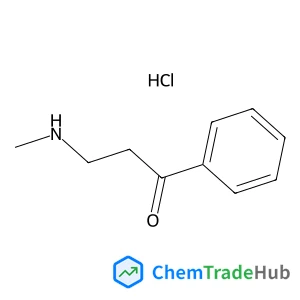
3-(Methylamino)-1-phenyl-1-propanone hydrochloride (1:1)
CAS Number:
2538-50-3
Molecular Formula:
C10H14ClNO
![4-{2-[4-(2-Methyl-2-propanyl)phenyl]ethoxy}quinazoline structure](https://static.chemtradehub.com/structs/120/120928-09-8-d3db.webp "4-{2-[4-(2-Methyl-2-propanyl)phenyl]ethoxy}quinazoline structure")
4-{2-[4-(2-Methyl-2-propanyl)phenyl]ethoxy}quinazoline
CAS Number:
120928-09-8
Molecular Formula:
C20H22N2O
![1,2-Diphenyl-4-[2-(phenylsulfinyl)ethyl]-3,5-pyrazolidinedione structure](https://static.chemtradehub.com/structs/57-/57-96-5-efcc.webp "1,2-Diphenyl-4-[2-(phenylsulfinyl)ethyl]-3,5-pyrazolidinedione structure")
1,2-Diphenyl-4-[2-(phenylsulfinyl)ethyl]-3,5-pyrazolidinedione
CAS Number:
57-96-5
Molecular Formula:
C23H20N2O3S
Recommended Suppliers





Disclaimer
This page provides academic journal information for reference and research purposes only. We are not affiliated with any journal publishers and do not handle publication submissions. For publication-related inquiries, please contact the respective journal publishers directly.
If you notice any inaccuracies in the information displayed, please contact us at support@chemtradehub.com. We will promptly review and address your concerns.