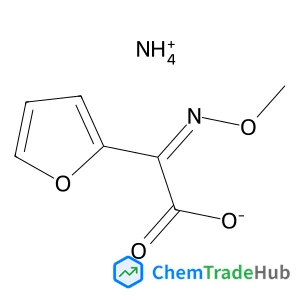
Ammonium (Z)-2-(furan-2-yl)-2-(methoxyimino)acetate
CAS Number:
97148-39-5
Molecular Formula:
C7H10N2O4
Randhir P. Deo, Nathan S. Lawrence, Joseph Wang
The oxidation and enhanced detection of traditionally ‘non-electroactive’ amino acids at a single-wall carbon nanotube (SWNT) surface and at a nickel hydroxide film electrochemically deposited and generated upon the SWNT layer is reported. Different CNT are compared, with Nafion-dispersed SWNT offering the most favorable layer for constant-potential amperometric detection. Factors affecting the oxidation process, including the pH or applied potential, are assessed. The response of the SWNT–Nafion coated electrode compares favorably with that of copper and nickel disk electrodes under flow injection analysis (FIA) conditions. The electrodeposition of nickel onto the SWNT–Nafion layer (Ni–CNT) led to a dramatic enhancement of the analytical response (vs. that observed at the SWNT or nickel electrodes alone). The oxidative process at the Ni(OH)2 layer has been studied and the increase in sensitivity rationalized. In the presence of amino acid the Ni–CNT layer undergoes an electrocatalytic process in which the amino acid reduces the newly formed NiO(OH) species. Furthermore, the attractive response of both the CNT and Ni–CNT layers has allowed these electrodes to be used for constant-potential FIA of various amino acids and indicates great promise for monitoring chromatographic effluents. Once again an improved signal was observed at the Ni–CNT electrode compared to nickel deposited upon a bare glassy carbon electrode (Ni–GC).
Noemí Alarcos, Boiko Cohen, Abderrazzak Douhal
DOI: 10.1039/C5CP04548G
Cathal Smyth, Daniel G. Oblinsky, Gregory D. Scholes
DOI: 10.1039/C5CP00295H
DOI: 10.1039/C5CP06786C
Sergey A. Kislenko, Victoria A. Nikitina, Renat R. Nazmutdinov
DOI: 10.1039/C5CP04566E
Dorian S. N. Parker, Ralf I. Kaiser, Oleg Kostko, Tyler P. Troy, Musahid Ahmed, Bing-Jian Sun, Shih-Hua Chen, A. H. H. Chang
DOI: 10.1039/C5CP02960K
W. H. Brito, Joice da Silva-Araújo, H. Chacham
DOI: 10.1039/C5CP04926A
Giovanni Romanelli, Xuan Zhang, Kian Ping Loh, Carla Andreani
DOI: 10.1039/C5CP05240H
Mohammed Ahmed, Ajay K. Singh, Jahur A. Mondal
DOI: 10.1039/C5CP07014G
Mehmet Yagmurcukardes, Engin Torun, Francois M. Peeters, R. Tugrul Senger
DOI: 10.1039/C5CP05538E
Qiaohong Li, Luyang Qiao, Ruiping Chen, Zuju Ma, Rui Si, Yuangen Yao, Kechen Wu
DOI: 10.1039/C5CP07309J
1H-Indazole-6-carbonitrile finds applications in pharmaceuticals, where it serve...
Waste containing Dioctyl (2E)-2-butenedioate (CAS: 2997-85-5) should be collecte...
Sodium [(1,2-benzoxazol-3-ylmethyl)sulfonyl]azanide is primarily used in pharmac...
Dimethyl 4-(4,4,5,5-tetramethyl-1,3,2-dioxaborolan-2-yl)-2,6-pyridinedicarboxyla...
Waste containing 2-Fluoro-6-hydrazinopyridine (CAS: 80714-39-2) should be manage...
6-Formyl-2-pyridinecarboxylic acid is an organic compound with the molecular for...
Research trends for this compound indicate a focus on its potential applications...
9H-Tribenzo[b,d,f]azepine is typically synthesized via a multi-step process invo...
1-Cyclopropyl-7-ethoxy-6-fluoro-8-methoxy-4-oxo-1,4-dihydro-3-quinolinecarboxyli...
Waste containing Methyl 3-oxo-1,2,3,4-tetrahydro-6-quinoxalinecarboxylate (CAS: ...

Analyst publishes analytical and bioanalytical research that reports premier fundamental discoveries and inventions, and the applications of those discoveries, unconfined by traditional discipline barriers.