












Reply to the ‘Comment on “Possible induced enhancement of dispersion forces by cellular phones” ’ by R. K. Adair, Phys. Chem. Chem. Phys., 2004, 6, DOI: 10.1039/b405698a
Literature Information
Publication Date
2004-06-24
DOI
10.1039/B406825B
Impact Factor
3.676
Authors
View Original
Abstract
The first page of this article is displayed as the abstract.
Related Literature
FI-ICP-TOFMS for quantification of biologically essential trace elements in cerebrospinal fluid – high-throughput at low sample volume
Sarah Theiner, Anna Schoeberl, Lisa Fischer, Sophie Neumayer, Stephan Hann, Gunda Koellensperger
2019-06-11
Paper
DOI: 10.1039/C9AN00039A
Can mid-infrared biomedical spectroscopy of cells, fluids and tissue aid improvements in cancer survival? A patient paradigm
Matthew J. Baker
2015-10-19
Critical Review
DOI: 10.1039/C5AN01858G
Colorimetric switchable linker-based bioassay for ultrasensitive detection of prostate-specific antigen as a cancer biomarker
Jungwoo Hahn, Eunghee Kim, Youngsang You
2019-05-27
Paper
DOI: 10.1039/C9AN00552H
An ultrasensitive and simple assay for the Hepatitis C virus using a reduced graphene oxide-assisted hybridization chain reaction
Jialong Fan, Liqun Yuan, Qingxin Liu, Chunyi Tong, Wenmiao Wang, Feng Xiao, Bin Liu, Xuanming Liu
2019-05-16
Paper
DOI: 10.1039/C9AN00179D
Serum-based differentiation between multiple sclerosis and amyotrophic lateral sclerosis by Random Forest classification of FTIR spectra
Youssef El Khoury, Vildan Gulsari, Christine Patte-Mensah, Gilles Marcou, Alexandre Varnek, Ayikoé Guy Mensah-Nyagan
2019-06-12
Paper
DOI: 10.1039/C9AN00754G
Electrochemical sensing of cocaine in real samples based on electrodeposited biomimetic affinity ligands
Anca Florea, Todd Cowen, Sergey Piletsky, Karolien De Wael
2019-06-10
Paper
DOI: 10.1039/C9AN00618D
Visual detection of serum asialohaptoglobin by plasmonic sandwich ELLSA – a new platform for cirrhosis diagnosis
Partha Pratim Bose, Gautam Mandal, Dharmendra Kumar, Ajay Duseja, Bishnu Pada Chatterjee
2015-11-03
Communication
DOI: 10.1039/C5AN02000J
Microfluidics for the detection of minimal residual disease in acute myeloid leukemia patients using circulating leukemic cells selected from blood
Sally A. Hunsucker, Jennifer P. Waugh, Thomas C. Shea
2015-10-26
Paper
DOI: 10.1039/C5AN01836F
Postsynthetic functionalization of water stable zirconium metal organic frameworks for high performance copper removal
Yao Xie, Guiqin Ye, Suping Peng, Shiyuan Jiang, Yang Wang, Xiaoya Hu
2019-07-03
Paper
DOI: 10.1039/C9AN00981G
You might also like
Compound Q&A
How should waste containing (6-Bromo-2-naphthyl)oxy](dimethyl)(2-methyl-2-propanyl)silane be handled?
Waste containing (6-Bromo-2-naphthyl)oxy](dimethyl)(2-methyl-2-propanyl)silane (...
100751-65-3[(6-Bromo-2-naphthyl...
Compound Q&A
How is 7-Fluoro-4-isoquinolinecarboxylic acid (CAS: 1841081-40-0) typically synthesized?
7-Fluoro-4-isoquinolinecarboxylic acid can be synthesized via a multi-step proce...
1841081-40-07-Fluoro-4-isoquinol...
Compound Q&A
What are the physical and chemical properties of 2,3,5,6-Tetrabromothieno[3,2-b]thiophene (CAS: 124638-53-5)?
2,3,5,6-Tetrabromothieno[3,2-b]thiophene is a crystalline compound with a high m...
124638-53-52,3,5,6-Tetrabromoth...
Compound Q&A
Is 1-[4-(Benzylamino)-7,8-dihydro-5H-pyrano[4,3-d]pyrimidin-2-yl]-2-methyl-1H-indole-4-carboxamide (CAS: 1542705-92-9) safe?
1-[4-(Benzylamino)-7,8-dihydro-5H-pyrano[4,3-d]pyrimidin-2-yl]-2-methyl-1H-indol...
1542705-92-91-[4-(Benzylamino)-7...
Compound Q&A
What is the market or research trend for imidazo[5,1-d]-1,2,3,5-tetrazine-8-carboxylic acid, 3,4-dihydro-3-methyl-4-oxo- (CAS: 113942-30-6)?
The market for imidazo[5,1-d]-1,2,3,5-tetrazine-8-carboxylic acid, 3,4-dihydro-3...
113942-30-6Imidazo[5,1-d]-1,2,3...
Compound Q&A
What is 3-(Triisopropylsilyl)propiolaldehyde (CAS: 163271-80-5)?
3-(Triisopropylsilyl)propiolaldehyde is a synthetic organic compound with the CA...
163271-80-53-(Triisopropylsilyl...
Compound Q&A
What regulatory guidelines apply to 6-Nitro-2H-1,4-benzoxazin-3(4H)-one (CAS: 81721-87-1)?
6-Nitro-2H-1,4-benzoxazin-3(4H)-one (CAS: 81721-87-1) is subject to various regu...
81721-87-16-Nitro-2H-1,4-benzo...
Compound Q&A
How should waste containing (3-Fluorophenyl)(4-{[(2-methyl-2-propanyl)oxy]carbonyl}-1-piperazinyl)acetic acid (CAS: 885272-91-3) be handled?
Waste containing (3-Fluorophenyl)(4-{[(2-methyl-2-propanyl)oxy]carbonyl}-1-piper...
885272-91-3(3-Fluorophenyl)(4-{...
Compound Q&A
What are the physical and chemical properties of N,N'-4,4'-Biphenyldiyldiisonicotinamide (CAS: 55119-40-9)?
N,N'-4,4'-Biphenyldiyldiisonicotinamide is a white crystalline solid with a mole...
55119-40-9N,N'-4,4'-Biphenyldi...
Compound Q&A
What industries use 6-Bromo-8-fluoro-2-quinazolinol (CAS: 1036756-15-6)?
6-Bromo-8-fluoro-2-quinazolinol is primarily used in the pharmaceutical industry...
1036756-15-66-Bromo-8-fluoro-2-q...
Source Journal
Physical Chemistry Chemical Physics

CiteScore:
5.5
Self-citation Rate:
10.3%
Articles per Year:
3036
Physical Chemistry Chemical Physics (PCCP) is an international journal co-owned by 19 physical chemistry and physics societies from around the world. This journal publishes original, cutting-edge research in physical chemistry, chemical physics and biophysical chemistry. To be suitable for publication in PCCP, articles must include significant innovation and/or insight into physical chemistry; this is the most important criterion that reviewers and Editors will judge against when evaluating submissions. The journal has a broad scope and welcomes contributions spanning experiment, theory, computation and data science. Topical coverage includes spectroscopy, dynamics, kinetics, statistical mechanics, thermodynamics, electrochemistry, catalysis, surface science, quantum mechanics, quantum computing and machine learning. Interdisciplinary research areas such as polymers and soft matter, materials, nanoscience, energy, surfaces/interfaces, and biophysical chemistry are welcomed if they demonstrate significant innovation and/or insight into physical chemistry. Joined experimental/theoretical studies are particularly appreciated when complementary and based on up-to-date approaches.
Recommended Compounds


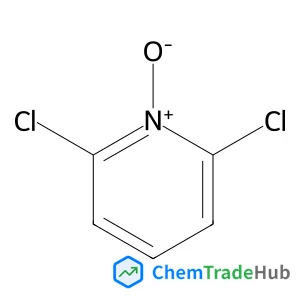
![(2S)-2-({[(2-Methyl-2-propanyl)oxy]carbonyl}amino)-4-pentynoic acid structure](https://static.chemtradehub.com/structs/630/63039-48-5-b66d.webp "(2S)-2-({[(2-Methyl-2-propanyl)oxy]carbonyl}amino)-4-pentynoic acid structure")
(2S)-2-({[(2-Methyl-2-propanyl)oxy]carbonyl}amino)-4-pentynoic acid
CAS Number:
63039-48-5
Molecular Formula:
C10H15NO4
Recommended Suppliers






Disclaimer
This page provides academic journal information for reference and research purposes only. We are not affiliated with any journal publishers and do not handle publication submissions. For publication-related inquiries, please contact the respective journal publishers directly.
If you notice any inaccuracies in the information displayed, please contact us at support@chemtradehub.com. We will promptly review and address your concerns.