












Rate coefficients and production of vibrationally excited HCl from the reactions of chlorine atoms with methanol, ethanol, acetaldehyde and formaldehyde
Literature Information
Publication Date
2004-03-26
DOI
10.1039/B402167C
Impact Factor
3.676
Authors
Paul W. Seakins, John J. Orlando, Geoffrey S. Tyndall
View Original
Abstract
Room temperature rate coefficients have been determined for the reactions of Cl (2P3/2) atoms with methanol, ethanol, formaldehyde and acetaldehyde. Cl atoms were produced by laser flash photolysis of molecular chlorine, in the presence of oxygen to prevent chain chemistry. IR emission from vibrationally excited HCl was observed for all reagents. For the reactions with methanol and acetaldehyde the kinetics have been determined by both IR diode laser absorption spectroscopy (kCl+CH3OH = (5.83 ± 0.77) × 10−11 cm3 molecule−1 s−1kCl+CH3CHO = (7.7 ± 1.1) × 10−11 cm3 molecule−1 s−1) and IR chemiluminescence (kCl+CH3OH = (5.38 ± 0.25) × 10−11 cm3 molecule−1 s−1, kCl+CH3CHO = (8.8 ± 1.5) × 10−11 cm3 molecule−1 s−1. For ethanol and formaldehyde IR chemiluminescence measurements gave kCl+HCHO = (6.98 ± 0.69) × 10−11 cm3 molecule−1 s−1 and kCl+C2H5OH = (1.02 ± 0.19) × 10−10 cm3 molecule−1 s−1. The fraction of vibrationally excited HCl was determined relative to that of acetaldehyde and when put on an absolute scale the values for methanol, ethanol and formaldehyde were: 0.25 ± 0.04, 0.21 ± 0.03 and 0.91 ± 0.14 respectively.
Related Literature
Bias-stress effects in organic field-effect transistors based on self-assembled monolayer nanodielectrics
Florian Colléaux, James M. Ball, Paul H. Wöbkenberg, Peter J. Hotchkiss, Seth R. Marder, Thomas D. Anthopoulos
2011-06-20
Paper
DOI: 10.1039/C1CP20769E
A statistical approach to inelastic electron tunneling spectroscopy on fullerene-terminated molecules
Jakob Kryger Sørensen, Emanuel Lörtscher, Tom Vosch, Heike Riel, Kristine Kilså, Thomas Bjørnholm, Herre van der Zant
2011-06-23
Paper
DOI: 10.1039/C1CP20861F
Double layer capacitance of anode/solid-electrolyte interfaces
2011-07-25
Paper
DOI: 10.1039/C1CP20508K
Hierarchical micro/nano structures of carbon composites as anodes for microbial fuel cells
Yong Zhao
2011-07-25
Paper
DOI: 10.1039/C1CP21813A
Molecular dynamics studies of native and substituted cyclodextrins in different media: 1. Charge derivation and force field performances
Christine Cézard, Frédéric Aubry, Florence Djedaïni-Pilard, François-Yves Dupradeau
2011-07-26
Paper
DOI: 10.1039/C1CP20854C
QM/MM calculation of protein magnetic shielding tensors with generalized hybrid-orbital method: A GIAO approach
Yoshinobu Akinaga, Jaewoon Jung, Seiichiro Ten-no
2011-07-15
Paper
DOI: 10.1039/C1CP21001G
Covalent networks through on-surface chemistry in ultra-high vacuum: state-of-the-art and recent developments
2011-05-09
Perspective
DOI: 10.1039/C1CP20700H
Platinum-nanogaps for single-molecule electronics: room-temperature stability
Ferry Prins, Ahson J. Shaikh, Jan H. van Esch, Rienk Eelkema, Herre S. J. van der Zant
2011-05-09
Paper
DOI: 10.1039/C1CP20555B
Understanding microsolvation of Li+: structural and energetical analyses
Jonathan Romero, Andres Reyes, Jorge David, Albeiro Restrepo
2011-07-27
Paper
DOI: 10.1039/C1CP20903E
Spin seebeck coefficient of a molecular spin pump
Jonas Fransson, Michael Galperin
2011-06-07
Paper
DOI: 10.1039/C1CP20720B
You might also like
Compound Q&A
What are the main uses of 1-(3-Aminophenyl)-3-[(3R)-1-(3,3-dimethyl-2-oxobutyl)-2-oxo-5-(2-pyridinyl)-2,3-dihydro-1H-1,4-benzodiazepin-3-yl]urea (CAS: 155412-88-7)?
This compound is mainly used as an intermediate in the synthesis of antipsychoti...
155412-88-71-(3-Aminophenyl)-3-...
Compound Q&A
How should waste containing 1-(D-Ribofuranosyl)-1,4-dihydro-3-pyridinecarboxamide (CAS: 19132-12-8) be handled?
Waste containing 1-(D-Ribofuranosyl)-1,4-dihydro-3-pyridinecarboxamide (CAS: 191...
19132-12-81-(D-Ribofuranosyl)-...
Compound Q&A
What regulatory guidelines apply to 2-Methyl-2-propanyl 3-bromo-3-(hydroxymethyl)-1-azetidinecarboxylate (CAS: 2007919-81-3)?
2-Methyl-2-propanyl 3-bromo-3-(hydroxymethyl)-1-azetidinecarboxylate (CAS: 20079...
2007919-81-32-Methyl-2-propanyl ...
Compound Q&A
What is N-(4-Chloro-2-pyridinyl)acetamide (CAS: 245056-66-0)?
N-(4-Chloro-2-pyridinyl)acetamide (CAS: 245056-66-0) is a chemical compound with...
245056-66-0N-(4-Chloro-2-pyridi...
Compound Q&A
What is 5-Chloro-2-hydroxybenzoic acid (CAS: 321-14-2)?
5-Chloro-2-hydroxybenzoic acid, also known as 5-chlorosalicylic acid, is an arom...
321-14-25-Chloro-2-hydroxybe...
Compound Q&A
What precautions should be taken when handling 1,1-Dichloro-1-fluoroethane (CAS: 1717-00-6)?
When handling 1,1-Dichloro-1-fluoroethane (CAS: 1717-00-6), it is important to u...
1717-00-61,1-Dichloro-1-fluor...
Compound Q&A
What are the physical and chemical properties of Fmoc-(2S,3R)-3-phenylpyrrolidine-2-carboxylic acid (CAS: 281655-32-1)?
Fmoc-(2S,3R)-3-phenylpyrrolidine-2-carboxylic acid is a white crystalline solid ...
281655-32-1Fmoc-(2S,3R)-3-pheny...
Compound Q&A
What are the main uses of 4-Amino-5-bromo-2-pyridinecarboxylic acid (CAS: 1363381-01-4)?
4-Amino-5-bromo-2-pyridinecarboxylic acid is primarily used as a precursor in th...
1363381-01-44-Amino-5-bromo-2-py...
Compound Q&A
What precautions should be taken when handling (S)-tert-butyl 2-((2-(4-bromophenyl)-2-oxoethyl)carbamoyl)pyrrolidine-1-carboxylate (CAS: 1007881-98-2)?
Handling this compound should be done with personal protective equipment (PPE) i...
1007881-98-2(S)-tert-butyl 2-((2...
Compound Q&A
What precautions should be taken when handling 8-bromo-2,2-dimethyl-3,4-dihydro-2H-1,4-benzoxazin-3-one (CAS: 688363-73-7)?
When handling 8-bromo-2,2-dimethyl-3,4-dihydro-2H-1,4-benzoxazin-3-one, use prop...
688363-73-78-bromo-2,2-dimethyl...
Source Journal
Physical Chemistry Chemical Physics

CiteScore:
5.5
Self-citation Rate:
10.3%
Articles per Year:
3036
Physical Chemistry Chemical Physics (PCCP) is an international journal co-owned by 19 physical chemistry and physics societies from around the world. This journal publishes original, cutting-edge research in physical chemistry, chemical physics and biophysical chemistry. To be suitable for publication in PCCP, articles must include significant innovation and/or insight into physical chemistry; this is the most important criterion that reviewers and Editors will judge against when evaluating submissions. The journal has a broad scope and welcomes contributions spanning experiment, theory, computation and data science. Topical coverage includes spectroscopy, dynamics, kinetics, statistical mechanics, thermodynamics, electrochemistry, catalysis, surface science, quantum mechanics, quantum computing and machine learning. Interdisciplinary research areas such as polymers and soft matter, materials, nanoscience, energy, surfaces/interfaces, and biophysical chemistry are welcomed if they demonstrate significant innovation and/or insight into physical chemistry. Joined experimental/theoretical studies are particularly appreciated when complementary and based on up-to-date approaches.
Recommended Compounds
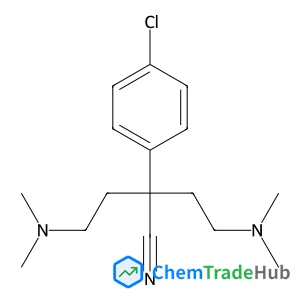
2-(4-Chlorophenyl)-4-(dimethylamino)-2-(2-(dimethylamino)ethyl)butanenitrile
CAS Number:
1246816-57-8
Molecular Formula:
C16H24ClN3
Recommended Suppliers






Disclaimer
This page provides academic journal information for reference and research purposes only. We are not affiliated with any journal publishers and do not handle publication submissions. For publication-related inquiries, please contact the respective journal publishers directly.
If you notice any inaccuracies in the information displayed, please contact us at support@chemtradehub.com. We will promptly review and address your concerns.