












![1-[3-(4-Morpholinylsulfonyl)phenyl]methanamine structure](https://static.chemtradehub.com/structs/933/933989-32-3-51af.webp "1-[3-(4-Morpholinylsulfonyl)phenyl]methanamine structure")
Non-template hydrothermal route derived mesoporous Ce0.2Zr0.8O2 nanosized powders with blue-shifted UV absorption and high CO conversion activity
Literature Information
Publication Date
2004-01-27
DOI
10.1039/B314885H
Impact Factor
3.676
Authors
Rui Si, Ya-Wen Zhang, Chao-Xian Xiao, Shi-Jie Li, Bing-Xiong Lin, Yuan Kou, Chun-Hua Yan
View Original
Abstract
Mesoporous Ce0.2Zr0.8O2 nanosized powders were synthesized via a hydrothermal method in the presence of urea without any templates using a trivalent cerium salt as the starting material. The analyses by medium-angle powder X-ray diffraction (PXRD) and vis-Raman spectroscopy showed that the Ce0.2Zr0.8O2 powders were solid solutions of pure tetragonal phase, whether as-prepared at 160 °C or calcined at 773–1273 K. By low-angle PXRD and transmission electron microscopy, the as-prepared Ce0.2Zr0.8O2 showed a short-range ordered mesostructure probably as a result of the natural agglomeration of uniform nanoparticles upon hydrothermal treatment. The as-prepared powders had high surface areas (232–281 m2 g−1) and narrow pore size distributions (3.5–4.0 nm), according to the measurements of nitrogen adsorption. After calcining at 773 K, this mesostructure was retained to some degree with lower surface areas (66–75 m2 g−1) and larger pore sizes (5.1–7.2 nm). Determined by X-ray photoelectron spectroscopy, the numbers of oxygen vacancies (0.025–0.037) on the nanocrystalline surface was high for both as-prepared and calcined Ce0.2Zr0.8O2. UV-vis absorption measurements showed that the band gap energy of the as-prepared Ce0.2Zr0.8O2 nanocrystals was distinctly blue-shifted compared with the bulk value due to the quantum size effect. The catalytic tests demonstrated that the Ce0.2Zr0.8O2 nanosized powders synthesized at 160 °C showed higher thermal stability in terms of surface area and phase composition, and higher catalytic activity for CO conversion than that synthesized at 140 °C. Among all the catalysts tested, the mesostructured one with the highest surface area and the largest pore volume displayed the highest oxygen storage capacity of 233 μmol CO g−1 at 773 K, and the lowest 50% conversion temperature of 641 K.
Recommended Journals
Related Literature
Characterization of the binding interactions between EvaGreen dye and dsDNA
L. C. T. Shoute, G. R. Loppnow
2018-01-25
Paper
DOI: 10.1039/C7CP06058K
Tuning nuclear depolarization under MAS by electron T1e
Alicia Lund, Asif Equbal
2018-09-05
Paper
DOI: 10.1039/C8CP04167A
Influences of the molecular fuel structure on combustion reactions towards soot precursors in selected alkane and alkene flames
Lena Ruwe, Nils Hansen, Katharina Kohse-Höinghaus
2018-02-02
Paper
DOI: 10.1039/C7CP07743B
Hexagonal SiC with spatially separated active sites on polar and nonpolar facets achieving enhanced hydrogen production from photocatalytic water reduction
Ning Liu, Zhongnan Guo, Wenjun Wang, Liwei Guo, Wenxia Yuan
2018-01-17
Paper
DOI: 10.1039/C7CP08363G
Photoprotection or photodamage: a direct observation of nonradiative dynamics from 2-ethylhexyl 4-dimethylaminobenzoate sunscreen agent
Chensheng Ma, Chris Tsz-Leung Chan, Ruth Chau-Ting Chan, Allen Ka-Wa Wong, Bowie Po-Yee Chung, Wai-Ming Kwok
2018-09-05
Paper
DOI: 10.1039/C8CP04447C
The excess electron at polyethylene interfaces
Fernan Saiz, David Cubero, Nick Quirke
2018-07-27
Paper
DOI: 10.1039/C8CP01330F
Cl-Loss dynamics in the dissociative photoionization of CF3Cl with threshold photoelectron–photoion coincidence imaging
Xiangkun Wu, Guoqiang Tang, Hanhui Zhang, Xiaoguo Zhou, Shilin Liu, Fuyi Liu, Liusi Sheng, Bing Yan
2018-01-31
Paper
DOI: 10.1039/C7CP07502B
Synergism of fictitious forces on nickel cobaltite nanofibers: electrospinning forces revisited
B. Sachin Kumar, Sreeram K. Kalpathy, S. Anandhan
2018-01-23
Paper
DOI: 10.1039/C7CP07435B
Revisiting absorption and electronic circular dichroism spectra of cholesterol in solution: a joint experimental and theoretical study
Andrea Bonvicini, Laure Guilhaudis, Vincent Tognetti, Didier Desmaële, Nathalie Sauvonnet, Hassan Oulyadi, Laurent Joubert
2018-02-06
Paper
DOI: 10.1039/C7CP07713K
Hydrogen detachment driven by a repulsive 1πσ* state – an electron localization function study of 3-amino-1,2,4-triazole
Andrzej Bil, Zdzisław Latajka, Malgorzata Biczysko
2018-01-16
Paper
DOI: 10.1039/C7CP06744E
You might also like
Compound Q&A
What are the main uses of 1-(3-Aminophenyl)-3-[(3R)-1-(3,3-dimethyl-2-oxobutyl)-2-oxo-5-(2-pyridinyl)-2,3-dihydro-1H-1,4-benzodiazepin-3-yl]urea (CAS: 155412-88-7)?
This compound is mainly used as an intermediate in the synthesis of antipsychoti...
155412-88-71-(3-Aminophenyl)-3-...
Compound Q&A
How should waste containing 1-(D-Ribofuranosyl)-1,4-dihydro-3-pyridinecarboxamide (CAS: 19132-12-8) be handled?
Waste containing 1-(D-Ribofuranosyl)-1,4-dihydro-3-pyridinecarboxamide (CAS: 191...
19132-12-81-(D-Ribofuranosyl)-...
Compound Q&A
What regulatory guidelines apply to 2-Methyl-2-propanyl 3-bromo-3-(hydroxymethyl)-1-azetidinecarboxylate (CAS: 2007919-81-3)?
2-Methyl-2-propanyl 3-bromo-3-(hydroxymethyl)-1-azetidinecarboxylate (CAS: 20079...
2007919-81-32-Methyl-2-propanyl ...
Compound Q&A
What is N-(4-Chloro-2-pyridinyl)acetamide (CAS: 245056-66-0)?
N-(4-Chloro-2-pyridinyl)acetamide (CAS: 245056-66-0) is a chemical compound with...
245056-66-0N-(4-Chloro-2-pyridi...
Compound Q&A
What is 5-Chloro-2-hydroxybenzoic acid (CAS: 321-14-2)?
5-Chloro-2-hydroxybenzoic acid, also known as 5-chlorosalicylic acid, is an arom...
321-14-25-Chloro-2-hydroxybe...
Compound Q&A
What precautions should be taken when handling 1,1-Dichloro-1-fluoroethane (CAS: 1717-00-6)?
When handling 1,1-Dichloro-1-fluoroethane (CAS: 1717-00-6), it is important to u...
1717-00-61,1-Dichloro-1-fluor...
Compound Q&A
What are the physical and chemical properties of Fmoc-(2S,3R)-3-phenylpyrrolidine-2-carboxylic acid (CAS: 281655-32-1)?
Fmoc-(2S,3R)-3-phenylpyrrolidine-2-carboxylic acid is a white crystalline solid ...
281655-32-1Fmoc-(2S,3R)-3-pheny...
Compound Q&A
What are the main uses of 4-Amino-5-bromo-2-pyridinecarboxylic acid (CAS: 1363381-01-4)?
4-Amino-5-bromo-2-pyridinecarboxylic acid is primarily used as a precursor in th...
1363381-01-44-Amino-5-bromo-2-py...
Compound Q&A
What precautions should be taken when handling (S)-tert-butyl 2-((2-(4-bromophenyl)-2-oxoethyl)carbamoyl)pyrrolidine-1-carboxylate (CAS: 1007881-98-2)?
Handling this compound should be done with personal protective equipment (PPE) i...
1007881-98-2(S)-tert-butyl 2-((2...
Compound Q&A
What precautions should be taken when handling 8-bromo-2,2-dimethyl-3,4-dihydro-2H-1,4-benzoxazin-3-one (CAS: 688363-73-7)?
When handling 8-bromo-2,2-dimethyl-3,4-dihydro-2H-1,4-benzoxazin-3-one, use prop...
688363-73-78-bromo-2,2-dimethyl...
Source Journal
Physical Chemistry Chemical Physics

CiteScore:
5.5
Self-citation Rate:
10.3%
Articles per Year:
3036
Physical Chemistry Chemical Physics (PCCP) is an international journal co-owned by 19 physical chemistry and physics societies from around the world. This journal publishes original, cutting-edge research in physical chemistry, chemical physics and biophysical chemistry. To be suitable for publication in PCCP, articles must include significant innovation and/or insight into physical chemistry; this is the most important criterion that reviewers and Editors will judge against when evaluating submissions. The journal has a broad scope and welcomes contributions spanning experiment, theory, computation and data science. Topical coverage includes spectroscopy, dynamics, kinetics, statistical mechanics, thermodynamics, electrochemistry, catalysis, surface science, quantum mechanics, quantum computing and machine learning. Interdisciplinary research areas such as polymers and soft matter, materials, nanoscience, energy, surfaces/interfaces, and biophysical chemistry are welcomed if they demonstrate significant innovation and/or insight into physical chemistry. Joined experimental/theoretical studies are particularly appreciated when complementary and based on up-to-date approaches.
Recommended Compounds
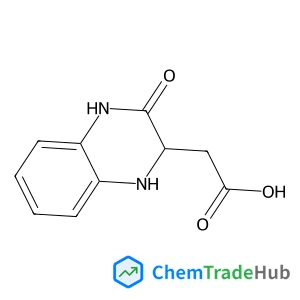
(3-Oxo-1,2,3,4-tetrahydro-2-quinoxalinyl)acetic acid
CAS Number:
136584-14-0
Molecular Formula:
C10H10N2O3
![Methyl 4-({[(2-methyl-2-propanyl)oxy]carbonyl}amino)bicyclo[2.2.2]octane-1-carboxylate structure](https://static.chemtradehub.com/structs/943/943845-74-7-b7e5.webp "Methyl 4-({[(2-methyl-2-propanyl)oxy]carbonyl}amino)bicyclo[2.2.2]octane-1-carboxylate structure")
Methyl 4-({[(2-methyl-2-propanyl)oxy]carbonyl}amino)bicyclo[2.2.2]octane-1-carboxylate
CAS Number:
943845-74-7
Molecular Formula:
C15H25NO4
Recommended Suppliers




Disclaimer
This page provides academic journal information for reference and research purposes only. We are not affiliated with any journal publishers and do not handle publication submissions. For publication-related inquiries, please contact the respective journal publishers directly.
If you notice any inaccuracies in the information displayed, please contact us at support@chemtradehub.com. We will promptly review and address your concerns.