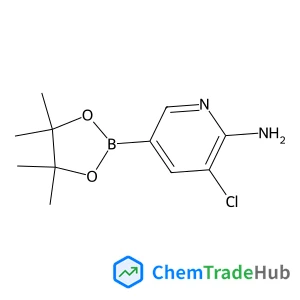
3-Chloro-5-(4,4,5,5-tetramethyl-1,3,2-dioxaborolan-2-yl)-2-pyridinamine
CAS Number:
1032758-99-8
Molecular Formula:
C11H16BClN2O2
Alberto Vailati
We present a series of novel, unconventional optical techniques that are capable of performing measurements of low and ultra-low angle scattered light, and are therefore of potential interest for colloid physics and complex fluids in general. These techniques determine the angular intensity distribution through a spatial frequency spectral analysis of the signal recorded in the near field of the scattered light. Experimental results and a comparative discussion of these techniques are presented.
Andrew Das Arulsamy, Zlatko Kregar, Kristina Eleršič, Martina Modic, Uma Shankar Subramani
DOI: 10.1039/C1CP20138G
Peilin Liao, Emily A. Carter
DOI: 10.1039/C1CP20829B
Juan Pablo Catalán
DOI: 10.1039/C1CP21380F
M. Isabel Burguete, Eduardo García-Verdugo, Santiago V. Luis, Julián A. Restrepo
DOI: 10.1039/C1CP20970A
Bounphanh Tonpheng, Junchun Yu, Ove Andersson
DOI: 10.1039/C1CP20785G
Hongpeng You
DOI: 10.1039/C1CP20635D
Natalya Schmerl, Gunther Andersson
DOI: 10.1039/C1CP20734B
This compound is mainly used as an intermediate in the synthesis of antipsychoti...
Waste containing 1-(D-Ribofuranosyl)-1,4-dihydro-3-pyridinecarboxamide (CAS: 191...
2-Methyl-2-propanyl 3-bromo-3-(hydroxymethyl)-1-azetidinecarboxylate (CAS: 20079...
N-(4-Chloro-2-pyridinyl)acetamide (CAS: 245056-66-0) is a chemical compound with...
5-Chloro-2-hydroxybenzoic acid, also known as 5-chlorosalicylic acid, is an arom...
When handling 1,1-Dichloro-1-fluoroethane (CAS: 1717-00-6), it is important to u...
Fmoc-(2S,3R)-3-phenylpyrrolidine-2-carboxylic acid is a white crystalline solid ...
4-Amino-5-bromo-2-pyridinecarboxylic acid is primarily used as a precursor in th...
Handling this compound should be done with personal protective equipment (PPE) i...
When handling 8-bromo-2,2-dimethyl-3,4-dihydro-2H-1,4-benzoxazin-3-one, use prop...

Physical Chemistry Chemical Physics (PCCP) is an international journal co-owned by 19 physical chemistry and physics societies from around the world. This journal publishes original, cutting-edge research in physical chemistry, chemical physics and biophysical chemistry. To be suitable for publication in PCCP, articles must include significant innovation and/or insight into physical chemistry; this is the most important criterion that reviewers and Editors will judge against when evaluating submissions. The journal has a broad scope and welcomes contributions spanning experiment, theory, computation and data science. Topical coverage includes spectroscopy, dynamics, kinetics, statistical mechanics, thermodynamics, electrochemistry, catalysis, surface science, quantum mechanics, quantum computing and machine learning. Interdisciplinary research areas such as polymers and soft matter, materials, nanoscience, energy, surfaces/interfaces, and biophysical chemistry are welcomed if they demonstrate significant innovation and/or insight into physical chemistry. Joined experimental/theoretical studies are particularly appreciated when complementary and based on up-to-date approaches.
![2,6-Bis({(2R)-2-[hydroxy(diphenyl)methyl]-1-pyrrolidinyl}methyl)-4-methylphenol structure](https://static.chemtradehub.com/structs/877/877395-58-9-70bf.webp "2,6-Bis({(2R)-2-[hydroxy(diphenyl)methyl]-1-pyrrolidinyl}methyl)-4-methylphenol structure")