













Hydration and structure—the two sides of the insulin aggregation process
Literature Information
Publication Date
2004-02-10
DOI
10.1039/B314086E
Impact Factor
3.676
Authors
Wojciech Dzwolak, Revanur Ravindra, Roland Winter
View Original
Abstract
Aggregation of bovine insulin under monomer, and dimer-promoting conditions has been probed by FT-IR spectroscopy and DSC/PPC calorimetry. This approach enabled linking of characteristic aggregation-hallmarking conformational events (such as partial unfolding, and subsequent refolding into aggregated β-strands) to different stages of protein hydration. Aggregation of insulin in 20% acetic acid occurs at a markedly lower temperature than in pure water and is further enhanced in the presence of charge-shielding ions (0.1 M NaCl). While acetic acid makes the protein molecule more permissive to the solvent penetration (seen as the enhanced H/D-exchange), NaCl does not have this effect. The calorimetric data reveals that, while the aggregation itself is exothermic, in the absence of the co-solvent it is preceded by an endothermic transition. In either case, the negative heat capacity changes suggest a substantial reduction in the number of water–protein contacts upon aggregation. This has been supported by pressure perturbation calorimetry, which showed a simultaneous release of water molecules bound to the protein. The aggregation of insulin appears to be driven mostly by hydrophobic interactions and, as such, involves a rearrangement of hydrophobic side-chain amino acid residues that leads to the overall reduction in number of unfavorable protein–water contacts. The study points to the intricate nature of the acetic acid effect on insulin aggregation, which is likely to involve changing the structure of the solvating water, and direct binding to the protein.
Related Literature
Synthesis and evaluation of N,S-compounds as chiral ligands for transfer hydrogenation of acetophenone
Jenny K. Ekegren, Peter Roth, Klas Källström, Tibor Tarnai, Pher G. Andersson
2002-12-09
Paper
DOI: 10.1039/B208907F
Möbius bis and tris-spiroaromatic systems
David Hall, Henry S. Rzepa
2002-12-02
Paper
DOI: 10.1039/B210415F
Eugenunilones A–H: rearranged sesquiterpenoids from Eugenia uniflora
Mu Chen, Jia-Qing Cao, Song Ang, Ting-Ni Zeng, Ni-Ping Li, Tang-Jia Yang, Jun-Shan Liu, Yan Wu, Wen-Cai Ye, Lei Wang
2021-12-03
Research Article
DOI: 10.1039/D1QO01629F
Asymmetric fluorination of indanone-2-carboxylates using a polystyrene-supported diphenylamine-linked bis(oxazoline) complex
Biao Wang, Yifeng Wang, Yidong Jiang, Mingming Chu, Suosuo Qi, Wanzhen Ju, Danqian Xu
2018-09-28
Paper
DOI: 10.1039/C8OB01943F
Ru-Catalyzed dehydrogenative synthesis of antimalarial arylidene oxindoles
Girish Singh Bisht, Akanksha M. Pandey, Moreshwar B. Chaudhari, Sandip G. Agalave, Abhishek Kanyal, Krishanpal Karmodiya, Boopathy Gnanaprakasam
2018-09-18
Paper
DOI: 10.1039/C8OB01852A
Organic dye-photocatalyzed fluoroalkylation of heteroarene-N-oxide derivatives
Beatriz Lantaño, Sebastián Barata-Vallejo, Al Postigo
2018-08-29
Paper
DOI: 10.1039/C8OB01653D
Synthesis, chiroptical properties and absolute configuration of spiro[1,3-benzodioxole-methanocyclooct[b]indole]
Eugenius Butkus, Julė Malinauskienė, Sigitas Stončius
2002-12-09
Paper
DOI: 10.1039/B208422H
Synthesis of 1,3-dithiol-2-ones as proligands related to molybdopterin
Ben Bradshaw, David Collison, C. David Garner, John A. Joule
2002-11-27
Paper
DOI: 10.1039/B209217D
Catalytic asymmetric Henry reactions of silyl nitronates with aldehydes
Tine Risgaard, Kurt V. Gothelf, Karl Anker Jørgensen
2002-12-03
Paper
DOI: 10.1039/B208859M
Refined methods for the synthesis of meso-substituted A3- and trans-A2B-corroles
Daniel T. Gryko, Beata Koszarna
2002-12-09
Paper
DOI: 10.1039/B208950E
You might also like
Compound Q&A
Is 6-(3-Fluorophenyl)picolinic acid (CAS: 887982-40-3) safe?
6-(3-Fluorophenyl)picolinic acid is generally considered safe for laboratory use...
887982-40-36-(3-Fluorophenyl)pi...
Compound Q&A
What industries use (3R)-3-Pyrrolidinol (CAS: 2799-21-5)?
(3R)-3-Pyrrolidinol is used in the pharmaceutical industry as a precursor for dr...
2799-21-5(3R)-3-Pyrrolidinol
Compound Q&A
What precautions should be taken when handling (4R,5R)-4,5-Diethoxycarbonyl-2,2-dimethyldioxolane (CAS: 59779-75-8)?
When handling (4R,5R)-4,5-Diethoxycarbonyl-2,2-dimethyldioxolane (CAS: 59779-75-...
59779-75-8(4R,5R)-4,5-Diethoxy...
Compound Q&A
How is 1-(6-Chloroimidazo[1,2-b]pyridazin-3-yl)ethanone (CAS: 90734-71-7) typically synthesized?
1-(6-Chloroimidazo[1,2-b]pyridazin-3-yl)ethanone is often synthesized via a mult...
90734-71-71-(6-Chloroimidazo[1...
Compound Q&A
What is the market or research trend for N-Ethyl-3,4-dimethylbenzylamine (CAS: 39180-83-1)?
The market for N-Ethyl-3,4-dimethylbenzylamine (CAS: 39180-83-1) remains steady,...
39180-83-1N-Ethyl-3,4-dimethyl...
Compound Q&A
What is Tert-butyl 3-(pyrrolidin-1-yl)azetidine-1-carboxylate (CAS: 1019008-21-9)?
Tert-butyl 3-(pyrrolidin-1-yl)azetidine-1-carboxylate is a chemical compound wit...
1019008-21-9Tert-butyl 3-(pyrrol...
Compound Q&A
What regulatory guidelines apply to 1-Bromo-3-chloro-2,4-dimethoxybenzene (CAS: 1228956-93-1)?
1-Bromo-3-chloro-2,4-dimethoxybenzene (CAS: 1228956-93-1) falls under the classi...
1228956-93-11-Bromo-3-chloro-2,4...
Compound Q&A
Is 8-Bromo-2-methyl-3,4-dihydroisoquinolin-1(2H)-one (CAS: 1368622-07-4) safe?
The safety of 8-Bromo-2-methyl-3,4-dihydroisoquinolin-1(2H)-one (CAS: 1368622-07...
1368622-07-48-Bromo-2-methyl-3,4...
Compound Q&A
Is Benzyl [(3S)-2,6-dioxo-3-piperidinyl]carbamate (CAS: 22785-43-9) safe?
Benzyl [(3S)-2,6-dioxo-3-piperidinyl]carbamate is generally safe when handled wi...
22785-43-9Benzyl [(3S)-2,6-dio...
Compound Q&A
How should 1-{[4-(4,4,5,5-Tetramethyl-1,3,2-dioxaborolan-2-yl)phenyl]sulfonyl}pyrrolidine (CAS: 928657-21-0) be stored?
1-{[4-(4,4,5,5-Tetramethyl-1,3,2-dioxaborolan-2-yl)phenyl]sulfonyl}pyrrolidine s...
928657-21-01-{[4-(4,4,5,5-Tetra...
Source Journal
Physical Chemistry Chemical Physics

CiteScore:
5.5
Self-citation Rate:
10.3%
Articles per Year:
3036
Physical Chemistry Chemical Physics (PCCP) is an international journal co-owned by 19 physical chemistry and physics societies from around the world. This journal publishes original, cutting-edge research in physical chemistry, chemical physics and biophysical chemistry. To be suitable for publication in PCCP, articles must include significant innovation and/or insight into physical chemistry; this is the most important criterion that reviewers and Editors will judge against when evaluating submissions. The journal has a broad scope and welcomes contributions spanning experiment, theory, computation and data science. Topical coverage includes spectroscopy, dynamics, kinetics, statistical mechanics, thermodynamics, electrochemistry, catalysis, surface science, quantum mechanics, quantum computing and machine learning. Interdisciplinary research areas such as polymers and soft matter, materials, nanoscience, energy, surfaces/interfaces, and biophysical chemistry are welcomed if they demonstrate significant innovation and/or insight into physical chemistry. Joined experimental/theoretical studies are particularly appreciated when complementary and based on up-to-date approaches.
Recommended Compounds
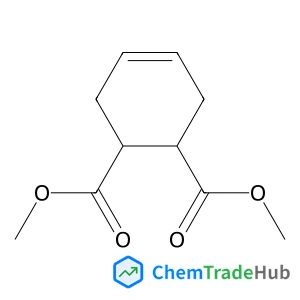
4-Cyclohexene-1,2-dicarboxylic acid, 1,2-dimethyl ester, (1R,2R)-rel-
CAS Number:
17673-68-6
Molecular Formula:
C10H14O4
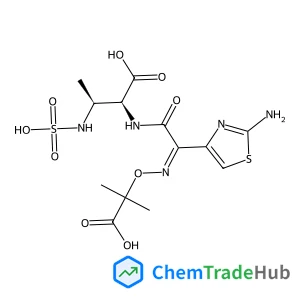
Aztreonam USP Related Compound A (Open-ring Aztreonam)
CAS Number:
87500-74-1
Molecular Formula:
C13H19N5O9S2
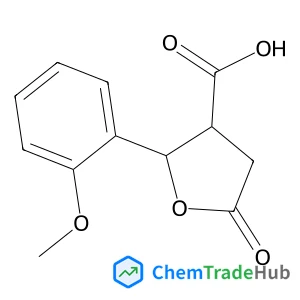
trans-2-(2-Methoxyphenyl)-5-oxotetrahydrofuran-3-carboxylic acid
CAS Number:
99226-02-5
Molecular Formula:
C12H12O5
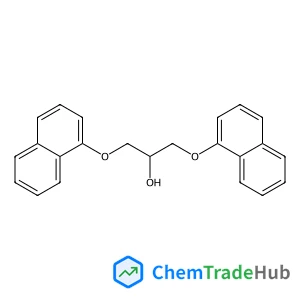
Recommended Suppliers





Disclaimer
This page provides academic journal information for reference and research purposes only. We are not affiliated with any journal publishers and do not handle publication submissions. For publication-related inquiries, please contact the respective journal publishers directly.
If you notice any inaccuracies in the information displayed, please contact us at support@chemtradehub.com. We will promptly review and address your concerns.