












The synthesis of tetra-acrylamido-calix[4]arene capsules
Literature Information
Publication Date
2003-08-20
DOI
10.1039/B304688E
Impact Factor
6.222
Authors
Nikolai Kuhnert, Adam Le-Gresley
View Original
Abstract
Upper rim substituted tetra-acrylamido-calix[4]arenes have been synthesised using the palladium catalysed Heck reaction; the compounds display solvent dependent aggregation in solution to form dimeric capsules stabilised by only eight amide CO–H–N hydrogen bonds and π–π interactions.
Related Literature
Posttranslational modifications of α-conotoxins: sulfotyrosine and C-terminal amidation stabilise structures and increase acetylcholine receptor binding
Thao N. T. Ho, Han Siean Lee, Shilpa Swaminathan, Lewis Goodwin, Nishant Rai, Brianna Ushay, Richard J. Lewis, K. Johan Rosengren, Anne C. Conibear
2021-07-26
Research Article
DOI: 10.1039/D1MD00182E
Microwave-assisted green synthesis of bile acid derivatives and evaluation of glucocorticoid receptor binding
Bojana R. Vasiljević, Edward T. Petri, Sofija S. Bekić, Andjelka S. Ćelić, Ljubica M. Grbović, Ksenija J. Pavlović
2020-11-19
Research Article
DOI: 10.1039/D0MD00311E
In vitro anti-diabetic assessment of guavanoic acid functionalized gold nanoparticles in regulating glucose transport using L6 rat skeletal muscle cells
K. Govindaraju
2020-06-05
Research Article
DOI: 10.1039/D0MD00125B
Synthesis of low-molecular weight fucoidan derivatives and their binding abilities to SARS-CoV-2 spike proteins
Tatsuki Koike, Aoi Sugimoto, Shuhei Kosono, Sumika Komaba, Yuko Kanno, Takashi Kitamura, Itsuki Anzai, Tokiko Watanabe, Daisuke Takahashi, Kazunobu Toshima
2021-09-07
Research Article
DOI: 10.1039/D1MD00264C
Elevated serum antibody responses to synthetic mycobacterial lipid antigens among UK farmers: an indication of exposure to environmental mycobacteria?
Alison Jones, Carys A. Davies, Samuel Fitch, Juma'a R. Al Dulayymi, James Gibbons, A. Prysor Williams, Mark S. Baird
2020-11-26
Research Article
DOI: 10.1039/D0MD00325E
Correction: Truncated S-MGBs: towards a parasite-specific and low aggregation chemotype
Daniel P. Brooke, Leah M. C. McGee, Federica Giordani, Jasmine M. Cross, Abedawn I. Khalaf, Craig Irving, Craig D. Shaw, Katharine C. Carter, Michael P. Barrett, Colin J. Suckling, Fraser J. Scott
2021-11-26
Correction
DOI: 10.1039/D1MD90044G
You might also like
Compound Q&A
What are the main uses of 1-(3-Aminophenyl)-3-[(3R)-1-(3,3-dimethyl-2-oxobutyl)-2-oxo-5-(2-pyridinyl)-2,3-dihydro-1H-1,4-benzodiazepin-3-yl]urea (CAS: 155412-88-7)?
This compound is mainly used as an intermediate in the synthesis of antipsychoti...
155412-88-71-(3-Aminophenyl)-3-...
Compound Q&A
How should waste containing 1-(D-Ribofuranosyl)-1,4-dihydro-3-pyridinecarboxamide (CAS: 19132-12-8) be handled?
Waste containing 1-(D-Ribofuranosyl)-1,4-dihydro-3-pyridinecarboxamide (CAS: 191...
19132-12-81-(D-Ribofuranosyl)-...
Compound Q&A
What regulatory guidelines apply to 2-Methyl-2-propanyl 3-bromo-3-(hydroxymethyl)-1-azetidinecarboxylate (CAS: 2007919-81-3)?
2-Methyl-2-propanyl 3-bromo-3-(hydroxymethyl)-1-azetidinecarboxylate (CAS: 20079...
2007919-81-32-Methyl-2-propanyl ...
Compound Q&A
What is N-(4-Chloro-2-pyridinyl)acetamide (CAS: 245056-66-0)?
N-(4-Chloro-2-pyridinyl)acetamide (CAS: 245056-66-0) is a chemical compound with...
245056-66-0N-(4-Chloro-2-pyridi...
Compound Q&A
What is 5-Chloro-2-hydroxybenzoic acid (CAS: 321-14-2)?
5-Chloro-2-hydroxybenzoic acid, also known as 5-chlorosalicylic acid, is an arom...
321-14-25-Chloro-2-hydroxybe...
Compound Q&A
What precautions should be taken when handling 1,1-Dichloro-1-fluoroethane (CAS: 1717-00-6)?
When handling 1,1-Dichloro-1-fluoroethane (CAS: 1717-00-6), it is important to u...
1717-00-61,1-Dichloro-1-fluor...
Compound Q&A
What are the physical and chemical properties of Fmoc-(2S,3R)-3-phenylpyrrolidine-2-carboxylic acid (CAS: 281655-32-1)?
Fmoc-(2S,3R)-3-phenylpyrrolidine-2-carboxylic acid is a white crystalline solid ...
281655-32-1Fmoc-(2S,3R)-3-pheny...
Compound Q&A
What are the main uses of 4-Amino-5-bromo-2-pyridinecarboxylic acid (CAS: 1363381-01-4)?
4-Amino-5-bromo-2-pyridinecarboxylic acid is primarily used as a precursor in th...
1363381-01-44-Amino-5-bromo-2-py...
Compound Q&A
What precautions should be taken when handling (S)-tert-butyl 2-((2-(4-bromophenyl)-2-oxoethyl)carbamoyl)pyrrolidine-1-carboxylate (CAS: 1007881-98-2)?
Handling this compound should be done with personal protective equipment (PPE) i...
1007881-98-2(S)-tert-butyl 2-((2...
Compound Q&A
What precautions should be taken when handling 8-bromo-2,2-dimethyl-3,4-dihydro-2H-1,4-benzoxazin-3-one (CAS: 688363-73-7)?
When handling 8-bromo-2,2-dimethyl-3,4-dihydro-2H-1,4-benzoxazin-3-one, use prop...
688363-73-78-bromo-2,2-dimethyl...
Source Journal
Chemical Communications

CiteScore:
8.6
Self-citation Rate:
4.7%
Articles per Year:
2458
ChemComm publishes urgent research which is of outstanding significance and interest to experts in the field, while also appealing to the journal’s broad chemistry readership. Our communication format is ideally suited to short, urgent studies that are of such importance that they require accelerated publication. Our scope covers all topics in chemistry, and research at the interface of chemistry and other disciplines (such as materials science, nanoscience, physics, engineering and biology) where there is a significant novelty in the chemistry aspects. Major topic areas covered include: Analytical Chemistry Catalysis Chemical Biology and medicinal chemistry Computational Chemistry and Machine Learning Energy and sustainable chemistry Environmental Chemistry Green Chemistry Inorganic Chemistry Materials Chemistry Nanoscience Organic Chemistry Physical Chemistry Polymer Chemistry Supramolecular Chemistry
Recommended Compounds
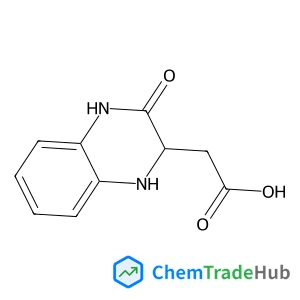
(3-Oxo-1,2,3,4-tetrahydro-2-quinoxalinyl)acetic acid
CAS Number:
136584-14-0
Molecular Formula:
C10H10N2O3
Recommended Suppliers





Disclaimer
This page provides academic journal information for reference and research purposes only. We are not affiliated with any journal publishers and do not handle publication submissions. For publication-related inquiries, please contact the respective journal publishers directly.
If you notice any inaccuracies in the information displayed, please contact us at support@chemtradehub.com. We will promptly review and address your concerns.