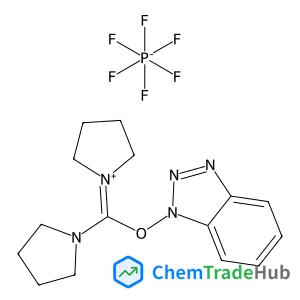
(1H-Benzotriazol-1-yloxy)(di-1-pyrrolidinyl)methylium hexafluorophosphate
CAS Number:
105379-24-6
Molecular Formula:
C15H21F6N5OP
Nanguo Liu, Darren R. Dunphy, Mark A. Rodriguez, Sarany Singer
A novel photoresponsive azobenzene-containing organosilane was synthesized via an isocyanato-amino coupling reaction, and its crystal structure was determined by X-ray crystallography.
DOI: 10.1039/C3CP50807B
Md Abdul Wahab, Jie Cui, Min Zhu
DOI: 10.1039/C3CP50515D
Motohiro Banno, Keisuke Tominaga
DOI: 10.1039/C2CP23647H
Navendu Bhatnagar, Ganesh Kamath, Jeffrey J. Potoff
DOI: 10.1039/C3CP44284E
Huifang Li, Paul Winget, Chad Risko, John S. Sears, Jean-Luc Brédas
DOI: 10.1039/C3CP50631B
Daniele Fazzi, Margherita Maiuri, Daniele Brida, Giulio Cerullo
DOI: 10.1039/C2CP23917E
Daniel Kinzel, Jesús González-Vázquez, Leticia González
DOI: 10.1039/C1CP22646K
Qiang Li, Yi-Xiang Qiu, Xian-Yang Chen
DOI: 10.1039/C2CP23225A
Valeska P. Ting, Paul F. Henry, Marc Schmidtmann, Chick C. Wilson, Mark T. Weller
DOI: 10.1039/C2CP40366H
Sean P. Berglund, Alexander J. E. Rettie, Son Hoang, C. Buddie Mullins
DOI: 10.1039/C2CP40807D
When handling 4-(2-Furylmethyl)thiomorpholine 1,1-dioxide (CAS: 79206-94-3), it ...
When handling 4-Chloro-N-[2-(4-morpholinyl)ethyl]benzamide (CAS: 71320-77-9), it...
Waste containing this compound (CAS: 62921-74-8) should be handled according to ...
Waste containing (S)-Methyl 2-amino-3-cyclohexylpropanoate should be collected i...
This compound can be synthesized using a multi-step process involving the conjug...
There are several alternatives to (2E)-3-(3,4-Dichlorophenyl)acrylic acid in syn...
Ethyl 6-(2-nitrophenyl)imidazo[2,1-b][1,3]thiazole-3-carboxylate (CAS: 925437-84...
Waste containing 2-(1,3-Thiazol-2-yl)ethanamine (CAS: 18453-07-1) should be coll...
Methyl 5-iodo-2-methylbenzoate can be synthesized through the iodination of meth...
5-Chloro[1,2,4]triazolo[1,5-a]pyridine is commonly synthesized via the condensat...

ChemComm publishes urgent research which is of outstanding significance and interest to experts in the field, while also appealing to the journal’s broad chemistry readership. Our communication format is ideally suited to short, urgent studies that are of such importance that they require accelerated publication. Our scope covers all topics in chemistry, and research at the interface of chemistry and other disciplines (such as materials science, nanoscience, physics, engineering and biology) where there is a significant novelty in the chemistry aspects. Major topic areas covered include: Analytical Chemistry Catalysis Chemical Biology and medicinal chemistry Computational Chemistry and Machine Learning Energy and sustainable chemistry Environmental Chemistry Green Chemistry Inorganic Chemistry Materials Chemistry Nanoscience Organic Chemistry Physical Chemistry Polymer Chemistry Supramolecular Chemistry
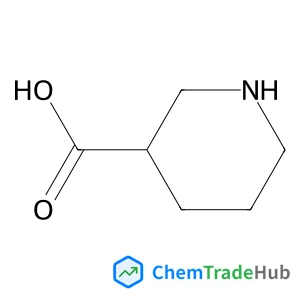
![5-Acetyl-2,3-dihydrobenzo[b]furan structure](https://static.chemtradehub.com/structs/908/90843-31-5-eea4.webp "5-Acetyl-2,3-dihydrobenzo[b]furan structure")