












Probing hydrogen positions in hydrous compounds: information from parametric neutron powder diffraction studies
Literature Information
Publication Date
2012-03-21
DOI
10.1039/C2CP40366H
Impact Factor
3.676
Authors
Valeska P. Ting, Paul F. Henry, Marc Schmidtmann, Chick C. Wilson, Mark T. Weller
View Original
Abstract
We demonstrate the extent to which modern detector technology, coupled with a high flux constant wavelength neutron source, can be used to obtain high quality diffraction data from short data collections, allowing the refinement of the full structures (including hydrogen positions) of hydrous compounds from in situ neutron powder diffraction measurements. The in situ thermodiffractometry and controlled humidity studies reported here reveal that important information on the reorientations of structural water molecules with changing conditions can be easily extracted, providing insight into the effects of hydrogen bonding on bulk physical properties. Using crystalline BaCl2·2H2O as an example system, we analyse the structural changes in the compound and its dehydration intermediates with changing temperature and humidity levels to demonstrate the quality of the dynamic structural information on the hydrogen atoms and associated hydrogen bonding that can be obtained without resorting to sample deuteration.
Related Literature
Correction: In situ synthesis of chiral AuNCs with aggregation-induced emission using glutathione and ceria precursor nanosheets for glutathione biosensing
Guoxing Wu, Alaa Eldin A. Salem, Lei Su, Bing Shi Li
2022-10-10
Correction
DOI: 10.1039/D2AN90082C
An electroactive fiber optic chip for spectroelectrochemical characterization of ultra-thin redox-active films
Brooke M. Beam, Neal R. Armstrong, Sergio B. Mendes
2008-12-19
Paper
DOI: 10.1039/B814338B
Vapor detection and vapor pressure measurements of fentanyl and fentanyl hydrochloride salt at ambient temperatures
Robert G. Ewing, Megan K. Nims, Kelsey A. Morrison, Garret L. Hart, Nancy M. Avalos, Elizabeth H. Denis
2022-09-28
Paper
DOI: 10.1039/D2AN01149B
Nanoparticle-induced potentiometric biosensing of NADH at copper ion-selective electrodes
Karin Y. Chumbimuni-Torres, Joseph Wang
2009-05-15
Paper
DOI: 10.1039/B902171J
High temperature liquid chromatography with monolithic capillary columns and pure watereluent
Tim J. Causon, Robert A. Shellie, Emily F. Hilder
2008-12-24
Communication
DOI: 10.1039/B815886J
A colorimetric chemical tongue detects and distinguishes between multiple analytes
Francis Buan Hong Lim, Tingjun Lei, Gabriella Fernandez, Nicole Lopez, Andre-Lorenz Chu, Allan Valiente, Abhignyan Nagesetti, Andy Nelson, Kerstin Schmidt, Ta Chen Chang, Obdulio Piloto
2022-10-17
Paper
DOI: 10.1039/D2AN01615J
Correction of axial chromatic aberrations in confocal Raman microspectroscopic measurements of a single microbial spore
Peter Lasch, Antje Hermelink, Dieter Naumann
2009-03-23
Paper
DOI: 10.1039/B822553B
Fabrication of an amperometric bienzyme biosensing system with neutral red functionalized carbon nanotubes
D. R. Shobha Jeykumari, S. Sriman Narayanan
2009-05-19
Paper
DOI: 10.1039/B820040H
Combining multidimensional chromatography-mass spectrometry and feature-based molecular networking methods for the systematic characterization of compounds in the supercritical fluid extract of Tripterygium wilfordii Hook F
Dian Liu, Feifei Huang, Ting Peng
2022-11-28
Paper
DOI: 10.1039/D2AN01471H
You might also like
Compound Q&A
What precautions should be taken when handling 4-(2-Furylmethyl)thiomorpholine 1,1-dioxide (CAS: 79206-94-3)?
When handling 4-(2-Furylmethyl)thiomorpholine 1,1-dioxide (CAS: 79206-94-3), it ...
79206-94-34-(2-Furylmethyl)thi...
Compound Q&A
What precautions should be taken when handling 4-Chloro-N-[2-(4-morpholinyl)ethyl]benzamide (CAS: 71320-77-9)?
When handling 4-Chloro-N-[2-(4-morpholinyl)ethyl]benzamide (CAS: 71320-77-9), it...
71320-77-94-Chloro-N-[2-(4-mor...
Compound Q&A
How should waste containing 2-[2-(2-Methoxyethoxy)ethoxy]ethyl 4-methylbenzenesulfonate (CAS: 62921-74-8) be handled?
Waste containing this compound (CAS: 62921-74-8) should be handled according to ...
62921-74-82-[2-(2-Methoxyethox...
Compound Q&A
How should waste containing (S)-Methyl 2-amino-3-cyclohexylpropanoate be handled?
Waste containing (S)-Methyl 2-amino-3-cyclohexylpropanoate should be collected i...
40056-18-6(S)-Methyl 2-amino-3...
Compound Q&A
How is 5-({4-[(2S,4R)-4-Hydroxy-2-methyltetrahydro-2H-pyran-4-yl]-2-thienyl}sulfanyl)-1-methyl-1,3-dihydro-2H-indol-2-one (CAS: 166882-70-8) typically synthesized?
This compound can be synthesized using a multi-step process involving the conjug...
166882-70-85-({4-[(2S,4R)-4-Hyd...
Compound Q&A
Are there alternatives to (2E)-3-(3,4-Dichlorophenyl)acrylic acid (CAS: 7312-27-8) in synthesis?
There are several alternatives to (2E)-3-(3,4-Dichlorophenyl)acrylic acid in syn...
7312-27-8(2E)-3-(3,4-Dichloro...
Compound Q&A
How should Ethyl 6-(2-nitrophenyl)imidazo[2,1-b][1,3]thiazole-3-carboxylate (CAS: 925437-84-9) be stored?
Ethyl 6-(2-nitrophenyl)imidazo[2,1-b][1,3]thiazole-3-carboxylate (CAS: 925437-84...
925437-84-9Ethyl 6-(2-nitrophen...
Compound Q&A
How should waste containing 2-(1,3-Thiazol-2-yl)ethanamine (CAS: 18453-07-1) be handled?
Waste containing 2-(1,3-Thiazol-2-yl)ethanamine (CAS: 18453-07-1) should be coll...
18453-07-12-(1,3-Thiazol-2-yl)...
Compound Q&A
How is Methyl 5-iodo-2-methylbenzoate (CAS: 103440-54-6) typically synthesized?
Methyl 5-iodo-2-methylbenzoate can be synthesized through the iodination of meth...
103440-54-6Methyl 5-iodo-2-meth...
Compound Q&A
How is 5-Chloro[1,2,4]triazolo[1,5-a]pyridine (CAS: 1427399-34-5) typically synthesized?
5-Chloro[1,2,4]triazolo[1,5-a]pyridine is commonly synthesized via the condensat...
1427399-34-55-Chloro[1,2,4]triaz...
Source Journal
Physical Chemistry Chemical Physics

CiteScore:
5.5
Self-citation Rate:
10.3%
Articles per Year:
3036
Physical Chemistry Chemical Physics (PCCP) is an international journal co-owned by 19 physical chemistry and physics societies from around the world. This journal publishes original, cutting-edge research in physical chemistry, chemical physics and biophysical chemistry. To be suitable for publication in PCCP, articles must include significant innovation and/or insight into physical chemistry; this is the most important criterion that reviewers and Editors will judge against when evaluating submissions. The journal has a broad scope and welcomes contributions spanning experiment, theory, computation and data science. Topical coverage includes spectroscopy, dynamics, kinetics, statistical mechanics, thermodynamics, electrochemistry, catalysis, surface science, quantum mechanics, quantum computing and machine learning. Interdisciplinary research areas such as polymers and soft matter, materials, nanoscience, energy, surfaces/interfaces, and biophysical chemistry are welcomed if they demonstrate significant innovation and/or insight into physical chemistry. Joined experimental/theoretical studies are particularly appreciated when complementary and based on up-to-date approaches.
Recommended Compounds
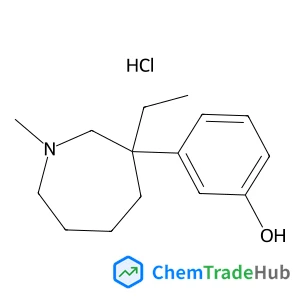
3-(3-Ethyl-1-methyl-3-azepanyl)phenol hydrochloride (1:1)
CAS Number:
59263-76-2
Molecular Formula:
C15H24ClNO


Recommended Suppliers






Disclaimer
This page provides academic journal information for reference and research purposes only. We are not affiliated with any journal publishers and do not handle publication submissions. For publication-related inquiries, please contact the respective journal publishers directly.
If you notice any inaccuracies in the information displayed, please contact us at support@chemtradehub.com. We will promptly review and address your concerns.