



Electronic g values of Na+–NO and Cu+–NO complexes in zeolites: Analysis using a relativistic density functional method
Literature Information
Publication Date
2003-04-23
DOI
10.1039/B300737E
Impact Factor
3.676
Authors
Konstantin M. Neyman, Dmitri I. Ganyushin, Vladimir A. Nasluzov, Notker Rösch, Andreas Pöppl, Martin Hartmann
View Original
Abstract
Electronic g values of molecular systems are usually difficult to interpret. We propose a new tool for the analysis of g values in terms of contributions of particular atomic orbitals. This tool benefits from a direct relationship between ground-state relativistic Kohn–Sham orbitals and g values in our novel scheme which takes spin–orbit effects into account self-consistently and employs two-component orbital wave functions obtained after a Douglas–Kroll decoupling of the four-component Dirac–Kohn–Sham equation to calculate electronic g values. We rationalize the notable difference in the g tensor anisotropy of adsorption complexes of an NO probe with charge compensating Na+ and Cu+ cations in zeolites. g components of the Na+–NO species, all three of them measured and calculated smaller than the free-electron value ge, reflect the essentially electrostatic adsorption mechanism. At variance, two g components larger than ge are obtained for the complex Cu+–NO and they are shown to manifest covalent interactions due to Cu 3d orbitals.
Recommended Journals

European Journal of Organic Chemistry

Coloration Technology

Advanced Engineering Materials

Journal of Enzyme inhibition and Medicinal Chemistry

Physical Chemistry Chemical Physics

Molecular Diversity

Green Chemistry

Photochemical & Photobiological Sciences

Nature Reviews Drug Discovery

Contact Lens & Anterior Eye
Related Literature
Isothermal vapor–liquid equilibria of binary systems of carbon dioxide and 1-butyne, compared to other binary CO2 + C4Hn systems in terms of global parameters
M. Bardas, N. Dahmen, T. Kraska, K.-D. Wagner, L. Yelash
2002-02-15
Paper
DOI: 10.1039/B109059C
Ultrafast dynamics in the excited state of green fluorescent protein (wt) studied by frequency-resolved femtosecond pump-probe spectroscopy
Kathrin Winkler, Jörg Lindner, Vinod Subramaniam, Thomas M. Jovin, Peter Vöhringer
Paper
DOI: 10.1039/B108843B
Solvation dynamics of Coumarin 490 in methanol and acetonitrile reverse micelles
Partha Hazra, Nilmoni Sarkar
Paper
DOI: 10.1039/B109447E
Oscillatory clusters in a reaction–diffusion system switching between excitable and unexcitable states
2002-03-13
Paper
DOI: 10.1039/B109391F
Temperature, pressure and density dependencies of the solubilities of low-volatility organic compounds in compressed gases Part 1. Solution energies from solubility data for disperse dyestuffs up to 20 MPa
Dirk Tuma, Björn Wagner, Gerhard M. Schneider
2002-02-14
Paper
DOI: 10.1039/B109521H
On the structure and coordination of the oxygen-donating species in Ti↑MCM-41/TBHP oxidation catalysts: a density functional theory and EXAFS study
Nikolas Kaltsoyannis
2002-03-04
Paper
DOI: 10.1039/B104735N
Vibrational spectra of 5,6-dihydrouracil. An experimental matrix isolation, solid state and theoretical study
Leszek Lapinski, Maciej J. Nowak, Dariusz C. Bieńko, Danuta Michalska
2002-02-26
Paper
DOI: 10.1039/B108702A
Gibbs solution of the van der Waals–Maxwell problem and universality of the liquid–gas coexistence curve
Vitaly B. Rogankov, Leonid Z. Boshkov
2002-02-18
Paper
DOI: 10.1039/B107989C
Characteristic cyclic voltammograms of alkyl viologens at single crystal gold electrodes
Kazuki Arihara, Takeo Ohsaka, Fusao Kitamura
2002-02-13
Communication
DOI: 10.1039/B109879A
Mass-selected infrared photodissociation spectroscopy of V4O10+
K. R. Asmis, M. Brümmer, C. Kaposta, G. Santambrogio, G. von Helden, K. Rademann, L. Wöste
2002-02-27
Communication
DOI: 10.1039/B111056J
You might also like
Compound Q&A
What regulatory guidelines apply to 6-Bromo-2-methylimidazo[1,2-a]pyrimidine (CAS: 1111638-05-1)?
6-Bromo-2-methylimidazo[1,2-a]pyrimidine (CAS: 1111638-05-1) falls under various...
1111638-05-16-Bromo-2-methylimid...
Compound Q&A
Are there alternatives to 1-Pyrrolidineethanol, β-methyl-α-phenyl-, (αS,βR) (CAS: 123620-80-4) in synthesis?
While there are no direct alternatives, similar compounds like 1-Pyrrolidineetha...
123620-80-41-Pyrrolidineethanol...
Compound Q&A
Is 4-Methyl-2,6-bis(2-methyl-2-propanyl)phenyl methylcarbamate (CAS: 1918-11-2) safe?
4-Methyl-2,6-bis(2-methyl-2-propanyl)phenyl methylcarbamate (CAS: 1918-11-2) is ...
1918-11-24-Methyl-2,6-bis(2-m...
Compound Q&A
How should 2-(3-Bromo-4-fluorophenyl)-1,3-dioxolane (CAS: 77771-04-1) be stored?
2-(3-Bromo-4-fluorophenyl)-1,3-dioxolane (CAS: 77771-04-1) should be stored in a...
77771-04-12-(3-Bromo-4-fluorop...
Compound Q&A
What are the physical and chemical properties of 4,5,6,7-Tetrahydro-1H-indazole hydrochloride (CAS: 18161-11-0)?
4,5,6,7-Tetrahydro-1H-indazole hydrochloride is a white crystalline solid with a...
18161-11-04,5,6,7-Tetrahydro-1...
Compound Q&A
What is (2R)-1-Methoxy-3-phenyl-2-propanamine (CAS: 59919-07-2)?
(2R)-1-Methoxy-3-phenyl-2-propanamine is a chiral organic compound with the CAS ...
59919-07-2(2R)-1-Methoxy-3-phe...
Compound Q&A
What industries use Ethyl 1-(1-phenylethyl)-1H-imidazole-5-carboxylate (CAS: 56649-47-9)?
Ethyl 1-(1-phenylethyl)-1H-imidazole-5-carboxylate is used in various industries...
56649-47-9Ethyl 1-(1-phenyleth...
Compound Q&A
What regulatory guidelines apply to 4-[(1E,3S)-1-(4-Hydroxyphenyl)-1,4-pentadien-3-yl]phenol (CAS: 17676-24-3)?
4-[(1E,3S)-1-(4-Hydroxyphenyl)-1,4-pentadien-3-yl]phenol (CAS: 17676-24-3) falls...
17676-24-34-[(1E,3S)-1-(4-Hydr...
Compound Q&A
What industries use (S)-3-Amino-5-phenylpentanoic acid hydrochloride (CAS: 331846-97-0)?
(S)-3-Amino-5-phenylpentanoic acid hydrochloride is primarily used in the pharma...
331846-97-0(S)-3-Amino-5-phenyl...
Compound Q&A
How is 7-methoxy-1-benzothiophene-2-carboxylic acid (CAS: 88791-07-5) typically synthesized?
7-Methoxy-1-benzothiophene-2-carboxylic acid is typically synthesized by reactin...
88791-07-57-methoxy-1-benzothi...
Source Journal
Physical Chemistry Chemical Physics
CiteScore:
5.5
Self-citation Rate:
10.3%
Articles per Year:
3036
Physical Chemistry Chemical Physics (PCCP) is an international journal co-owned by 19 physical chemistry and physics societies from around the world. This journal publishes original, cutting-edge research in physical chemistry, chemical physics and biophysical chemistry. To be suitable for publication in PCCP, articles must include significant innovation and/or insight into physical chemistry; this is the most important criterion that reviewers and Editors will judge against when evaluating submissions. The journal has a broad scope and welcomes contributions spanning experiment, theory, computation and data science. Topical coverage includes spectroscopy, dynamics, kinetics, statistical mechanics, thermodynamics, electrochemistry, catalysis, surface science, quantum mechanics, quantum computing and machine learning. Interdisciplinary research areas such as polymers and soft matter, materials, nanoscience, energy, surfaces/interfaces, and biophysical chemistry are welcomed if they demonstrate significant innovation and/or insight into physical chemistry. Joined experimental/theoretical studies are particularly appreciated when complementary and based on up-to-date approaches.
Recommended Compounds
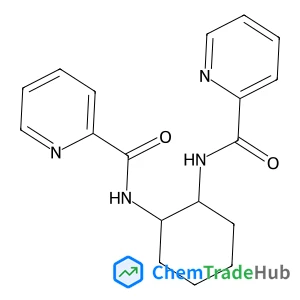
N,N'-(1R,2R)-1,2-Cyclohexanediyldi(2-pyridinecarboxamide)
CAS Number:
218290-24-5
Molecular Formula:
C18H20N4O2
![(3aS,6aS)-1-Methyloctahydropyrrolo[3,4-b]pyrrole structure](https://static.chemtradehub.com/structs/877/877212-98-1-9157.webp "(3aS,6aS)-1-Methyloctahydropyrrolo[3,4-b]pyrrole structure")
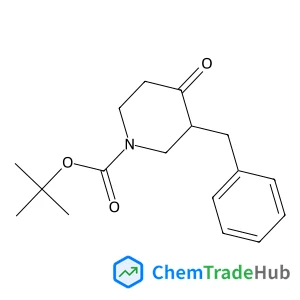
2-Methyl-2-propanyl 3-benzyl-4-oxo-1-piperidinecarboxylate
CAS Number:
193274-82-7
Molecular Formula:
C17H23NO3
Recommended Suppliers







Disclaimer
This page provides academic journal information for reference and research purposes only. We are not affiliated with any journal publishers and do not handle publication submissions. For publication-related inquiries, please contact the respective journal publishers directly.
If you notice any inaccuracies in the information displayed, please contact us at support@chemtradehub.com. We will promptly review and address your concerns.