












![[4-Amino-2-(methylsulfanyl)-5-pyrimidinyl]methanol structure](https://static.chemtradehub.com/structs/588/588-36-3-fc73.webp "[4-Amino-2-(methylsulfanyl)-5-pyrimidinyl]methanol structure")
Charged microcapsules for controlled release of hydrophobic actives. Part III: the effect of polyelectrolyte brush- and multilayers on sustained release
Literature Information
Publication Date
2013-03-08
DOI
10.1039/C3CP50417D
Impact Factor
3.676
Authors
Markus Andersson Trojer, Helena Andersson, Ye Li, Jonatan Borg, Krister Holmberg, Lars Nordstierna
View Original
Abstract
Poly(methyl methacrylate) microspheres have been prepared by the internal phase separation method using either of the three conventional dispersants poly(vinyl alcohol) (PVA), poly(methacrylic acid) (PMAA), or the amphiphilic block copolymer poly(methyl methacrylate)-block-poly(sodium methacrylate). The block copolymer based microsphere, which has a polyelectrolyte brush on the surface, was surface modified with up to two poly(diallyldimethylammonium chloride)–poly(sodium methacrylate) bilayers. The microspheres were loaded with the hydrophobic dye 2-(4-(2-chloro-4-nitrophenylazo)-N-ethylphenylamino)ethanol (Disperse Red 13) and its release from aqueous dispersions of microspheres with the different surface compositions was measured by spectrophotometry. The burst fraction, burst rate and the diffusion constant were determined from a model combining burst and diffusive release. Out of the three dispersants, the block copolymer gave the slowest release of the dye, with respect to both burst release and diffusive release. A very pronounced further reduction of the diffusion constant was obtained by applying polyelectrolyte multilayers on top of the microspheres. However, the diffusion constant was very weakly dependent on further polyelectrolyte adsorption and one polyelectrolyte bilayer appeared to suffice.
Related Literature
Coil spring-powered pump with inertial microfluidic chip for size-based isolation and enrichment of biological cells
Hogyeong Gwak, Seong Min Ha, Jae-Woo Song, Kyung-A. Hyun
2022-11-11
Paper
DOI: 10.1039/D2AN01380K
Paper-based sample processing for the fast and direct MS analysis of multiple analytes from serum samples
Fu Zhang, Bin Ji, Xiang-Hong Yan, Shuang Lv, Fang Fang, Shuang Zhao, Xiao-Lin Guo, Zhi-Yong Wu
2022-09-20
Paper
DOI: 10.1039/D2AN01261H
Viral infection of cells in culture detected using infrared microscopy
Gary Hastings, Peter Krug, Ruili Wang, Jing Guo, Hari P. Lamichhane, Tian Tang, Yu-sheng Hsu, John Ward, David Katz, Julia Hilliard
2009-05-05
Paper
DOI: 10.1039/B902154J
Multivalent SnO2 quantum dot-decorated Ti3C2 MXene for highly sensitive electrochemical detection of Sudan I in food
Lin Mei, Yanmei Shi, Yange Shi, Pengpeng Yan, Chunlei Lin, Yue Sun, Bingjie Wei, Jing Li
2022-10-27
Paper
DOI: 10.1039/D2AN01432G
Rapid detection and classification of hongmu by atmospheric pressure ionization mass spectrometry
Dehua Yu
2022-09-08
Paper
DOI: 10.1039/D2AN01169G
Circular arrays of polymer-based miniature rectilinear ion traps
Miriam Fico, Jeffrey D. Maas, Scott A. Smith, Anthony B. Costa, Zheng Ouyang, William J. Chappell, R. Graham Cooks
2009-04-03
Paper
DOI: 10.1039/B822140E
Accurate detection of perchlorate in epoxy resins via chlorine-35 quantitative quadrupolar NMR (qQNMR)
Ana Belén Ruiz-Muelle, Felipe Lestón-Cabeo, Ignacio Fernández
2022-10-11
Paper
DOI: 10.1039/D2AN00759B
Selective UV-filter detection with sensors based on stainless steel electrodes modified with polyaniline doped with metal tetrasulfonated phthalocyanine films
Luiz Fernando Moreira, Marcos Roberto de Vasconcelos Lanza, Auro Atsushi Tanaka, Maria Del Pilar Taboada Sotomayor
2009-04-28
Paper
DOI: 10.1039/B902273B
Label-free fibre optic Raman spectroscopy with bounded simplex-structured matrix factorization for the serial study of serum in amyotrophic lateral sclerosis
Visakan Kadirkamanathan, Martin R. Turner, Andrea Malaspina, John C. C. Day
2022-09-28
Paper
DOI: 10.1039/D2AN00936F
You might also like
Compound Q&A
What precautions should be taken when handling 4-(2-Furylmethyl)thiomorpholine 1,1-dioxide (CAS: 79206-94-3)?
When handling 4-(2-Furylmethyl)thiomorpholine 1,1-dioxide (CAS: 79206-94-3), it ...
79206-94-34-(2-Furylmethyl)thi...
Compound Q&A
What precautions should be taken when handling 4-Chloro-N-[2-(4-morpholinyl)ethyl]benzamide (CAS: 71320-77-9)?
When handling 4-Chloro-N-[2-(4-morpholinyl)ethyl]benzamide (CAS: 71320-77-9), it...
71320-77-94-Chloro-N-[2-(4-mor...
Compound Q&A
How should waste containing 2-[2-(2-Methoxyethoxy)ethoxy]ethyl 4-methylbenzenesulfonate (CAS: 62921-74-8) be handled?
Waste containing this compound (CAS: 62921-74-8) should be handled according to ...
62921-74-82-[2-(2-Methoxyethox...
Compound Q&A
How should waste containing (S)-Methyl 2-amino-3-cyclohexylpropanoate be handled?
Waste containing (S)-Methyl 2-amino-3-cyclohexylpropanoate should be collected i...
40056-18-6(S)-Methyl 2-amino-3...
Compound Q&A
How is 5-({4-[(2S,4R)-4-Hydroxy-2-methyltetrahydro-2H-pyran-4-yl]-2-thienyl}sulfanyl)-1-methyl-1,3-dihydro-2H-indol-2-one (CAS: 166882-70-8) typically synthesized?
This compound can be synthesized using a multi-step process involving the conjug...
166882-70-85-({4-[(2S,4R)-4-Hyd...
Compound Q&A
Are there alternatives to (2E)-3-(3,4-Dichlorophenyl)acrylic acid (CAS: 7312-27-8) in synthesis?
There are several alternatives to (2E)-3-(3,4-Dichlorophenyl)acrylic acid in syn...
7312-27-8(2E)-3-(3,4-Dichloro...
Compound Q&A
How should Ethyl 6-(2-nitrophenyl)imidazo[2,1-b][1,3]thiazole-3-carboxylate (CAS: 925437-84-9) be stored?
Ethyl 6-(2-nitrophenyl)imidazo[2,1-b][1,3]thiazole-3-carboxylate (CAS: 925437-84...
925437-84-9Ethyl 6-(2-nitrophen...
Compound Q&A
How should waste containing 2-(1,3-Thiazol-2-yl)ethanamine (CAS: 18453-07-1) be handled?
Waste containing 2-(1,3-Thiazol-2-yl)ethanamine (CAS: 18453-07-1) should be coll...
18453-07-12-(1,3-Thiazol-2-yl)...
Compound Q&A
How is Methyl 5-iodo-2-methylbenzoate (CAS: 103440-54-6) typically synthesized?
Methyl 5-iodo-2-methylbenzoate can be synthesized through the iodination of meth...
103440-54-6Methyl 5-iodo-2-meth...
Compound Q&A
How is 5-Chloro[1,2,4]triazolo[1,5-a]pyridine (CAS: 1427399-34-5) typically synthesized?
5-Chloro[1,2,4]triazolo[1,5-a]pyridine is commonly synthesized via the condensat...
1427399-34-55-Chloro[1,2,4]triaz...
Source Journal
Physical Chemistry Chemical Physics

CiteScore:
5.5
Self-citation Rate:
10.3%
Articles per Year:
3036
Physical Chemistry Chemical Physics (PCCP) is an international journal co-owned by 19 physical chemistry and physics societies from around the world. This journal publishes original, cutting-edge research in physical chemistry, chemical physics and biophysical chemistry. To be suitable for publication in PCCP, articles must include significant innovation and/or insight into physical chemistry; this is the most important criterion that reviewers and Editors will judge against when evaluating submissions. The journal has a broad scope and welcomes contributions spanning experiment, theory, computation and data science. Topical coverage includes spectroscopy, dynamics, kinetics, statistical mechanics, thermodynamics, electrochemistry, catalysis, surface science, quantum mechanics, quantum computing and machine learning. Interdisciplinary research areas such as polymers and soft matter, materials, nanoscience, energy, surfaces/interfaces, and biophysical chemistry are welcomed if they demonstrate significant innovation and/or insight into physical chemistry. Joined experimental/theoretical studies are particularly appreciated when complementary and based on up-to-date approaches.
Recommended Compounds


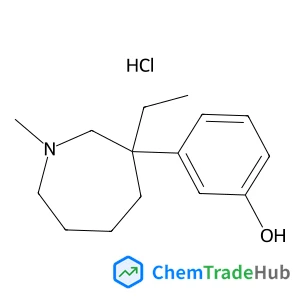
3-(3-Ethyl-1-methyl-3-azepanyl)phenol hydrochloride (1:1)
CAS Number:
59263-76-2
Molecular Formula:
C15H24ClNO
![1,2-Diphenyl-4-[2-(phenylsulfinyl)ethyl]-3,5-pyrazolidinedione structure](https://static.chemtradehub.com/structs/57-/57-96-5-efcc.webp "1,2-Diphenyl-4-[2-(phenylsulfinyl)ethyl]-3,5-pyrazolidinedione structure")
1,2-Diphenyl-4-[2-(phenylsulfinyl)ethyl]-3,5-pyrazolidinedione
CAS Number:
57-96-5
Molecular Formula:
C23H20N2O3S
Recommended Suppliers




Disclaimer
This page provides academic journal information for reference and research purposes only. We are not affiliated with any journal publishers and do not handle publication submissions. For publication-related inquiries, please contact the respective journal publishers directly.
If you notice any inaccuracies in the information displayed, please contact us at support@chemtradehub.com. We will promptly review and address your concerns.