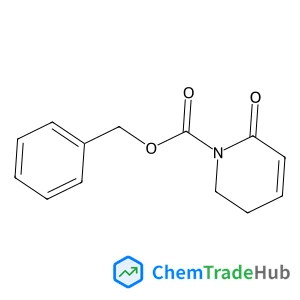
Benzyl 6-oxo-3,6-dihydro-1(2H)-pyridinecarboxylate
CAS Number:
725746-35-0
Molecular Formula:
C13H13NO3
Kazunori Matsuura, Taro Yamashita, Yuuko Igami, Nobuo Kimizuka
DNA three-way junctions formed from three 30-mer oligonucleotides that contain single-chained self-complementary sticky ends spontaneously self-assemble into ‘nucleo-nanocages’: the exo- and endo-nuclease digestion experiments indicate that defects such as the single and double strand end structures are absent on the spherical nano-assemblies, providing clear evidence for the closed nanocage structure.
Leire del Campo, Domingos De Sousa Meneses
DOI: 10.1039/D1CP01259B
Sadra Kashefolgheta, Shuzhe Wang, William E. Acree, Jr., Philippe H. Hünenberger
DOI: 10.1039/D1CP00215E
Susana Blanco, Alberto Macario, Juan Carlos López
DOI: 10.1039/D1CP01691A
DOI: 10.1039/D1CP01445E
Darius Abramavicius
DOI: 10.1039/D1CP00694K
Senthil Kumar Karuppannan, Ayelet Vilan
DOI: 10.1039/D1CP01690C
Anthony Wong, Gabriel Ménard
DOI: 10.1039/D1CP02763H
Hao Li, Weijie Yang, Chongchong Wu, Jiang Xu
DOI: 10.1039/D1CP00588J
Hayato Aida, Rikuri Morita
DOI: 10.1039/D1CP02876F
James D. Fletcher, Lucia Lanfri, Grant A. D. Ritchie, Gus Hancock, Meez Islam, Graham Richmond
DOI: 10.1039/D1CP03360C
N-(4-Methoxybenzyl)-2-pyridinamine (CAS: 52818-63-0) is increasingly being used ...
When handling Ethyl 4-(2-chlorophenyl)-1,3-thiazole-2-carboxylate, appropriate p...
Diethyldiselane (CAS: 628-39-7) is classified under the Globally Harmonized Syst...
The market for oxocopper (CAS: 12053-18-8) is primarily driven by its use in cat...
The market for 5-{[(2-Methyl-2-propanyl)oxy]carbonyl}-5-azaspiro[2.4]heptane-7-c...
2-(1-Pyrrolidinyl)-4-pyridinamine is a chemical compound with the CAS number 359...
2-(3-Pyridinyl)-1-azabicyclo[2.2.2]octane (CAS: 91556-75-1) is a crystalline sol...
(S)-Alpha-allyl-proline hydrochloride is usually synthesized via a Wittig reacti...
3-Methyl-1,2-oxazole-5-carboxylic acid (CAS: 4857-42-5) is an organic compound w...
Lys-SMCC-DM1 is synthesized via a multi-step process involving the coupling of S...

ChemComm publishes urgent research which is of outstanding significance and interest to experts in the field, while also appealing to the journal’s broad chemistry readership. Our communication format is ideally suited to short, urgent studies that are of such importance that they require accelerated publication. Our scope covers all topics in chemistry, and research at the interface of chemistry and other disciplines (such as materials science, nanoscience, physics, engineering and biology) where there is a significant novelty in the chemistry aspects. Major topic areas covered include: Analytical Chemistry Catalysis Chemical Biology and medicinal chemistry Computational Chemistry and Machine Learning Energy and sustainable chemistry Environmental Chemistry Green Chemistry Inorganic Chemistry Materials Chemistry Nanoscience Organic Chemistry Physical Chemistry Polymer Chemistry Supramolecular Chemistry
![N-{[(2-Methyl-2-propanyl)oxy]carbonyl}-L-methionylglycine structure](https://static.chemtradehub.com/structs/234/23446-03-9-e1e5.webp "N-{[(2-Methyl-2-propanyl)oxy]carbonyl}-L-methionylglycine structure")
![1-oxaspiro[4.4]nonan-6-one structure](https://static.chemtradehub.com/structs/134/134179-01-4-e051.webp "1-oxaspiro[4.4]nonan-6-one structure")