












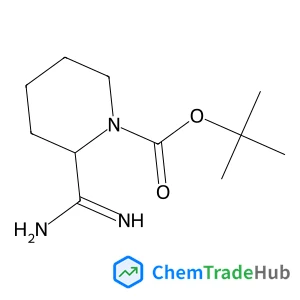
2-Methyl-2-propanyl 2-carbamimidoyl-1-piperidinecarboxylate
CAS Number:
1258640-98-0
Molecular Formula:
C11H21N3O2
Jon R. Wilson, Daren J. Caruana, Gianfranco Gilardi
A nucleic acid binding protein, rop, has conserved topology with a number of redox proteins; this is exploited to engineer haem binding, expanding its function as a redox protein.
Martin Hladík, Antonín Fejfar, Héctor Vázquez
DOI: 10.1039/D1CP01654G
Anastasiia I. Fadeeva, Vitaly A. Gorbunov, Alexander V. Myshlyavtsev
DOI: 10.1039/D1CP03111B
Rui Tang, Ling Han, Jing Yang, Min Xu, Min Ge, Yuanyuan Tang, Xiaobin Fu, Hongtao Liu, Yuan Qian
DOI: 10.1039/D1CP02769G
Yongjian Zang, Xuhua Li, Yizhen Zhao, He Wang, Dongxiao Hao, Lei Zhang, Zhiwei Yang, Xiaohui Yuan, Shengli Zhang
DOI: 10.1039/D1CP01611C
Chithra M. J., Probal Nag, Sivaranjana Reddy Vennapusa
DOI: 10.1039/D1CP02587B
Zhongxu Wang, Yu Liu, FengYu Li, Jingxiang Zhao
DOI: 10.1039/D1CP02648H
Leire del Campo, Domingos De Sousa Meneses
DOI: 10.1039/D1CP01259B
Alejandro Herrera-Carbajal, Ventura Rodríguez-Lugo, Juan Hernández-Ávila, Ariadna Sánchez-Castillo
DOI: 10.1039/D1CP00519G
Lian Yang, Xudong Liu, Yan Zhang, Yongsheng Yang, Ying Xue
DOI: 10.1039/D1CP01973B
N-(4-Methoxybenzyl)-2-pyridinamine (CAS: 52818-63-0) is increasingly being used ...
When handling Ethyl 4-(2-chlorophenyl)-1,3-thiazole-2-carboxylate, appropriate p...
Diethyldiselane (CAS: 628-39-7) is classified under the Globally Harmonized Syst...
The market for oxocopper (CAS: 12053-18-8) is primarily driven by its use in cat...
The market for 5-{[(2-Methyl-2-propanyl)oxy]carbonyl}-5-azaspiro[2.4]heptane-7-c...
2-(1-Pyrrolidinyl)-4-pyridinamine is a chemical compound with the CAS number 359...
2-(3-Pyridinyl)-1-azabicyclo[2.2.2]octane (CAS: 91556-75-1) is a crystalline sol...
(S)-Alpha-allyl-proline hydrochloride is usually synthesized via a Wittig reacti...
3-Methyl-1,2-oxazole-5-carboxylic acid (CAS: 4857-42-5) is an organic compound w...
Lys-SMCC-DM1 is synthesized via a multi-step process involving the coupling of S...

ChemComm publishes urgent research which is of outstanding significance and interest to experts in the field, while also appealing to the journal’s broad chemistry readership. Our communication format is ideally suited to short, urgent studies that are of such importance that they require accelerated publication. Our scope covers all topics in chemistry, and research at the interface of chemistry and other disciplines (such as materials science, nanoscience, physics, engineering and biology) where there is a significant novelty in the chemistry aspects. Major topic areas covered include: Analytical Chemistry Catalysis Chemical Biology and medicinal chemistry Computational Chemistry and Machine Learning Energy and sustainable chemistry Environmental Chemistry Green Chemistry Inorganic Chemistry Materials Chemistry Nanoscience Organic Chemistry Physical Chemistry Polymer Chemistry Supramolecular Chemistry


![1-[6-(1H-Imidazol-1-yl)-3-pyridinyl]methanamine structure](https://static.chemtradehub.com/structs/914/914637-08-4-8825.webp "1-[6-(1H-Imidazol-1-yl)-3-pyridinyl]methanamine structure")




