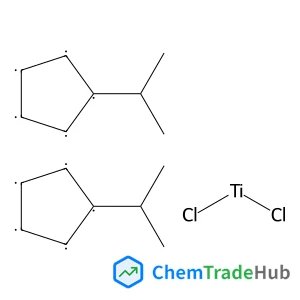
BIS(I-PROPYLCYCLOPENTADIENYL)TITANIUM DICHLORIDE
CAS Number:
12130-65-3
Molecular Formula:
C16H22Cl2Ti
Masahito Ochiai, Shinji Yamamoto
Exposure of tertiary thioamides to (E)-1-hexenyl(phenyl)-λ3-iodane results in vinylic SN2 reaction to give the inverted (Z)-S-vinylthioimidonium salts, which under alkaline hydrolysis (Na2CO3 or K2CO3) selectively afford amides, while (Z)-S-vinyl thioesters are obtained in high yields via the hydrolysis under acidic conditions (HCl).
Iain Wilkinson, Ivan Anton Garcia, Benjamin J. Whitaker, Jean-Benoît Hamard, Valérie Blanchet
DOI: 10.1039/C0CP01551B
A. D. G. Nunn, R. S. Minns, R. Spesyvtsev, M. J. Bearpark, M. A. Robb, H. H. Fielding
DOI: 10.1039/C0CP01723J
Jonathan D. Raff, János Szanyi, Barbara J. Finlayson-Pitts
DOI: 10.1039/C0CP01041C
M. T. M Koper
DOI: 10.1039/B912091B
Francesco Michelotti, Beniamino Sciacca, Lorenzo Dominici, Marzia Quaglio, Emiliano Descrovi, Fabrizio Giorgis, Francesco Geobaldo
DOI: 10.1039/B914280K
Roman G. Pavelko, Helen Daly, Christopher Hardacre, Alexey A. Vasiliev, Eduard Llobet
DOI: 10.1039/B921665K
Jyun-Lin Wu, Hsin-Fu Kuo, Ping-Tzu Chen, Hung-Jen Chen, Su-Jien Lin, Wen-Kuang Hsu
DOI: 10.1039/C0CP00890G
Andrea C. Sauerwein, Maria Concistrè, Malcolm H. Levitt
DOI: 10.1039/C0CP01262A
Stephen Poulston, Timothy I. Hyde, Hugh Hamilton, Olivier Mathon, Carmelo Prestipino, Andrew W. J. Smith
DOI: 10.1039/B911941H
Minh Tho Nguyen, Tamás Veszprémi
DOI: 10.1039/B916847H
2-Methylbenzene-1,4-diamine dihydrochloride (CAS: 615-45-2) should be stored in ...
(1S,4S)-2,5-Diazabicyclo[2.2.1]heptane dihydrobromide is generally considered sa...
(6-Chloropyridazin-3-YL)methanamine finds applications in the pharmaceutical ind...
2-Fluoro-3-methylphenol is primarily used in the synthesis of pharmaceuticals, p...
When handling 3-Methoxy-4-nitrobenzonitrile, it is important to wear appropriate...
When handling 1,3-Oxazolo[4,5-b]pyridine-2(3H)-thione (CAS: 211949-57-4), it is ...
4-Ethynylbenzamide (CAS: 90347-86-7) falls under various regulatory guidelines i...
3-(2-Ethylphenyl)-2-thioxo-4-imidazolidinone is primarily used as an intermediat...
(2-Fluoro-6-methoxyphenyl)acetic acid, also known as 4-fluoro-3-methoxybenzoic a...
Market trends for 2-[4-(Hydroxymethyl)phenoxy]ethanol (CAS: 102196-18-9) indicat...

ChemComm publishes urgent research which is of outstanding significance and interest to experts in the field, while also appealing to the journal’s broad chemistry readership. Our communication format is ideally suited to short, urgent studies that are of such importance that they require accelerated publication. Our scope covers all topics in chemistry, and research at the interface of chemistry and other disciplines (such as materials science, nanoscience, physics, engineering and biology) where there is a significant novelty in the chemistry aspects. Major topic areas covered include: Analytical Chemistry Catalysis Chemical Biology and medicinal chemistry Computational Chemistry and Machine Learning Energy and sustainable chemistry Environmental Chemistry Green Chemistry Inorganic Chemistry Materials Chemistry Nanoscience Organic Chemistry Physical Chemistry Polymer Chemistry Supramolecular Chemistry
![1-Benzyl-1,7-diazaspiro[4.4]nonane dihydrochloride structure](https://static.chemtradehub.com/structs/115/1159822-71-5-0320.webp "1-Benzyl-1,7-diazaspiro[4.4]nonane dihydrochloride structure")