












The selective functionalisation and difunctionalisation of p-substituted calix[6]arene and calix[8]arenes using hydrophilic moieties
Literature Information
Publication Date
2002-12-19
DOI
10.1039/B208649M
Impact Factor
3.876
Authors
Gwénaëlle Hervé, Dirk Uwe Hahn, Anne-Cécile Hervé, Kerry J. Goodworth, Alison M. Hill, Helen C. Hailes
View Original
Abstract
Methodologies to access water soluble large ringed calixarenes in good yield using efficient synthetic procedures have been investigated. Symmetrical partial functionalisations at the lower rim are described using activated [n]ethylene glycol chains and the addition behaviour contrasted with that of bromoalkanenitriles which proceeds with no observed regioselectivity. Full functionalisations of the calixarenes bearing hydrophilic groups are then investigated and a two-step procedure established which appears to be generally applicable for the addition of different [n]ethylene glycol chains. Furthermore, difunctionalisation under different reaction conditions are described. Throughout, strategies for the characterisation of these high mass compounds are outlined.
Related Literature
Combination of Pd/C and Amberlyst-15 in a single reactor for the acid/hydrogenating catalytic conversion of carbohydrates to 5-hydroxy-2,5-hexanedione
Fei liu, Maïté Audemar, Karine De Oliveira Vigier, Jean-Marc Clacens, Floryan De Campo, François Jérôme
2014-07-25
Communication
DOI: 10.1039/C4GC01158A
Bio-based superhydrophilic foam membranes for sustainable oil–water separation
Azaz Gogda
2014-07-15
Paper
DOI: 10.1039/C4GC01070A
Gold supported on titania for specific monohydrogenation of dinitroaromatics in the liquid phase
Shuang-Shuang Liu, Xiang Liu, Lei Yu, Yong-Mei Liu, He-Yong He, Yong Cao
2014-06-26
Paper
DOI: 10.1039/C4GC00869C
Synthesis of 2-substituted pyrimidines and benzoxazoles via a visible-light-driven organocatalytic aerobic oxidation: enhancement of the reaction rate and selectivity by a base
Lin Wang, Zhi-Gang Ma, Xiao-Jing Wei, Qing-Yuan Meng, Deng-Tao Yang, Shao-Fu Du, Zi-Fei Chen, Li-Zhu Wu, Qiang Liu
2014-06-18
Communication
DOI: 10.1039/C4GC00337C
Towards non-toxic solvents for membrane preparation: a review
A. Figoli, T. Marino, S. Simone, E. Di Nicolò, X.-M. Li, T. He, S. Tornaghi, E. Drioli
2014-07-03
Tutorial Review
DOI: 10.1039/C4GC00613E
Selective conversion of lignin in corncob residue to monophenols with high yield and selectivity
Zhicheng Jiang, Ting He, Jianmei Li, Changwei Hu
2014-06-30
Paper
DOI: 10.1039/C4GC00620H
Influence of precursor type on non-toxic hybrid inks for high-efficiency Cu2ZnSnS4 thin-film solar cells
Kyujin Kim, Inhyuk Kim, Yunjung Oh, Daehee Lee, Kyoohee Woo, Sunho Jeong, Jooho Moon
2014-07-10
Paper
DOI: 10.1039/C4GC00896K
Sustainable polyacetals from isohexides
B. S. Rajput, S. R. Gaikwad, S. K. Menon, S. H. Chikkali
2014-04-25
Paper
DOI: 10.1039/C4GC00543K
A survey of solvent selection guides
Denis Prat, John Hayler, Andy Wells
2014-07-29
Paper
DOI: 10.1039/C4GC01149J
You might also like
Compound Q&A
How should 2-Methylbenzene-1,4-diamine dihydrochloride (CAS: 615-45-2) be stored?
2-Methylbenzene-1,4-diamine dihydrochloride (CAS: 615-45-2) should be stored in ...
615-45-22-Methylbenzene-1,4-...
Compound Q&A
Is (1S,4S)-2,5-Diazabicyclo[2.2.1]heptane dihydrobromide (CAS: 132747-20-7) safe?
(1S,4S)-2,5-Diazabicyclo[2.2.1]heptane dihydrobromide is generally considered sa...
132747-20-7(1S,4S)-2,5-Diazabic...
Compound Q&A
What industries use (6-Chloropyridazin-3-YL)methanamine (CAS: 871826-15-2)?
(6-Chloropyridazin-3-YL)methanamine finds applications in the pharmaceutical ind...
871826-15-2(6-Chloropyridazin-3...
Compound Q&A
What are the main uses of 2-Fluoro-3-methylphenol (CAS: 77772-72-6)?
2-Fluoro-3-methylphenol is primarily used in the synthesis of pharmaceuticals, p...
77772-72-62-Fluoro-3-methylphe...
Compound Q&A
What precautions should be taken when handling 3-Methoxy-4-nitrobenzonitrile (CAS: 177476-75-4)?
When handling 3-Methoxy-4-nitrobenzonitrile, it is important to wear appropriate...
177476-75-43-Methoxy-4-nitroben...
Compound Q&A
What precautions should be taken when handling 1,3-Oxazolo[4,5-b]pyridine-2(3H)-thione (CAS: 211949-57-4)?
When handling 1,3-Oxazolo[4,5-b]pyridine-2(3H)-thione (CAS: 211949-57-4), it is ...
211949-57-4[1,3]Oxazolo[4,5-b]p...
Compound Q&A
What regulatory guidelines apply to 4-Ethynylbenzamide (CAS: 90347-86-7)?
4-Ethynylbenzamide (CAS: 90347-86-7) falls under various regulatory guidelines i...
90347-86-74-Ethynylbenzamide
Compound Q&A
What are the main uses of 3-(2-Ethylphenyl)-2-thioxo-4-imidazolidinone (CAS: 186822-57-1)?
3-(2-Ethylphenyl)-2-thioxo-4-imidazolidinone is primarily used as an intermediat...
186822-57-13-(2-Ethylphenyl)-2-...
Compound Q&A
What is (2-Fluoro-6-methoxyphenyl)acetic acid (CAS: 500912-19-6)?
(2-Fluoro-6-methoxyphenyl)acetic acid, also known as 4-fluoro-3-methoxybenzoic a...
500912-19-6(2-Fluoro-6-methoxyp...
Compound Q&A
What is the market or research trend for 2-[4-(Hydroxymethyl)phenoxy]ethanol (CAS: 102196-18-9)?
Market trends for 2-[4-(Hydroxymethyl)phenoxy]ethanol (CAS: 102196-18-9) indicat...
102196-18-92-[4-(Hydroxymethyl)...
Source Journal
Organic & Biomolecular Chemistry

CiteScore:
3.4
Self-citation Rate:
10.3%
Articles per Year:
1041
Organic & Biomolecular Chemistry (OBC) publishes original and high impact research and reviews in organic chemistry. We welcome research that shows new or significantly improved protocols or methodologies in total synthesis, synthetic methodology or physical and theoretical organic chemistry as well as research that shows a significant advance in the organic chemistry or molecular design aspects of chemical biology, catalysis, supramolecular and macromolecular chemistry, theoretical chemistry, mechanism-oriented physical organic chemistry, medicinal chemistry or natural products. Articles published in the journal should report new work which makes a highly-significant impact in the field. Routine and incremental work is generally not suitable for publication in the journal. More details about key areas of our scope are below. In all cases authors should include in their article clear rationale for why their research has been carried out.
Recommended Compounds
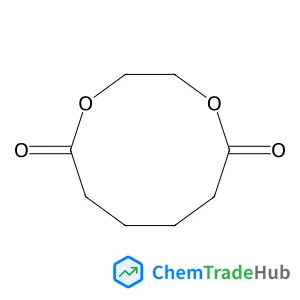

2,3,6-Tri-O-acetyl-4-O-(2,3,4,6-tetra-O-acetyl-beta-D-galactopyranosyl)-alpha-D-glucopyranosyl bromide
CAS Number:
4753-07-5
Molecular Formula:
C26H35BrO17
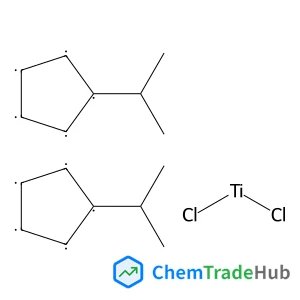
BIS(I-PROPYLCYCLOPENTADIENYL)TITANIUM DICHLORIDE
CAS Number:
12130-65-3
Molecular Formula:
C16H22Cl2Ti
![trans-2-{[(Tert-butoxy)carbonyl]amino}cyclobutane-1-carboxylic acid structure](https://static.chemtradehub.com/structs/951/951173-25-4-27cd.webp "trans-2-{[(Tert-butoxy)carbonyl]amino}cyclobutane-1-carboxylic acid structure")
trans-2-{[(Tert-butoxy)carbonyl]amino}cyclobutane-1-carboxylic acid
CAS Number:
951173-25-4
Molecular Formula:
C10H17NO4
Recommended Suppliers




Disclaimer
This page provides academic journal information for reference and research purposes only. We are not affiliated with any journal publishers and do not handle publication submissions. For publication-related inquiries, please contact the respective journal publishers directly.
If you notice any inaccuracies in the information displayed, please contact us at support@chemtradehub.com. We will promptly review and address your concerns.