


Rate coefficients for rotational energy transfer from the levels OH(X 2Π3/2, v = 1, ji = 1.5, 3.5–8.5) in collisions with He, Ar, N2 and HNO3
Literature Information
Publication Date
2002-10-08
DOI
10.1039/B207549K
Impact Factor
3.676
Authors
Kevin M. Hickson, Chester M. Sadowski, Ian W. M. Smith
View Original
Abstract
Using an infrared-ultraviolet double resonance method, we have measured rate coefficients at room temperature for the transfer of OH radicals from rotational levels between ji = 1.5 (N = 1) and ji = 8.5 (N = 8) in the X 2Π, Ω = 3/2; v = 1 vibronic state in collisions with He, Ar, N2 and HNO3. OH radicals were generated by 266 nm pulsed laser photolysis of HNO3 and promoted to selected ji using a pulsed infrared laser tuned to an appropriate line in the (1,0) infrared fundamental band of OH. The evolution of population in selected levels was observed using time-delayed laser-induced fluorescence in the (1,1) band of the A 2Σ+–X 2Π system. The results of two kinds of measurement are reported. For ji = 3.5 and 6.5, a single Λ-doublet component of the selected rotational level was excited and the evolution of the populations in both Λ-doublet components was observed. The decay of the sum of the two individual populations then yields rate coefficients for the transfer of population from ji, free of complications arising from the transfer of population between the two Λ-doublet levels. For a wider range of levels, including ji = 6.5, we have carried out simpler measurements in which rate coefficients for transfer from the initially excited level ji are inferred by monitoring only the change in population in the Λ-doublet level that is directly populated by the pump laser. Measurements of both kinds have been carried out for ji = 6.5 and the rate coefficients derived from the two sets of measurements are in good agreement. The measured rate coefficients for rotational relaxation (kRET) show a significant dependence on both the collision partner, with kRET(He) ≈ kRET(Ar) < kRET(N2) < kRET(HNO3), and on the rotational level with the values of kRET generally decreasing as ji is increased beyond ji = 3.5.
Recommended Journals

Critical Reviews in Solid State and Materials Sciences

Atomization and Sprays

Colloid Journal

Journal of Asian Natural Products Research

Journal of the Indian Institute of Science

Biocatalysis and Biotransformation

Medicinal Chemistry Research

Main Group Chemistry

Bioorganic & Medicinal Chemistry Letters

Heteroatom Chemistry
Related Literature
Poly(tetrafluoroethylene-co-perfluorovinyl ether sulfonamide) for anion exchange membranes
Xundao Liu, Hongrong Gao, Xiaohong Chen, Yong Hu, Hong Li, Yongming Zhang
2016-03-30
Paper
DOI: 10.1039/C6PY00036C
Evaluating chemical ligation techniques for the synthesis of block copolypeptides, polypeptoids and block copolypept(o)ides: a comparative study
Kristina Klinker, Regina Holm, Philipp Heller, Matthias Barz
2015-05-01
Paper
DOI: 10.1039/C5PY00461F
The effect of ring size on the mechanical relaxation dynamics of polyrotaxane gels
K. Kato, K. Karube, N. Nakamura, K. Ito
2015-01-19
Paper
DOI: 10.1039/C4PY01644K
Influences of the backbone randomness on the properties, morphology and performances of the fluorinated benzoselenadiazole–benzothiadiazole based random copolymers
Yung-Tsung Chen, Tzu-Wei Huang, Chien-Lung Wang, Chain-Shu Hsu
2015-04-01
Paper
DOI: 10.1039/C5PY00175G
Cyclohexyl-substituted poly(phosphonate)-copolymers with adjustable glass transition temperatures
Thomas Wolf, Johannes Naß, Frederik R. Wurm
2016-03-30
Communication
DOI: 10.1039/C6PY00358C
Modulating the solubility of zwitterionic poly((3-methacrylamidopropyl)ammonioalkane sulfonate)s in water and aqueous salt solutions via the spacer group separating the cationic and the anionic moieties
Viet Hildebrand, Erik Wischerhoff
2015-12-08
Paper
DOI: 10.1039/C5PY01642H
Facile construction of fluorescent polymeric aggregates with various morphologies by self-assembly of supramolecular amphiphilic graft copolymers
Xiaofan Ji, Yang Li, Hu Wang, Run Zhao, Guping Tang, Feihe Huang
2015-06-03
Communication
DOI: 10.1039/C5PY00801H
Chloride-promoted Pd-catalyzed direct C–H arylation for highly efficient phosphine-free synthesis of π-conjugated polymers
Shotaro Hayashi, Toshio Koizumi
2015-06-19
Communication
DOI: 10.1039/C5PY00871A
Dithienosilole-benzothiadiazole-based ternary copolymers with a D1–A–D2–A structure for polymer solar cells
Xuelong Huang, Guichuan Zhang, Cheng Zhou, Liqian Liu, Yaocheng Jin, Shengjian Liu, Lei Ying, Fei Huang, Yong Cao
2015-04-27
Paper
DOI: 10.1039/C5PY00201J
You might also like
Compound Q&A
What are the main uses of (5-Sulfamoyl-3-pyridinyl)boronic acid (CAS: 951233-61-7)?
(5-Sulfamoyl-3-pyridinyl)boronic acid is primarily used in chemical synthesis, p...
951233-61-7(5-Sulfamoyl-3-pyrid...
Compound Q&A
How is Benzyl 2-methyl-2-(methylsulfonyl)-4-pentenoate (CAS: 1942858-50-5) typically synthesized?
Benzyl 2-methyl-2-(methylsulfonyl)-4-pentenoate is typically synthesized via est...
1942858-50-5Benzyl 2-methyl-2-(m...
Compound Q&A
What precautions should be taken when handling 8-Fluoroquinolin-6-ol (CAS: 209353-22-0)?
When handling 8-Fluoroquinolin-6-ol (CAS: 209353-22-0), it is important to use p...
209353-22-08-Fluoroquinolin-6-o...
Compound Q&A
What are the physical and chemical properties of 1,3-Dibromo-5-(2-methyl-2-propanyl)benzene (CAS: 129316-09-2)?
1,3-Dibromo-5-(2-methyl-2-propanyl)benzene (CAS: 129316-09-2) is a crystalline c...
129316-09-21,3-Dibromo-5-(2-met...
Compound Q&A
What industries use Ethyl 7-chloro-4-oxo-1-(1,3-thiazol-2-yl)-1,4-dihydro-1,8-naphthyridine-3-carboxylate (CAS: 174726-87-5)?
Ethyl 7-chloro-4-oxo-1-(1,3-thiazol-2-yl)-1,4-dihydro-1,8-naphthyridine-3-carbox...
174726-87-5Ethyl 7-chloro-4-oxo...
Compound Q&A
What precautions should be taken when handling Delta-7-Avenasterol (CAS: 23290-26-8)?
When handling Delta-7-Avenasterol (CAS: 23290-26-8), it is important to wear app...
23290-26-8Delta-7-Avenasterol
Compound Q&A
What precautions should be taken when handling N-({(5R)-3-[3-Fluoro-4-(4-morpholinyl)phenyl]-2-oxo-1,3-oxazolidin-5-yl}methyl)acetamide (CAS: 872992-20-6)?
Proper handling involves the use of personal protective equipment such as gloves...
872992-20-6N-({(5R)-3-[3-Fluoro...
Compound Q&A
What precautions should be taken when handling 2-Methyl-2-proanyl 4-[(2-aminophenyl)amino]-1-piperidinecarboxylate (CAS: 79099-00-6)?
When handling 2-Methyl-2-proanyl 4-[(2-aminophenyl)amino]-1-piperidinecarboxylat...
79099-00-62-Methyl-2-propanyl ...
Compound Q&A
What is N-Methyl-4-chlorobenzylamine hydrochloride (CAS: 65542-24-7)?
N-Methyl-4-chlorobenzylamine hydrochloride (CAS: 65542-24-7) is a organic compou...
65542-24-7N-Methyl-4-chloroben...
Compound Q&A
Is [2-(Dodecyloxy)ethoxy]acetic acid (CAS: 27306-90-7) safe?
[2-(Dodecyloxy)ethoxy]acetic acid (CAS: 27306-90-7) is generally considered safe...
27306-90-7[2-(Dodecyloxy)ethox...
Source Journal
Physical Chemistry Chemical Physics

CiteScore:
5.5
Self-citation Rate:
10.3%
Articles per Year:
3036
Physical Chemistry Chemical Physics (PCCP) is an international journal co-owned by 19 physical chemistry and physics societies from around the world. This journal publishes original, cutting-edge research in physical chemistry, chemical physics and biophysical chemistry. To be suitable for publication in PCCP, articles must include significant innovation and/or insight into physical chemistry; this is the most important criterion that reviewers and Editors will judge against when evaluating submissions. The journal has a broad scope and welcomes contributions spanning experiment, theory, computation and data science. Topical coverage includes spectroscopy, dynamics, kinetics, statistical mechanics, thermodynamics, electrochemistry, catalysis, surface science, quantum mechanics, quantum computing and machine learning. Interdisciplinary research areas such as polymers and soft matter, materials, nanoscience, energy, surfaces/interfaces, and biophysical chemistry are welcomed if they demonstrate significant innovation and/or insight into physical chemistry. Joined experimental/theoretical studies are particularly appreciated when complementary and based on up-to-date approaches.
Recommended Compounds
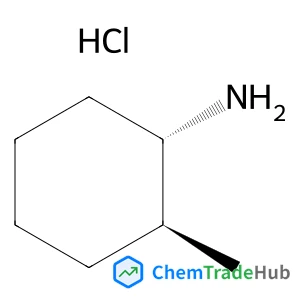
(1R,2R)-2-Methylcyclohexanamine hydrochloride (1:1)
CAS Number:
39558-31-1
Molecular Formula:
C7H16ClN
Recommended Suppliers






Disclaimer
This page provides academic journal information for reference and research purposes only. We are not affiliated with any journal publishers and do not handle publication submissions. For publication-related inquiries, please contact the respective journal publishers directly.
If you notice any inaccuracies in the information displayed, please contact us at support@chemtradehub.com. We will promptly review and address your concerns.