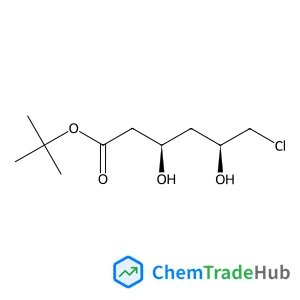
2-Methyl-2-propanyl (3R,5S)-6-chloro-3,5-dihydroxyhexanoate
CAS Number:
154026-93-4
Molecular Formula:
C10H19ClO4
Doris Roth, Otto Dopfer
Infrared (IR) photodissociation spectra of isomeric C3H3+–L dimers with the inert ligands L = Ne, Ar, O2, N2, and CO2 are recorded in the spectral range of the C–H stretch fundamentals. At least two C3H3+ isomers are generated by electron impact ionization of allene (H2CCCH2) in the cluster ion source, namely the cyclopropenyl (c-C3H3+) and propargyl (H2CCCH+) cations. Both C3H3+ ions form weakly-bound adducts with all ligands considered and the attraction in these ion–ligand complexes is dominated by induction and electrostatic forces. In general, the intermolecular interaction in both c-C3H3+–L and H2CCCH+–L increases in the order Ne < Ar < O2 < N2 < CO2, in line with the polarizabilities, quadrupole moments, and proton affinities of L. Rovibrational analysis of the ν4 vibrations of c-C3H3+–L involving molecular ligands reveals several competing structural binding motifs, including the formation of H-bonds (L = N2, CO2, O2), C-bonds (L = CO2), and π-bonds (L = O2). The preferred binding site and details of the equilibrium structure strongly depend on L. In contrast, the observed H2CCCH+–L dimers feature all H-bonds between L and the acetylenic proton. Ab initio calculations for c-C3H3+–L and H2CCCH+–L at the MP2(full)/6-311G(2df,2pd) level provide additional information about the intermolecular potential energy surface of these ion–ligand complexes and confirm the interpretation of the experimental IR spectra. Photofragmentation branching ratios observed for c-C3H3+–(CO2)n with n = 1–3 allow the dissociation energy of the intermolecular H-bonds and C-bonds to be estimated as D0(H/C) = 1300 ± 300 cm−1.
K. Sandeep Raju, Gouri Sankar Das, Kumud Malika Tripathi
DOI: 10.1039/D3SU00343D
Jiling Yue
DOI: 10.1039/D3LF00145H
Julia Diener, Christian Bartsch, Florian Dietrich, Claudia Falcke, Iva Anic, Steffen Roth, Andreas Taden, Michael Richter
DOI: 10.1039/D3SU00269A
Jenni Tienaho, Hanna Brännström, Risto Korpinen, Juha-Matti Pihlava, Jarkko Hellström, Paula Jylhä, Jaana Liimatainen, Veikko Möttönen, Jyri Maunuksela, Petri Kilpeläinen
DOI: 10.1039/D3SU00255A
Xinyang Sun, Alex Durkin, Miao Guo
DOI: 10.1039/D3SU00251A
Weiliang Han, Weigao Han, Zhicheng Tang
DOI: 10.1039/D3LF00147D
Andrea Angulo, Carolina Elizarraras, Ju Hee Shin, Alexandra van Riel, Toshihiro Akashige, Miguel Modestino
DOI: 10.1039/D3SU00347G
Cheng-Wei Lin, Zhiyin Yang, Ailun Huang, Xueying Chang, Chenxiang Wang, Fan Yang, Chen Wei, Markus Thiel, Yuto Katsuyama, Lihua Jin
DOI: 10.1039/D3LF00194F
(1R,3S)-1,3-Cyclopentanediol finds applications in various industries. In the ph...
When handling N'-[4-(Dimethylamino)phenyl]-N,N-dimethyl-1,4-benzenediamine, it i...
There are several alternatives to 5-(2,4-Difluorophenyl)-2-methoxypyrimidine in ...
1-(3-Methoxyphenoxy)propan-2-ol (CAS: 382141-68-6) must comply with the Globally...
Tetrodotoxin Citrate is extremely dangerous and should be handled with extreme c...
2-Methyl-2-propanyl [(1R,3S)-3-hydroxycyclopentyl]carbamate (CAS: 225641-84-9) i...
Waste containing 4-(2-Hydroxyhexafluoroisopropyl)Benzoic Acid (CAS: 16261-80-6) ...
2-Methyl-2-proanyl {(2S)-1-[(benzyloxy)amino]-3-hydroxy-3-methyl-1-oxo-2-butanyl...
Benzeneethanamine, α-ethyl-, hydrochloride (1:1) is an organic compound with the...
In the synthesis of compounds similar to 3-{(E)-[4-(Dimethylamino)phenyl]diazeny...

Physical Chemistry Chemical Physics (PCCP) is an international journal co-owned by 19 physical chemistry and physics societies from around the world. This journal publishes original, cutting-edge research in physical chemistry, chemical physics and biophysical chemistry. To be suitable for publication in PCCP, articles must include significant innovation and/or insight into physical chemistry; this is the most important criterion that reviewers and Editors will judge against when evaluating submissions. The journal has a broad scope and welcomes contributions spanning experiment, theory, computation and data science. Topical coverage includes spectroscopy, dynamics, kinetics, statistical mechanics, thermodynamics, electrochemistry, catalysis, surface science, quantum mechanics, quantum computing and machine learning. Interdisciplinary research areas such as polymers and soft matter, materials, nanoscience, energy, surfaces/interfaces, and biophysical chemistry are welcomed if they demonstrate significant innovation and/or insight into physical chemistry. Joined experimental/theoretical studies are particularly appreciated when complementary and based on up-to-date approaches.
![Ethyl 3-((6-(4,5-dihydro-1H-benzo[d]azepin-3(2H)-yl)-2-(pyridin-2-yl)pyrimidin-4-yl)amino)propanoate structure](https://static.chemtradehub.com/structs/137/1373423-53-0-496a.webp "Ethyl 3-((6-(4,5-dihydro-1H-benzo[d]azepin-3(2H)-yl)-2-(pyridin-2-yl)pyrimidin-4-yl)amino)propanoate structure")