












![[1-(5-Methyl-2-pyridinyl)-1H-pyrazol-4-yl]methanol structure](https://static.chemtradehub.com/structs/143/1439822-99-7-6cc9.webp "[1-(5-Methyl-2-pyridinyl)-1H-pyrazol-4-yl]methanol structure")
[1-(5-Methyl-2-pyridinyl)-1H-pyrazol-4-yl]methanol
CAS Number:
1439822-99-7
Molecular Formula:
C10H11N3O
Xiaosong Li, Smriti Anand, John M. Millam, H. Bernhard Schlegel
The photodissociation of s-tetrazine via a three-body fragmentation channel (C2N2H2 → 2HCN + N2) has been studied by ab initio direct classical trajectory calculations using Hartree–Fock and density functional methods with split valence and polarized basis sets [HF/3-21G, HF/6-31G(d) and B3LYP/6-31G(d)]. The calculated transition state is planar. At our most reliable method (CBS-APNO), the heat of reaction and barrier height are −53.0 kcal mol−1 and 41.1 kcal mol−1, respectively. To simulate the experimental photolysis of s-tetrazine, trajectories were started from a microcanonical ensemble at the transition state with 12 kcal mol−1 excess energy distributed among the vibrational modes and the transition vector. At all levels of theory, the HCN product has a very broad rotational distribution, ranging up to J = 64, and has extensive excitation of the bending vibration. By contrast, N2 is produced with low J and with only a small amount of vibrational excitation in agreement with experiments. In accord with the experiment, the relative translation motion of the products receives about 80–83% of the available energy.
Richard A. J. O'Hair, Ana K. Vrkic
DOI: 10.1039/B209848B
Biyun Wang, Xianghu Zhao, Qingyun Liu, Song Cao
DOI: 10.1039/C8OB02322K
Muhammad Ashram, Shehadeh Mizyed, Paris E. Georghiou
DOI: 10.1039/B209046P
Richard A. van Delden, Nagatoshi Koumura, Annemarie Schoevaars, Auke Meetsma, Ben L. Feringa
DOI: 10.1039/B209378B
Changchun Yuan, Shangyong Zhong, Xingyi Li, Yanhong Wang, Miao-Miao Xun, Yunli Bai, Kongkai Zhu
DOI: 10.1039/C8OB02005A
Sergio Martí, Vicent Moliner, Iñaki Tuñón, Ian H. Williams
DOI: 10.1039/B210508J
Maurizio Benaglia, Tamara Danelli, Gianluca Pozzi
DOI: 10.1039/B210985A
Simon W. O'Brien, Hideyuki Shiozawa, Rosa Zerella, Dominic P. O'Brien, Dudley H. Williams
DOI: 10.1039/B209162N
Matthew J. Gaunt, Helen F. Sneddon, Peter R. Hewitt, Paolo Orsini, David F. Hook, Steven V. Ley.
DOI: 10.1039/B208982C
Yuichiro Kawamoto, Daiki Ozone, Toyoharu Kobayashi, Hisanaka Ito
DOI: 10.1039/C8OB02557F
2-Methylbenzene-1,4-diamine dihydrochloride (CAS: 615-45-2) should be stored in ...
(1S,4S)-2,5-Diazabicyclo[2.2.1]heptane dihydrobromide is generally considered sa...
(6-Chloropyridazin-3-YL)methanamine finds applications in the pharmaceutical ind...
2-Fluoro-3-methylphenol is primarily used in the synthesis of pharmaceuticals, p...
When handling 3-Methoxy-4-nitrobenzonitrile, it is important to wear appropriate...
When handling 1,3-Oxazolo[4,5-b]pyridine-2(3H)-thione (CAS: 211949-57-4), it is ...
4-Ethynylbenzamide (CAS: 90347-86-7) falls under various regulatory guidelines i...
3-(2-Ethylphenyl)-2-thioxo-4-imidazolidinone is primarily used as an intermediat...
(2-Fluoro-6-methoxyphenyl)acetic acid, also known as 4-fluoro-3-methoxybenzoic a...
Market trends for 2-[4-(Hydroxymethyl)phenoxy]ethanol (CAS: 102196-18-9) indicat...

Physical Chemistry Chemical Physics (PCCP) is an international journal co-owned by 19 physical chemistry and physics societies from around the world. This journal publishes original, cutting-edge research in physical chemistry, chemical physics and biophysical chemistry. To be suitable for publication in PCCP, articles must include significant innovation and/or insight into physical chemistry; this is the most important criterion that reviewers and Editors will judge against when evaluating submissions. The journal has a broad scope and welcomes contributions spanning experiment, theory, computation and data science. Topical coverage includes spectroscopy, dynamics, kinetics, statistical mechanics, thermodynamics, electrochemistry, catalysis, surface science, quantum mechanics, quantum computing and machine learning. Interdisciplinary research areas such as polymers and soft matter, materials, nanoscience, energy, surfaces/interfaces, and biophysical chemistry are welcomed if they demonstrate significant innovation and/or insight into physical chemistry. Joined experimental/theoretical studies are particularly appreciated when complementary and based on up-to-date approaches.
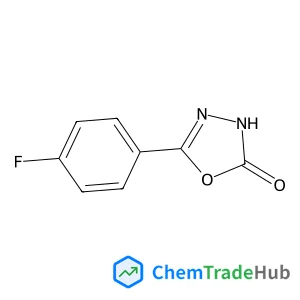
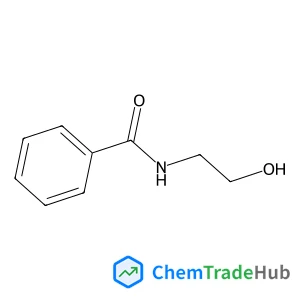

![5-Bromo-3-isopropyl-1H-pyrrolo[2,3-b]pyridine structure](https://static.chemtradehub.com/structs/125/1256819-54-1-8620.webp "5-Bromo-3-isopropyl-1H-pyrrolo[2,3-b]pyridine structure")




