











Kinetic barriers and ordering of non-covalently bound states
Literature Information
Publication Date
2003-01-07
DOI
10.1039/B209162N
Impact Factor
3.876
Authors
Simon W. O'Brien, Hideyuki Shiozawa, Rosa Zerella, Dominic P. O'Brien, Dudley H. Williams
View Original
Abstract
Binding of a dimer of a glycopeptide antibiotic to two molecules of a ligand that are bound to a membrane surface (by a hydrocarbon anchor) has been investigated. This binding on a surface is cooperatively enhanced (surface enhancement) relative to the binding in solution, because the former occurs intramolecularly on a template. Previously a correlation between surface enhancement and thermodynamic stability of the dimer in free solution (Kdimsol) was hypothesised. However, we found that two weakly dimerising antibiotics (vancomycin and ristocetin A) with similar Kdimsol give very different surface enhancements. We propose a model to explain the data correlating surface enhancement to the kinetic barrier to dissociation of the dimer. The surface enhancement of binding can be expected to increase with increasing tightness of the non-covalent interactions formed at the dimer interface. The effect should be found in general where cooperativity is exercised within an organised template (e.g., DNA duplexes and proteins).
Related Literature
Correction: Catalytic aerobic oxidation of renewable furfural to maleic anhydride and furanone derivatives with their mechanistic studies
Jihong Lan, Zhuqi Chen, Jinchi Lin, Guochuan Yin
2014-09-10
Correction
DOI: 10.1039/C4GC90039A
Hydrothermal saline promoted grafting: a route to sulfonic acid SBA-15 silica with ultra-high acid site loading for biodiesel synthesis
C. Pirez, A. F. Lee, J. C. Manayil, C. M. A. Parlett, K. Wilson
2014-07-24
Communication
DOI: 10.1039/C4GC01139B
Lactic acid production from glucose over polymer catalysts in aqueous alkaline solution under mild conditions
Xincheng Wang, Yanlei Song, Chongpin Huang, Fengbing Liang, Biaohua Chen
2014-06-26
Paper
DOI: 10.1039/C4GC00811A
Combination of Pd/C and Amberlyst-15 in a single reactor for the acid/hydrogenating catalytic conversion of carbohydrates to 5-hydroxy-2,5-hexanedione
Fei liu, Maïté Audemar, Karine De Oliveira Vigier, Jean-Marc Clacens, Floryan De Campo, François Jérôme
2014-07-25
Communication
DOI: 10.1039/C4GC01158A
Very efficient conversion of glucose to 5-hydroxymethylfurfural in DBU-based ionic liquids with benzenesulfonate anion
Lingqiao Wu, Jinliang Song, Binbin Zhang, Baowen Zhou, Huacong Zhou, Honglei Fan, Yingying Yang, Buxing Han
2014-05-20
Paper
DOI: 10.1039/C4GC00311J
Designing ionic liquids for absorptive cooling
Kiki Adi Kurnia, João A. P. Coutinho
2014-06-17
Communication
DOI: 10.1039/C4GC00954A
Continuous production of sugars from pyrolysis of acid-infused lignocellulosic biomass
2014-06-17
Paper
DOI: 10.1039/C4GC00602J
Highly active, water-compatible and easily separable magnetic mesoporous Lewis acid catalyst for the Mukaiyama–Aldol reaction in water
Fang Zhang, Xiaotao Wu, Chao Liang, Xiaoyan Li, Zhen Wang, Hexing Li
2014-03-27
Paper
DOI: 10.1039/C4GC00178H
Ruthenium complexes of tetradentate bipyridine ligands: highly efficient catalysts for the hydrogenation of carboxylic esters and lactones
Wei Li, Jian-Hua Xie, Ming-Lei Yuan, Qi-Lin Zhou
2014-06-13
Communication
DOI: 10.1039/C4GC00835A
You might also like
Compound Q&A
How should 2-Methylbenzene-1,4-diamine dihydrochloride (CAS: 615-45-2) be stored?
2-Methylbenzene-1,4-diamine dihydrochloride (CAS: 615-45-2) should be stored in ...
615-45-22-Methylbenzene-1,4-...
Compound Q&A
Is (1S,4S)-2,5-Diazabicyclo[2.2.1]heptane dihydrobromide (CAS: 132747-20-7) safe?
(1S,4S)-2,5-Diazabicyclo[2.2.1]heptane dihydrobromide is generally considered sa...
132747-20-7(1S,4S)-2,5-Diazabic...
Compound Q&A
What industries use (6-Chloropyridazin-3-YL)methanamine (CAS: 871826-15-2)?
(6-Chloropyridazin-3-YL)methanamine finds applications in the pharmaceutical ind...
871826-15-2(6-Chloropyridazin-3...
Compound Q&A
What are the main uses of 2-Fluoro-3-methylphenol (CAS: 77772-72-6)?
2-Fluoro-3-methylphenol is primarily used in the synthesis of pharmaceuticals, p...
77772-72-62-Fluoro-3-methylphe...
Compound Q&A
What precautions should be taken when handling 3-Methoxy-4-nitrobenzonitrile (CAS: 177476-75-4)?
When handling 3-Methoxy-4-nitrobenzonitrile, it is important to wear appropriate...
177476-75-43-Methoxy-4-nitroben...
Compound Q&A
What precautions should be taken when handling 1,3-Oxazolo[4,5-b]pyridine-2(3H)-thione (CAS: 211949-57-4)?
When handling 1,3-Oxazolo[4,5-b]pyridine-2(3H)-thione (CAS: 211949-57-4), it is ...
211949-57-4[1,3]Oxazolo[4,5-b]p...
Compound Q&A
What regulatory guidelines apply to 4-Ethynylbenzamide (CAS: 90347-86-7)?
4-Ethynylbenzamide (CAS: 90347-86-7) falls under various regulatory guidelines i...
90347-86-74-Ethynylbenzamide
Compound Q&A
What are the main uses of 3-(2-Ethylphenyl)-2-thioxo-4-imidazolidinone (CAS: 186822-57-1)?
3-(2-Ethylphenyl)-2-thioxo-4-imidazolidinone is primarily used as an intermediat...
186822-57-13-(2-Ethylphenyl)-2-...
Compound Q&A
What is (2-Fluoro-6-methoxyphenyl)acetic acid (CAS: 500912-19-6)?
(2-Fluoro-6-methoxyphenyl)acetic acid, also known as 4-fluoro-3-methoxybenzoic a...
500912-19-6(2-Fluoro-6-methoxyp...
Compound Q&A
What is the market or research trend for 2-[4-(Hydroxymethyl)phenoxy]ethanol (CAS: 102196-18-9)?
Market trends for 2-[4-(Hydroxymethyl)phenoxy]ethanol (CAS: 102196-18-9) indicat...
102196-18-92-[4-(Hydroxymethyl)...
Source Journal
Organic & Biomolecular Chemistry

CiteScore:
3.4
Self-citation Rate:
10.3%
Articles per Year:
1041
Organic & Biomolecular Chemistry (OBC) publishes original and high impact research and reviews in organic chemistry. We welcome research that shows new or significantly improved protocols or methodologies in total synthesis, synthetic methodology or physical and theoretical organic chemistry as well as research that shows a significant advance in the organic chemistry or molecular design aspects of chemical biology, catalysis, supramolecular and macromolecular chemistry, theoretical chemistry, mechanism-oriented physical organic chemistry, medicinal chemistry or natural products. Articles published in the journal should report new work which makes a highly-significant impact in the field. Routine and incremental work is generally not suitable for publication in the journal. More details about key areas of our scope are below. In all cases authors should include in their article clear rationale for why their research has been carried out.
Recommended Compounds
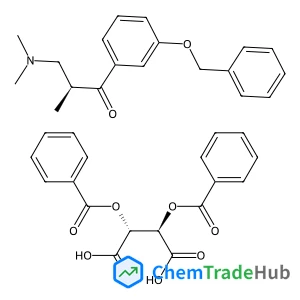
(S)-1-(3-(Benzyloxy)phenyl)-3-(dimethylamino)-2-methylpropan-1-one (2r,3r)-2,3-bis(benzoyloxy)succinate
CAS Number:
1004315-81-4
Molecular Formula:
C37H37NO10
Recommended Suppliers





Disclaimer
This page provides academic journal information for reference and research purposes only. We are not affiliated with any journal publishers and do not handle publication submissions. For publication-related inquiries, please contact the respective journal publishers directly.
If you notice any inaccuracies in the information displayed, please contact us at support@chemtradehub.com. We will promptly review and address your concerns.