












Structure and vibrational spectra of α-hydroxy isobutyric acid in the crystalline and glassy phases and isolated in inert gas matrixes
Literature Information
Publication Date
2002-03-26
DOI
10.1039/B110949A
Impact Factor
3.676
Authors
Susana Jarmelo, Rui Fausto
View Original
Abstract
Infrared spectra of monomeric α-hydroxy isobutyric acid (HIBA) isolated in argon, krypton and xenon matrixes (at 8 K) are reported. It is shown that in all the studied matrixes HIBA exists preferentially as the intramolecularly H-bonded SsC conformer, where the HOCC, OCCO and OCOH dihedrals are 0°. In addition to the SsC form, two higher energy conformers (AaT and GskC) could be observed experimentally for the first time. The spectra of the three observed conformers were assigned on the basis of density functional theory calculations (B3LYP/6-31G*) and their relative energies estimated from relative band intensities. Raman and infrared spectra of both crystalline and low temperature glassy states were also recorded and interpreted. In consonance with previously reported X-ray structural studies (W. P. J. Gaykema, J. A. Kanters and G. Roelofsen, Cryst. Struct. Commun., 1978, 7, 463), the vibrational data now obtained are consistent with the exclusive presence in the crystalline phase of molecules assuming a conformation similar to that of the lowest energy monomer observed in the matrixes (SsC conformer).
Related Literature
Application of multivariate statistics in assessment of green analytical chemistry parameters of analytical methodologies
Marek Tobiszewski, Stefan Tsakovski, Vasil Simeonov, Jacek Namieśnik
2013-04-03
Paper
DOI: 10.1039/C3GC36976E
One-by-one hydrogenation, cross-coupling reaction, and Knoevenagel condensations catalyzed by PdCl2 and the downstream palladium residue
Hu Wang, Li Li, Xing-Feng Bai, Wen-Hui Deng, Zhan-Jiang Zheng, Ke-Fang Yang
2013-06-24
Communication
DOI: 10.1039/C3GC40991K
In situ coating of diatom frustules with silver nanoparticles
Jeremiah Toster, Qin Lin Zhou, Nicole M. Smith, K. Swaminathan Iyer, Federico Rosei, Colin L. Raston
2013-06-11
Communication
DOI: 10.1039/C3GC40660A
Methods for the regeneration of nicotinamidecoenzymes
Hong Wu, Chunyong Tian, Xiaokai Song, Chuang Liu, Dong Yang, Zhongyi Jiang
2013-04-03
Critical Review
DOI: 10.1039/C3GC37129H
Catalytic conversion of biomass-derived levulinic acid to valerate esters as oxygenated fuels using supported ruthenium catalysts
Tao Pan, Jin Deng, Qing Xu, Yang Xu, Qing-Xiang Guo, Yao Fu
2013-08-13
Paper
DOI: 10.1039/C3GC40927A
N-terminal PEGylated cellulase: a high stability enzyme in 1-butyl-3-methylimidazolium chloride
Lu Li, Juan Xie, Shitao Yu, Zhongliang Su, Shiwei Liu, Fusheng Liu, Congxia Xie, Baoquan Zhang, Chenggang Zhang
2013-03-22
Paper
DOI: 10.1039/C3GC40104A
Mineral neogenesis as an inspiration for mild, solvent-free synthesis of bulk microporous metal–organic frameworks from metal (Zn, Co) oxides
Cristina Mottillo, Yuneng Lu, Minh-Hao Pham, Matthew J. Cliffe, Trong-On Do, Tomislav Friščić
2013-06-03
Paper
DOI: 10.1039/C3GC40520F
Carboxylation of terminal alkynes at ambient CO2 pressure in ethylene carbonate
Bing Yu, Zhen-Feng Diao, Chun-Xiang Guo, Chun-Lai Zhong, Liang-Nian He, Ya-Nan Zhao, Qing-Wen Song, An-Hua Liu, Jin-Quan Wang
2013-07-01
Paper
DOI: 10.1039/C3GC40896E
You might also like
Compound Q&A
What precautions should be taken when handling 4-Methyl-6-(trifluoromethyl)quinoline (CAS: 40716-16-3)?
When handling 4-Methyl-6-(trifluoromethyl)quinoline (CAS: 40716-16-3), safety go...
40716-16-34-Methyl-6-(trifluor...
Compound Q&A
What is 4-(3,5-Difluorophenyl)aniline (CAS: 405058-00-6)?
4-(3,5-Difluorophenyl)aniline is an aromatic organic compound with the CAS numbe...
405058-00-64-(3,5-Difluoropheny...
Compound Q&A
How is 5-{[4-(Trifluoromethyl)phenyl]sulfanyl}-1,2,3-thiadiazole-4-carboxylic acid (CAS: 338982-07-3) typically synthesized?
5-{[4-(Trifluoromethyl)phenyl]sulfanyl}-1,2,3-thiadiazole-4-carboxylic acid can ...
338982-07-35-{[4-(Trifluorometh...
Compound Q&A
What is the market or research trend for 4-Benzylaniline hydrochloride (CAS: 6317-57-3)?
The market for 4-Benzylaniline hydrochloride (CAS: 6317-57-3) is steadily growin...
6317-57-34-Benzylaniline hydr...
Compound Q&A
Is [3-(Diethylsulfamoyl)phenyl]boronic acid (CAS: 871329-58-7) safe?
[3-(Diethylsulfamoyl)phenyl]boronic acid is generally considered safe when handl...
871329-58-7[3-(Diethylsulfamoyl...
Compound Q&A
What are the main uses of 3-Bromo-2,5-dimethoxyaniline (CAS: 115929-62-9)?
3-Bromo-2,5-dimethoxyaniline is mainly used in the pharmaceutical and chemical i...
115929-62-93-Bromo-2,5-dimethox...
Compound Q&A
What regulatory guidelines apply to N-Methyl-1-(5-methyl-1H-indol-3-yl)methanamine (CAS: 915922-67-7)?
N-Methyl-1-(5-methyl-1H-indol-3-yl)methanamine (CAS: 915922-67-7) is subject to ...
915922-67-7N-Methyl-1-(5-methyl...
Compound Q&A
What industries use Carbamic acid, N-[(5S)-5,6-diamino-6-oxohexyl]-, 1,1-dimethylethyl ester (CAS: 24828-96-4)?
This compound is primarily used in the pharmaceutical industry for the synthesis...
24828-96-4Carbamic acid, N-[(5...
Compound Q&A
How should 2-Methyl-2-propanyl [(1S,3R)-3-aminocyclohexyl]carbamate (CAS: 1298101-47-9) be stored?
2-Methyl-2-propanyl [(1S,3R)-3-aminocyclohexyl]carbamate (CAS: 1298101-47-9) sho...
1298101-47-92-Methyl-2-propanyl ...
Compound Q&A
What industries use Ethyl 2-bromo-4,4,4-trifluorobutanoate (CAS: 367-33-9)?
Ethyl 2-bromo-4,4,4-trifluorobutanoate (CAS: 367-33-9) is utilized in the pharma...
367-33-9Ethyl 2-bromo-4,4,4-...
Source Journal
Physical Chemistry Chemical Physics

CiteScore:
5.5
Self-citation Rate:
10.3%
Articles per Year:
3036
Physical Chemistry Chemical Physics (PCCP) is an international journal co-owned by 19 physical chemistry and physics societies from around the world. This journal publishes original, cutting-edge research in physical chemistry, chemical physics and biophysical chemistry. To be suitable for publication in PCCP, articles must include significant innovation and/or insight into physical chemistry; this is the most important criterion that reviewers and Editors will judge against when evaluating submissions. The journal has a broad scope and welcomes contributions spanning experiment, theory, computation and data science. Topical coverage includes spectroscopy, dynamics, kinetics, statistical mechanics, thermodynamics, electrochemistry, catalysis, surface science, quantum mechanics, quantum computing and machine learning. Interdisciplinary research areas such as polymers and soft matter, materials, nanoscience, energy, surfaces/interfaces, and biophysical chemistry are welcomed if they demonstrate significant innovation and/or insight into physical chemistry. Joined experimental/theoretical studies are particularly appreciated when complementary and based on up-to-date approaches.
Recommended Compounds
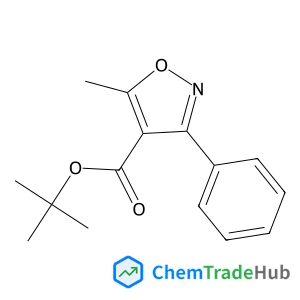
2-Methyl-2-propanyl 5-methyl-3-phenyl-1,2-oxazole-4-carboxylate
CAS Number:
211429-79-7
Molecular Formula:
C15H17NO3
![[3-(2,6-Dichlorophenyl)-5-isopropyl-1,2-oxazol-4-yl]methanol structure](https://static.chemtradehub.com/structs/278/278597-30-1-5c79.webp "[3-(2,6-Dichlorophenyl)-5-isopropyl-1,2-oxazol-4-yl]methanol structure")
[3-(2,6-Dichlorophenyl)-5-isopropyl-1,2-oxazol-4-yl]methanol
CAS Number:
278597-30-1
Molecular Formula:
C13H13Cl2NO2
Recommended Suppliers






Disclaimer
This page provides academic journal information for reference and research purposes only. We are not affiliated with any journal publishers and do not handle publication submissions. For publication-related inquiries, please contact the respective journal publishers directly.
If you notice any inaccuracies in the information displayed, please contact us at support@chemtradehub.com. We will promptly review and address your concerns.