












Mineral neogenesis as an inspiration for mild, solvent-free synthesis of bulk microporous metal–organic frameworks from metal (Zn, Co) oxides
Literature Information
Publication Date
2013-06-03
DOI
10.1039/C3GC40520F
Impact Factor
10.182
Authors
Cristina Mottillo, Yuneng Lu, Minh-Hao Pham, Matthew J. Cliffe, Trong-On Do, Tomislav Friščić
View Original
Abstract
“Accelerated aging” is a simple and conceptually novel methodology for the synthesis of functional metal–organic materials, which seeks to provide a scalable, mild and environmentally-friendly alternative to solution-based or mechanochemical syntheses. Accelerated aging draws inspiration from slow processes of geological biomineralization and mineral neogenesis, and adapts them for the low-energy and solvent-free synthesis of modern metal–organic materials. This systematic study outlines the development of an accelerated aging synthesis of microporous frameworks from metal oxides CoO and ZnO. Whereas metal oxides often require high temperatures or aggressive reagents, accelerated aging allows their spontaneous transformation into porous materials under surprisingly mild conditions, akin to those of molecular self-assembly (humid air, up to 45 °C). Here, we describe how accelerated aging can be optimized for the one-step synthesis of multi-gram amounts of microporous solids. As targets, we selected popular zeolitic imidazolate frameworks (ZIFs): the sodalite-topology ZIF-8, its cobalt analogue ZIF-67, and a related zeolite RHO framework. Unlike conventional solution or mechanochemical syntheses, accelerated aging is diffusion-controlled and does not require continuous agitation, bulk solvent or high temperature. The syntheses of ZIF-8 and ZIF-67 contrast the conventional paradigm of metal–organic framework synthesis, by demonstrating that microporous materials can be spontaneously and efficiently assembled from a close-packed metal oxide without using solvents, high temperature or other activation (e.g. microwave, sonochemical, mechanochemical).
Recommended Journals
Related Literature
Iodine(iii)-induced regioselective carbocyclization of terminal alkynes: a facile approach to prepare 1,1-diiodomethylene substituted cyclic compounds
Zeyu Wang, Jiang Zhong, Chen Zheng, Renhua Fan
2017-02-08
Research Article
DOI: 10.1039/C6QO00822D
Mechanistic studies for dirhodium-catalyzed ring expansion reactions
Yin Wei, Xu-Bo Hu, Kai Chen
2017-02-09
Research Article
DOI: 10.1039/C6QO00713A
Electronic and steric effects on the three-fold Scholl-type cycloheptatriene ring formation around a tribenzotriquinacene core‡
Ho-Wang Ip, Hak-Fun Chow, Dietmar Kuck
2017-03-16
Research Article
DOI: 10.1039/C7QO00132K
Fast construction of dianthraceno[a,e]pentalenes for OPV applications
Haijun Fan
2017-01-20
Research Article
DOI: 10.1039/C6QO00867D
Copper nitrate-mediated chemo- and regioselective annulation from two different alkynes: a direct route to isoxazoles
Yingying Li, Mingchun Gao, Bingxin Liu
2016-12-20
Research Article
DOI: 10.1039/C6QO00704J
Selective thionation of naphtho[2,3-b]thiophene diimide: tuning of the optoelectronic properties and packing structure
Masahiro Nakano, Kazuo Takimiya, Qichun Zhang
2017-01-19
Research Article
DOI: 10.1039/C6QO00871B
One-pot synthesis of N-heterocycles and enimino carbocycles by tandem dehydrative coupling–reductive cyclization of halo-sec-amides and dehydrative cyclization of olefinic sec-amides‡
Pei-Qiang Huang, Ying-Hong Huang, Shu-Ren Wang
2016-12-16
Research Article
DOI: 10.1039/C6QO00720A
Rhodanine-based dyes absorbing in the entire visible spectrum
Rafael Sandoval-Torrientes, Joaquín Calbo, David García-Fresnadillo, José Santos, Enrique Ortí
2017-02-06
Research Article
DOI: 10.1039/C6QO00760K
Dimerization of substituted 4-aryl-1,3-diacetylenes – quantum chemical calculations and kinetic studies
Alexandra Janiszewski, Jonas Fax, Gebhard Haberhauer
2019-02-26
Research Article
DOI: 10.1039/C9QO00119K
Unexpected formation of [5]helicenes from hexaarylbenzenes containing pyrrole moieties
Felix Ammon, Stephanie Theresia Sauer, Rainer Lippert, Dominik Lungerich, David Reger, Frank Hampel, Norbert Jux
2017-03-23
Research Article
DOI: 10.1039/C7QO00112F
You might also like
Compound Q&A
What precautions should be taken when handling 4-Methyl-6-(trifluoromethyl)quinoline (CAS: 40716-16-3)?
When handling 4-Methyl-6-(trifluoromethyl)quinoline (CAS: 40716-16-3), safety go...
40716-16-34-Methyl-6-(trifluor...
Compound Q&A
What is 4-(3,5-Difluorophenyl)aniline (CAS: 405058-00-6)?
4-(3,5-Difluorophenyl)aniline is an aromatic organic compound with the CAS numbe...
405058-00-64-(3,5-Difluoropheny...
Compound Q&A
How is 5-{[4-(Trifluoromethyl)phenyl]sulfanyl}-1,2,3-thiadiazole-4-carboxylic acid (CAS: 338982-07-3) typically synthesized?
5-{[4-(Trifluoromethyl)phenyl]sulfanyl}-1,2,3-thiadiazole-4-carboxylic acid can ...
338982-07-35-{[4-(Trifluorometh...
Compound Q&A
What is the market or research trend for 4-Benzylaniline hydrochloride (CAS: 6317-57-3)?
The market for 4-Benzylaniline hydrochloride (CAS: 6317-57-3) is steadily growin...
6317-57-34-Benzylaniline hydr...
Compound Q&A
Is [3-(Diethylsulfamoyl)phenyl]boronic acid (CAS: 871329-58-7) safe?
[3-(Diethylsulfamoyl)phenyl]boronic acid is generally considered safe when handl...
871329-58-7[3-(Diethylsulfamoyl...
Compound Q&A
What are the main uses of 3-Bromo-2,5-dimethoxyaniline (CAS: 115929-62-9)?
3-Bromo-2,5-dimethoxyaniline is mainly used in the pharmaceutical and chemical i...
115929-62-93-Bromo-2,5-dimethox...
Compound Q&A
What regulatory guidelines apply to N-Methyl-1-(5-methyl-1H-indol-3-yl)methanamine (CAS: 915922-67-7)?
N-Methyl-1-(5-methyl-1H-indol-3-yl)methanamine (CAS: 915922-67-7) is subject to ...
915922-67-7N-Methyl-1-(5-methyl...
Compound Q&A
What industries use Carbamic acid, N-[(5S)-5,6-diamino-6-oxohexyl]-, 1,1-dimethylethyl ester (CAS: 24828-96-4)?
This compound is primarily used in the pharmaceutical industry for the synthesis...
24828-96-4Carbamic acid, N-[(5...
Compound Q&A
How should 2-Methyl-2-propanyl [(1S,3R)-3-aminocyclohexyl]carbamate (CAS: 1298101-47-9) be stored?
2-Methyl-2-propanyl [(1S,3R)-3-aminocyclohexyl]carbamate (CAS: 1298101-47-9) sho...
1298101-47-92-Methyl-2-propanyl ...
Compound Q&A
What industries use Ethyl 2-bromo-4,4,4-trifluorobutanoate (CAS: 367-33-9)?
Ethyl 2-bromo-4,4,4-trifluorobutanoate (CAS: 367-33-9) is utilized in the pharma...
367-33-9Ethyl 2-bromo-4,4,4-...
Source Journal
Green Chemistry

CiteScore:
16.1
Self-citation Rate:
7.5%
Articles per Year:
944
Green Chemistry provides a unique forum for the publication of innovative research on the development of alternative green and sustainable technologies. The scope of Green Chemistry is based on, but not limited to, the definition proposed by Anastas and Warner (Green Chemistry: Theory and Practice, P T Anastas and J C Warner, Oxford University Press, Oxford, 1998). Green chemistry is the utilisation of a set of principles that reduces or eliminates the use or generation of hazardous substances in the design, manufacture and application of chemical products. Green Chemistry is at the frontiers of this continuously-evolving interdisciplinary science and publishes research that attempts to reduce the environmental impact of the chemical enterprise by developing a technology base that is inherently non-toxic to living things and the environment. Submissions on all aspects of research relating to the endeavour are welcome. The journal publishes original and significant cutting-edge research that is likely to be of wide general appeal. To be published, work must present a significant advance in green chemistry. Papers must contain a comparison with existing methods and demonstrate advantages over those methods before publication can be considered. For more information please see this Editorial. Coverage includes the following, but is not limited to: Design (e.g. biomimicry, design for degradation/recycling/reduced toxicity…) Reagents & Feedstocks (e.g. renewables, CO2, solvents, auxiliary agents, waste utilization…) Synthesis (e.g. organic, inorganic, synthetic biology…) Catalysis (e.g. homogeneous, heterogeneous, enzyme, whole cell…) Process (e.g. process design, intensification, separations, recycling, efficiency…) Energy (e.g. renewable energy, fuels, photovoltaics, fuel cells, energy storage, energy carriers…) Applications (e.g. electronics, dyes, consumer products, coatings, pharmaceuticals, preservatives, building materials, chemicals for industry/agriculture/mining…) Impact (e.g. safety, metrics, LCA, sustainability, (eco)toxicology…) Green chemistry is, by definition, a continuously-evolving frontier. Therefore, the inclusion of a particular material or technology does not, of itself, guarantee that a paper is suitable for the journal. To be suitable, the novel advance should have the potential for reduced environmental impact relative to the state of the art. Green Chemistry does not normally deal with research associated with 'end-of-pipe' or remediation issues.
Recommended Compounds
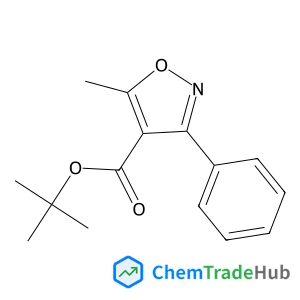
2-Methyl-2-propanyl 5-methyl-3-phenyl-1,2-oxazole-4-carboxylate
CAS Number:
211429-79-7
Molecular Formula:
C15H17NO3
![N-{3-[Benzyl(methyl)amino]propyl}-9-chloro-5,6,7,8-tetrahydro-2-acridinecarboxamide structure](https://static.chemtradehub.com/structs/142/1426944-49-1-1e4c.webp "N-{3-[Benzyl(methyl)amino]propyl}-9-chloro-5,6,7,8-tetrahydro-2-acridinecarboxamide structure")
N-{3-[Benzyl(methyl)amino]propyl}-9-chloro-5,6,7,8-tetrahydro-2-acridinecarboxamide
CAS Number:
1426944-49-1
Molecular Formula:
C25H28ClN3O
Recommended Suppliers







Disclaimer
This page provides academic journal information for reference and research purposes only. We are not affiliated with any journal publishers and do not handle publication submissions. For publication-related inquiries, please contact the respective journal publishers directly.
If you notice any inaccuracies in the information displayed, please contact us at support@chemtradehub.com. We will promptly review and address your concerns.