












Nanoscale electrodeposition of germanium on Au(111) from an ionic liquid: an in situ STM study of phase formation Part II. Ge from GeCl4
Literature Information
Publication Date
2002-03-22
DOI
10.1039/B110560B
Impact Factor
3.676
Authors
Frank Endres, Sherif Zein El Abedin
View Original
Abstract
The electrodeposition of germanium on Au(111) from the GeCl4 saturated ionic liquid 1-butyl-3-methylimidazolium hexafluorophosphate was investigated with in situ scanning tunneling microscopy and in part, qualitatively, with in situI/U tunneling spectroscopy. Ge deposition starts in the UPD regime with the decoration of the gold steps by Ge at +1000 mV vs. Ge, then small islands that have initial heights of about 150 pm on average start growing at +950 mV vs. Ge. At +750 mV vs. Ge islands with average heights of 250 pm form, they can be removed reversibly at higher electrode potentials and holes with apparent depths between about 30 and 100 pm remain in the gold surface. Before bulk deposition of germanium starts, a thin rough layer with metallic behaviour is deposited on the surface. It can be stripped reversibly upon increasing the electrode potential to higher values. The overpotential deposition on this layer starts with nanoclusters of 10–40 nm in diameter and some nanometres in height. They can be stabilized for hours by proper selection of the electrode potential. In situI/U tunneling spectroscopy of about 100 nm thick Ge films clearly shows semiconducting behaviour on the whole of the surface in the scanned area. The band gap of the bulk Ge determined by in situI/U tunneling spectroscopy is 0.7 ± 0.1 eV, in good agreement with the theoretical value of 0.67 eV for intrinsic microcrystalline germanium at 300 K. On a layer of approximately 20 nm in thickness we found both sites with semiconducting behaviour and sites with rather metallic behaviour.
Recommended Journals
Related Literature
Carbon dioxide as a reversible amine-protecting agent in selective Michael additions and acylations
Annelies Peeters, Rob Ameloot, Dirk E. De Vos
2013-04-11
Paper
DOI: 10.1039/C3GC40568K
Lignin to lipid bioconversion by oleaginous Rhodococci
Matyas Kosa, Arthur J. Ragauskas
2013-06-19
Communication
DOI: 10.1039/C3GC40434J
Organocatalytic 1,3-dipolar cycloaddition reactions of ketones and azides with water as a solvent
Dwun Kit Jonathan Yeung, Tao Gao, Jiayao Huang, Shaofa Sun, Haibing Guo, Jian Wang
2013-07-22
Communication
DOI: 10.1039/C3GC41126E
Conversion of fructose into 5-hydroxymethylfurfural and alkyl levulinates catalyzed by sulfonic acid-functionalized carbon materials
Jinzhu Chen, Xing Huang, Limin Chen, Longlong Ma, Xinjun Li
2013-08-06
Paper
DOI: 10.1039/C3GC41139G
Synergistic catalysis by an aerogel supported ionic liquid phase (ASILP) in the synthesis of 1,5-benzodiazepines
Rajanikant Kurane, Jagannath Jadhav, Sharanabasappa Khanapure, Rajashri Salunkhe, Gajanan Rashinkar
2013-05-01
Communication
DOI: 10.1039/C3GC40592C
Cellulose-derived superparamagnetic carbonaceous solid acid catalyst for cellulose hydrolysis in an ionic liquid or aqueous reaction system
Haixin Guo, Youfen Lian, Lulu Yan, Xinhua Qi, Richard Lee Smith, Jr.
2013-05-14
Paper
DOI: 10.1039/C3GC40433A
A waste-minimized protocol for the preparation of 1,2-azido alcohols and 1,2-amino alcohols
Eleonora Ballerini, Paolo Crotti, Ileana Frau, Daniela Lanari, Ferdinando Pizzo, Luigi Vaccaro
2013-06-21
Paper
DOI: 10.1039/C3GC40988K
Ionic liquid forms of the herbicide dicamba with increased efficacy and reduced volatility
O. Andreea Cojocaru, Julia L. Shamshina, Gabriela Gurau, Anna Syguda, Tadeusz Praczyk, Juliusz Pernak, Robin D. Rogers
2013-06-03
Paper
DOI: 10.1039/C3GC37143C
Benzylic hydroxylation of aromatic compounds by P450 BM3
Katharina Neufeld, Jan Marienhagen, Ulrich Schwaneberg
2013-07-08
Paper
DOI: 10.1039/C3GC40838H
You might also like
Compound Q&A
What precautions should be taken when handling 4-Methyl-6-(trifluoromethyl)quinoline (CAS: 40716-16-3)?
When handling 4-Methyl-6-(trifluoromethyl)quinoline (CAS: 40716-16-3), safety go...
40716-16-34-Methyl-6-(trifluor...
Compound Q&A
What is 4-(3,5-Difluorophenyl)aniline (CAS: 405058-00-6)?
4-(3,5-Difluorophenyl)aniline is an aromatic organic compound with the CAS numbe...
405058-00-64-(3,5-Difluoropheny...
Compound Q&A
How is 5-{[4-(Trifluoromethyl)phenyl]sulfanyl}-1,2,3-thiadiazole-4-carboxylic acid (CAS: 338982-07-3) typically synthesized?
5-{[4-(Trifluoromethyl)phenyl]sulfanyl}-1,2,3-thiadiazole-4-carboxylic acid can ...
338982-07-35-{[4-(Trifluorometh...
Compound Q&A
What is the market or research trend for 4-Benzylaniline hydrochloride (CAS: 6317-57-3)?
The market for 4-Benzylaniline hydrochloride (CAS: 6317-57-3) is steadily growin...
6317-57-34-Benzylaniline hydr...
Compound Q&A
Is [3-(Diethylsulfamoyl)phenyl]boronic acid (CAS: 871329-58-7) safe?
[3-(Diethylsulfamoyl)phenyl]boronic acid is generally considered safe when handl...
871329-58-7[3-(Diethylsulfamoyl...
Compound Q&A
What are the main uses of 3-Bromo-2,5-dimethoxyaniline (CAS: 115929-62-9)?
3-Bromo-2,5-dimethoxyaniline is mainly used in the pharmaceutical and chemical i...
115929-62-93-Bromo-2,5-dimethox...
Compound Q&A
What regulatory guidelines apply to N-Methyl-1-(5-methyl-1H-indol-3-yl)methanamine (CAS: 915922-67-7)?
N-Methyl-1-(5-methyl-1H-indol-3-yl)methanamine (CAS: 915922-67-7) is subject to ...
915922-67-7N-Methyl-1-(5-methyl...
Compound Q&A
What industries use Carbamic acid, N-[(5S)-5,6-diamino-6-oxohexyl]-, 1,1-dimethylethyl ester (CAS: 24828-96-4)?
This compound is primarily used in the pharmaceutical industry for the synthesis...
24828-96-4Carbamic acid, N-[(5...
Compound Q&A
How should 2-Methyl-2-propanyl [(1S,3R)-3-aminocyclohexyl]carbamate (CAS: 1298101-47-9) be stored?
2-Methyl-2-propanyl [(1S,3R)-3-aminocyclohexyl]carbamate (CAS: 1298101-47-9) sho...
1298101-47-92-Methyl-2-propanyl ...
Compound Q&A
What industries use Ethyl 2-bromo-4,4,4-trifluorobutanoate (CAS: 367-33-9)?
Ethyl 2-bromo-4,4,4-trifluorobutanoate (CAS: 367-33-9) is utilized in the pharma...
367-33-9Ethyl 2-bromo-4,4,4-...
Source Journal
Physical Chemistry Chemical Physics

CiteScore:
5.5
Self-citation Rate:
10.3%
Articles per Year:
3036
Physical Chemistry Chemical Physics (PCCP) is an international journal co-owned by 19 physical chemistry and physics societies from around the world. This journal publishes original, cutting-edge research in physical chemistry, chemical physics and biophysical chemistry. To be suitable for publication in PCCP, articles must include significant innovation and/or insight into physical chemistry; this is the most important criterion that reviewers and Editors will judge against when evaluating submissions. The journal has a broad scope and welcomes contributions spanning experiment, theory, computation and data science. Topical coverage includes spectroscopy, dynamics, kinetics, statistical mechanics, thermodynamics, electrochemistry, catalysis, surface science, quantum mechanics, quantum computing and machine learning. Interdisciplinary research areas such as polymers and soft matter, materials, nanoscience, energy, surfaces/interfaces, and biophysical chemistry are welcomed if they demonstrate significant innovation and/or insight into physical chemistry. Joined experimental/theoretical studies are particularly appreciated when complementary and based on up-to-date approaches.
Recommended Compounds
![[3-(2,6-Dichlorophenyl)-5-isopropyl-1,2-oxazol-4-yl]methanol structure](https://static.chemtradehub.com/structs/278/278597-30-1-5c79.webp "[3-(2,6-Dichlorophenyl)-5-isopropyl-1,2-oxazol-4-yl]methanol structure")
[3-(2,6-Dichlorophenyl)-5-isopropyl-1,2-oxazol-4-yl]methanol
CAS Number:
278597-30-1
Molecular Formula:
C13H13Cl2NO2
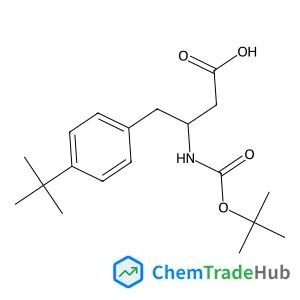
(S)-3-((tert-Butoxycarbonyl)amino)-4-(4-(tert-butyl)phenyl)butanoic acid
CAS Number:
403661-85-8
Molecular Formula:
C19H29NO4
![N-{3-[Benzyl(methyl)amino]propyl}-9-chloro-5,6,7,8-tetrahydro-2-acridinecarboxamide structure](https://static.chemtradehub.com/structs/142/1426944-49-1-1e4c.webp "N-{3-[Benzyl(methyl)amino]propyl}-9-chloro-5,6,7,8-tetrahydro-2-acridinecarboxamide structure")
N-{3-[Benzyl(methyl)amino]propyl}-9-chloro-5,6,7,8-tetrahydro-2-acridinecarboxamide
CAS Number:
1426944-49-1
Molecular Formula:
C25H28ClN3O
Recommended Suppliers




Disclaimer
This page provides academic journal information for reference and research purposes only. We are not affiliated with any journal publishers and do not handle publication submissions. For publication-related inquiries, please contact the respective journal publishers directly.
If you notice any inaccuracies in the information displayed, please contact us at support@chemtradehub.com. We will promptly review and address your concerns.