












Cellulose-derived superparamagnetic carbonaceous solid acid catalyst for cellulose hydrolysis in an ionic liquid or aqueous reaction system
Literature Information
Publication Date
2013-05-14
DOI
10.1039/C3GC40433A
Impact Factor
10.182
Authors
Haixin Guo, Youfen Lian, Lulu Yan, Xinhua Qi, Richard Lee Smith, Jr.
View Original
Abstract
A cellulose-derived carbonaceous solid acid catalyst that has superparamagnetism was synthesized by incomplete hydrothermal carbonization of cellulose followed by Fe3O4 grafting and –SO3H group functionalization. The as-prepared superparamagnetic carbon catalyst contained –SO3H, –COOH, and phenolic –OH groups and exhibited good catalytic activity for the hydrolysis of cellulose in either an ionic liquid phase or aqueous phase. A total reducing sugar (TRS) yield of 68.9% was obtained with ionic liquid 1-butyl-3-methyl imidazolium chloride ([BMIM][Cl]) at 130 °C for a 3 h reaction time. A TRS yield of 51% was obtained with water at 180 °C for a 9 h reaction time. The catalyst was applied to rice straw for which a TRS yield of 35.5%, based on the total mass of loaded rice straw, was obtained in [BMIM][Cl] at 150 °C in 2 h. The superparamagnetic carbonaceous solid acid catalyst was easily separated from the reaction products with an external magnetic field and used for subsequent recycling experiments. The activity of the recycled catalyst decreased with a recycle number that is attributed to some loss of the catalyst and adsorption of humin products on the active catalyst sites.
Related Literature
Silver-catalyzed geminal aminofluorination of diazoketones with anilines and N-fluorobenzenesulphonimide
Jun Huang, Linyong Li, Haoguo Chen, Tiebo Xiao, Yuwei He, Lei Zhou
2017-01-12
Research Article
DOI: 10.1039/C6QO00813E
5-Azadibenzo[a,g]corannulene
V. M. Tsefrikas, A. K. Greene, L. T. Scott
2017-01-19
Research Article
DOI: 10.1039/C6QO00831C
One-pot synthesis of N-heterocycles and enimino carbocycles by tandem dehydrative coupling–reductive cyclization of halo-sec-amides and dehydrative cyclization of olefinic sec-amides‡
Pei-Qiang Huang, Ying-Hong Huang, Shu-Ren Wang
2016-12-16
Research Article
DOI: 10.1039/C6QO00720A
A general synthesis of unnatural α-amino acids by iron-catalysed olefin–olefin coupling via generated radicals
Nadezhda V. Stoletova, Vladislav I. Kovalev, Tat'yana F. Savel'yeva, Victor I. Maleev
2019-02-18
Research Article
DOI: 10.1039/C9QO00108E
A theoretical study on quasi-one-dimensional open-shell singlet ladder oligomers: multi-radical nature, aromaticity and second hyperpolarizability
Kotaro Fukuda, Jun-ya Fujiyoshi, Hiroshi Matsui, Takanori Nagami, Shota Takamuku, Benoît Champagne
2017-03-06
Research Article
DOI: 10.1039/C7QO00108H
Synthesis and structure revision of symplocin A
Lu-Ping Shao, Chang-Mei Si, Zhuo-Ya Mao, Wen Zhou, Tadeusz F. Molinski, Bang-Guo Wei, Guo-Qiang Lin
2017-02-09
Research Article
DOI: 10.1039/C7QO00052A
The synthesis, structure, and properties of 5,6,11,12-tetraarylindeno[1,2-b]fluorenes and their applications as donors for organic photovoltaic devices
Yuan-Chih Lo, Hao-Chun Ting, Ya-Ze Li, Yi-Hua Li, Shun-Wei Liu, Kuo-Wei Huang
2016-12-01
Research Article
DOI: 10.1039/C6QO00673F
Additive-free regio- and diastereoselective construction of fully-substituted isoxazolidines employing diazo compounds
Ekta Gupta, Mohd Khalid Zaheer, Ruchir Kant
2019-02-21
Research Article
DOI: 10.1039/C8QO01421C
Pyrene-fused bisphenazinothiadiazoles with red to NIR electroluminescence
Diego Cortizo-Lacalle, Antonio Pertegás, Manuel Melle-Franco, Henk J. Bolink
2017-04-10
Research Article
DOI: 10.1039/C7QO00227K
Mechanistic studies for dirhodium-catalyzed ring expansion reactions
Yin Wei, Xu-Bo Hu, Kai Chen
2017-02-09
Research Article
DOI: 10.1039/C6QO00713A
You might also like
Compound Q&A
What precautions should be taken when handling 4-Methyl-6-(trifluoromethyl)quinoline (CAS: 40716-16-3)?
When handling 4-Methyl-6-(trifluoromethyl)quinoline (CAS: 40716-16-3), safety go...
40716-16-34-Methyl-6-(trifluor...
Compound Q&A
What is 4-(3,5-Difluorophenyl)aniline (CAS: 405058-00-6)?
4-(3,5-Difluorophenyl)aniline is an aromatic organic compound with the CAS numbe...
405058-00-64-(3,5-Difluoropheny...
Compound Q&A
How is 5-{[4-(Trifluoromethyl)phenyl]sulfanyl}-1,2,3-thiadiazole-4-carboxylic acid (CAS: 338982-07-3) typically synthesized?
5-{[4-(Trifluoromethyl)phenyl]sulfanyl}-1,2,3-thiadiazole-4-carboxylic acid can ...
338982-07-35-{[4-(Trifluorometh...
Compound Q&A
What is the market or research trend for 4-Benzylaniline hydrochloride (CAS: 6317-57-3)?
The market for 4-Benzylaniline hydrochloride (CAS: 6317-57-3) is steadily growin...
6317-57-34-Benzylaniline hydr...
Compound Q&A
Is [3-(Diethylsulfamoyl)phenyl]boronic acid (CAS: 871329-58-7) safe?
[3-(Diethylsulfamoyl)phenyl]boronic acid is generally considered safe when handl...
871329-58-7[3-(Diethylsulfamoyl...
Compound Q&A
What are the main uses of 3-Bromo-2,5-dimethoxyaniline (CAS: 115929-62-9)?
3-Bromo-2,5-dimethoxyaniline is mainly used in the pharmaceutical and chemical i...
115929-62-93-Bromo-2,5-dimethox...
Compound Q&A
What regulatory guidelines apply to N-Methyl-1-(5-methyl-1H-indol-3-yl)methanamine (CAS: 915922-67-7)?
N-Methyl-1-(5-methyl-1H-indol-3-yl)methanamine (CAS: 915922-67-7) is subject to ...
915922-67-7N-Methyl-1-(5-methyl...
Compound Q&A
What industries use Carbamic acid, N-[(5S)-5,6-diamino-6-oxohexyl]-, 1,1-dimethylethyl ester (CAS: 24828-96-4)?
This compound is primarily used in the pharmaceutical industry for the synthesis...
24828-96-4Carbamic acid, N-[(5...
Compound Q&A
How should 2-Methyl-2-propanyl [(1S,3R)-3-aminocyclohexyl]carbamate (CAS: 1298101-47-9) be stored?
2-Methyl-2-propanyl [(1S,3R)-3-aminocyclohexyl]carbamate (CAS: 1298101-47-9) sho...
1298101-47-92-Methyl-2-propanyl ...
Compound Q&A
What industries use Ethyl 2-bromo-4,4,4-trifluorobutanoate (CAS: 367-33-9)?
Ethyl 2-bromo-4,4,4-trifluorobutanoate (CAS: 367-33-9) is utilized in the pharma...
367-33-9Ethyl 2-bromo-4,4,4-...
Source Journal
Green Chemistry

CiteScore:
16.1
Self-citation Rate:
7.5%
Articles per Year:
944
Green Chemistry provides a unique forum for the publication of innovative research on the development of alternative green and sustainable technologies. The scope of Green Chemistry is based on, but not limited to, the definition proposed by Anastas and Warner (Green Chemistry: Theory and Practice, P T Anastas and J C Warner, Oxford University Press, Oxford, 1998). Green chemistry is the utilisation of a set of principles that reduces or eliminates the use or generation of hazardous substances in the design, manufacture and application of chemical products. Green Chemistry is at the frontiers of this continuously-evolving interdisciplinary science and publishes research that attempts to reduce the environmental impact of the chemical enterprise by developing a technology base that is inherently non-toxic to living things and the environment. Submissions on all aspects of research relating to the endeavour are welcome. The journal publishes original and significant cutting-edge research that is likely to be of wide general appeal. To be published, work must present a significant advance in green chemistry. Papers must contain a comparison with existing methods and demonstrate advantages over those methods before publication can be considered. For more information please see this Editorial. Coverage includes the following, but is not limited to: Design (e.g. biomimicry, design for degradation/recycling/reduced toxicity…) Reagents & Feedstocks (e.g. renewables, CO2, solvents, auxiliary agents, waste utilization…) Synthesis (e.g. organic, inorganic, synthetic biology…) Catalysis (e.g. homogeneous, heterogeneous, enzyme, whole cell…) Process (e.g. process design, intensification, separations, recycling, efficiency…) Energy (e.g. renewable energy, fuels, photovoltaics, fuel cells, energy storage, energy carriers…) Applications (e.g. electronics, dyes, consumer products, coatings, pharmaceuticals, preservatives, building materials, chemicals for industry/agriculture/mining…) Impact (e.g. safety, metrics, LCA, sustainability, (eco)toxicology…) Green chemistry is, by definition, a continuously-evolving frontier. Therefore, the inclusion of a particular material or technology does not, of itself, guarantee that a paper is suitable for the journal. To be suitable, the novel advance should have the potential for reduced environmental impact relative to the state of the art. Green Chemistry does not normally deal with research associated with 'end-of-pipe' or remediation issues.
Recommended Compounds
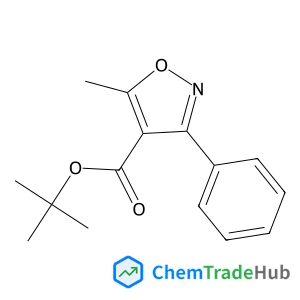
2-Methyl-2-propanyl 5-methyl-3-phenyl-1,2-oxazole-4-carboxylate
CAS Number:
211429-79-7
Molecular Formula:
C15H17NO3
![Methyl 3-({2'-[(E)-(hydroxyhydrazono)methyl]-4-biphenylyl}methyl)-2-oxo-2,3-dihydro-1H-benzimidazole-4-carboxylate structure](https://static.chemtradehub.com/structs/149/1499167-72-4-034a.webp "Methyl 3-({2'-[(E)-(hydroxyhydrazono)methyl]-4-biphenylyl}methyl)-2-oxo-2,3-dihydro-1H-benzimidazole-4-carboxylate structure")
Methyl 3-({2'-[(E)-(hydroxyhydrazono)methyl]-4-biphenylyl}methyl)-2-oxo-2,3-dihydro-1H-benzimidazole-4-carboxylate
CAS Number:
1499167-72-4
Molecular Formula:
C23H20N4O4
![2,4-Dichloro-6-isopropyl-5H-pyrrolo[3,4-d]pyrimidin-7(6H)-one structure](https://static.chemtradehub.com/structs/107/1079649-94-7-ad4a.webp "2,4-Dichloro-6-isopropyl-5H-pyrrolo[3,4-d]pyrimidin-7(6H)-one structure")
2,4-Dichloro-6-isopropyl-5H-pyrrolo[3,4-d]pyrimidin-7(6H)-one
CAS Number:
1079649-94-7
Molecular Formula:
C9H9Cl2N3O
Recommended Suppliers



Disclaimer
This page provides academic journal information for reference and research purposes only. We are not affiliated with any journal publishers and do not handle publication submissions. For publication-related inquiries, please contact the respective journal publishers directly.
If you notice any inaccuracies in the information displayed, please contact us at support@chemtradehub.com. We will promptly review and address your concerns.