












Spectral dependence of the intrinsic optical signal of excited states of central gray matter and conformational changes at membrane interfaces
Literature Information
Publication Date
2002-03-14
DOI
10.1039/B109914K
Impact Factor
3.676
Authors
Vera Maura Fernandes de Lima, Marc Weimer, Wolfgang Hanke
View Original
Abstract
Excitation waves and other no-propagation excited states change the optical properties of central gray matter. In transparent tissue, as the retina and the lens are, the intrinsic optical signals (IOS) are macroscopic. This optical signal is created by light scatter and has different components at the red and blue end of the spectrum. The scatter of red light is closely coupled to ionic flow in the extracellular space whereas the blue/green component is the hallmark of propagation onset and probably is coupled to membrane optical properties. The interpretation of the early red scatter as arising from conformational changes coupled to membrane activity led to the prediction that a macroscopic IOS would be present in the transparent lens and that it should present wavelike propagation. Experiments confirmed this prediction.
Related Literature
Metal-containing zeolites as efficient catalysts for the transformation of highly valuable chiral biomass-derived products
Cecilia Paris, Manuel Moliner, Avelino Corma
2013-05-22
Paper
DOI: 10.1039/C3GC40267C
Synergistic catalysis by an aerogel supported ionic liquid phase (ASILP) in the synthesis of 1,5-benzodiazepines
Rajanikant Kurane, Jagannath Jadhav, Sharanabasappa Khanapure, Rajashri Salunkhe, Gajanan Rashinkar
2013-05-01
Communication
DOI: 10.1039/C3GC40592C
Chemical conversion of biomass-derived hexose sugars to levulinic acid over sulfonic acid-functionalized graphene oxide catalysts
Ji-Woong Yoon, Dong Won Hwang, Harold H. Kung
2013-08-29
Paper
DOI: 10.1039/C3GC40353J
Photocatalysis on supported gold and silver nanoparticles under ultraviolet and visible light irradiation
Sarina Sarina, Eric R. Waclawik, Huaiyong Zhu
2013-05-10
Tutorial Review
DOI: 10.1039/C3GC40450A
Nanocatalysis in continuous flow: supported iron oxide nanoparticles for the heterogeneous aerobic oxidation of benzyl alcohol
David Obermayer, Alina M. Balu, Antonio A. Romero, Walter Goessler, Rafael Luque, C. Oliver Kappe
2013-03-19
Paper
DOI: 10.1039/C3GC40307F
Carbon dioxide as a reversible amine-protecting agent in selective Michael additions and acylations
Annelies Peeters, Rob Ameloot, Dirk E. De Vos
2013-04-11
Paper
DOI: 10.1039/C3GC40568K
Reactions of hydrophobic organic nanoparticle mixtures in water: nanoparticle-on-nanoparticle oxidative dye bleaching
Marco Giardiello, Tom O. McDonald, Jet-Sing Lee, Aled D. Roberts, Andrew Owen, Steve P. Rannard
2013-04-12
Paper
DOI: 10.1039/C3GC40573G
Unusual reactions mediated by FMN-dependent ene- and nitro-reductases
Katharina Durchschein, Mélanie Hall, Kurt Faber
2013-04-24
Critical Review
DOI: 10.1039/C3GC40588E
You might also like
Compound Q&A
What precautions should be taken when handling 4-Methyl-6-(trifluoromethyl)quinoline (CAS: 40716-16-3)?
When handling 4-Methyl-6-(trifluoromethyl)quinoline (CAS: 40716-16-3), safety go...
40716-16-34-Methyl-6-(trifluor...
Compound Q&A
What is 4-(3,5-Difluorophenyl)aniline (CAS: 405058-00-6)?
4-(3,5-Difluorophenyl)aniline is an aromatic organic compound with the CAS numbe...
405058-00-64-(3,5-Difluoropheny...
Compound Q&A
How is 5-{[4-(Trifluoromethyl)phenyl]sulfanyl}-1,2,3-thiadiazole-4-carboxylic acid (CAS: 338982-07-3) typically synthesized?
5-{[4-(Trifluoromethyl)phenyl]sulfanyl}-1,2,3-thiadiazole-4-carboxylic acid can ...
338982-07-35-{[4-(Trifluorometh...
Compound Q&A
What is the market or research trend for 4-Benzylaniline hydrochloride (CAS: 6317-57-3)?
The market for 4-Benzylaniline hydrochloride (CAS: 6317-57-3) is steadily growin...
6317-57-34-Benzylaniline hydr...
Compound Q&A
Is [3-(Diethylsulfamoyl)phenyl]boronic acid (CAS: 871329-58-7) safe?
[3-(Diethylsulfamoyl)phenyl]boronic acid is generally considered safe when handl...
871329-58-7[3-(Diethylsulfamoyl...
Compound Q&A
What are the main uses of 3-Bromo-2,5-dimethoxyaniline (CAS: 115929-62-9)?
3-Bromo-2,5-dimethoxyaniline is mainly used in the pharmaceutical and chemical i...
115929-62-93-Bromo-2,5-dimethox...
Compound Q&A
What regulatory guidelines apply to N-Methyl-1-(5-methyl-1H-indol-3-yl)methanamine (CAS: 915922-67-7)?
N-Methyl-1-(5-methyl-1H-indol-3-yl)methanamine (CAS: 915922-67-7) is subject to ...
915922-67-7N-Methyl-1-(5-methyl...
Compound Q&A
What industries use Carbamic acid, N-[(5S)-5,6-diamino-6-oxohexyl]-, 1,1-dimethylethyl ester (CAS: 24828-96-4)?
This compound is primarily used in the pharmaceutical industry for the synthesis...
24828-96-4Carbamic acid, N-[(5...
Compound Q&A
How should 2-Methyl-2-propanyl [(1S,3R)-3-aminocyclohexyl]carbamate (CAS: 1298101-47-9) be stored?
2-Methyl-2-propanyl [(1S,3R)-3-aminocyclohexyl]carbamate (CAS: 1298101-47-9) sho...
1298101-47-92-Methyl-2-propanyl ...
Compound Q&A
What industries use Ethyl 2-bromo-4,4,4-trifluorobutanoate (CAS: 367-33-9)?
Ethyl 2-bromo-4,4,4-trifluorobutanoate (CAS: 367-33-9) is utilized in the pharma...
367-33-9Ethyl 2-bromo-4,4,4-...
Source Journal
Physical Chemistry Chemical Physics

CiteScore:
5.5
Self-citation Rate:
10.3%
Articles per Year:
3036
Physical Chemistry Chemical Physics (PCCP) is an international journal co-owned by 19 physical chemistry and physics societies from around the world. This journal publishes original, cutting-edge research in physical chemistry, chemical physics and biophysical chemistry. To be suitable for publication in PCCP, articles must include significant innovation and/or insight into physical chemistry; this is the most important criterion that reviewers and Editors will judge against when evaluating submissions. The journal has a broad scope and welcomes contributions spanning experiment, theory, computation and data science. Topical coverage includes spectroscopy, dynamics, kinetics, statistical mechanics, thermodynamics, electrochemistry, catalysis, surface science, quantum mechanics, quantum computing and machine learning. Interdisciplinary research areas such as polymers and soft matter, materials, nanoscience, energy, surfaces/interfaces, and biophysical chemistry are welcomed if they demonstrate significant innovation and/or insight into physical chemistry. Joined experimental/theoretical studies are particularly appreciated when complementary and based on up-to-date approaches.
Recommended Compounds
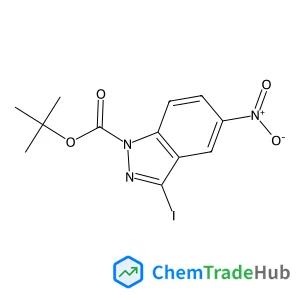
Tert-butyl 3-iodo-5-nitro-1H-indazole-1-carboxylate
CAS Number:
459133-69-8
Molecular Formula:
C12H12IN3O4
![N-{3-[Benzyl(methyl)amino]propyl}-9-chloro-5,6,7,8-tetrahydro-2-acridinecarboxamide structure](https://static.chemtradehub.com/structs/142/1426944-49-1-1e4c.webp "N-{3-[Benzyl(methyl)amino]propyl}-9-chloro-5,6,7,8-tetrahydro-2-acridinecarboxamide structure")
N-{3-[Benzyl(methyl)amino]propyl}-9-chloro-5,6,7,8-tetrahydro-2-acridinecarboxamide
CAS Number:
1426944-49-1
Molecular Formula:
C25H28ClN3O
Recommended Suppliers





Disclaimer
This page provides academic journal information for reference and research purposes only. We are not affiliated with any journal publishers and do not handle publication submissions. For publication-related inquiries, please contact the respective journal publishers directly.
If you notice any inaccuracies in the information displayed, please contact us at support@chemtradehub.com. We will promptly review and address your concerns.