












Modulation of methylene blue photochemical properties based on adsorption at aqueous micelle interfaces
Literature Information
Publication Date
2002-04-26
DOI
10.1039/B109753A
Impact Factor
3.676
Authors
Helena C. Junqueira, Divinomar Severino, Luis G. Dias, Marcos S. Gugliotti, Mauricio S. Baptista
View Original
Abstract
Methylene Blue (MB+) is a sensitizer that has been used for a variety of applications including energy conversion and photodynamic therapy (PDT). Although its photochemical properties in isotropic solution are well established, its effect in vivo and in restricted reaction environments is somewhat erratic. In order to understand its photochemical behavior when it interacts with biomolecules, in particular with membranes, MB+ properties were studied in sodium dodecyl sulfate (SDS) and cetyl trimethylammonium bromide (CTAB) solutions. Because of an electrostatic attraction, SDS and MB+ form complexes, changing the properties of both the micelles and the MB+ solutions. Surface tension measurements show that the c.m.c. of SDS decreases from ∼7 mM to ∼70 μM when the MB+ concentration increases from 0 to 45 μM. Above the c.m.c., binding of MB+ in the micelle pseudo-phase causes the formation of aggregates (mostly dimers) as attested by the increase in the absorption at 580 nm and the decrease in fluorescence emission. The extent of dimer formation is dependent on the relative concentrations of MB+ and SDS. In the presence of excess of SDS, MB+ is mainly in the monomer form and at low SDS concentration dimers are favored. Such effect, which was not observed in CTAB micelles, was modeled qualitatively by considering that MB+ molecules partition to the micelle pseudo-phase which favors or disfavors dimers as a function of its volume. MB+ transient species were characterized by laser flash photolysis and NIR emission showing the presence of triplets and subsequently singlet oxygen at high SDS concentration and semi-reduced and semi-oxidized MB+ radicals at low SDS concentration. Therefore it was shown that, depending on the ground state MB+ monomer/dimer equilibrium, induced by the micelles, the photochemical properties of MB+ can be shifted from a Type II (energy transfer to oxygen forming singlet oxygen) to a Type I mechanism (electron transfer forming the semi-reduced and the semi-oxidized radicals of MB+).
Related Literature
Insulin dimer dissociation and unfolding revealed by amide I two-dimensional infrared spectroscopy
Ziad Ganim, Kevin C. Jones, Andrei Tokmakoff
2010-03-05
Paper
DOI: 10.1039/B923515A
Extra-framework aluminium species in hydrated faujasitezeolite as investigated by two-dimensional solid-state NMR spectroscopy and theoretical calculations
Shenhui Li, Anmin Zheng, Yongchao Su, Hanjun Fang, Wanling Shen, Zhiwu Yu, Lei Chen, Feng Deng
2010-02-24
Paper
DOI: 10.1039/B915401A
First principles Monte Carlo simulations of aggregation in the vapor phase of hydrogen fluoride
Christopher J. Mundy, I-F. Will Kuo, J. Ilja Siepmann
2010-05-27
Paper
DOI: 10.1039/B924506E
Analysis and improvement of rate constant determination of reactions involving charged reactants
Keith M. Krise, Angela A. Hwang, Bratoljub H. Milosavljevic
2010-06-08
Paper
DOI: 10.1039/B927266F
Direct ab initio MD study on the interaction of hydroperoxy radical (HOO) with water molecules
Hiroto Tachikawa, Shigeaki Abe
2010-02-24
Paper
DOI: 10.1039/B923310E
Selective decomposition of nucleic acids by laser irradiation on probe-tethered gold nanoparticles in solution
Yoshihiro Takeda, Tamotsu Kondow, Fumitaka Mafuné
2010-11-01
Paper
DOI: 10.1039/C0CP00770F
Rotational dynamics of positively and negatively charged solutes in ionic liquid and viscous molecular solvent studied by time-resolved fluorescence anisotropy measurements
Dinesh Chandra Khara, Anunay Samanta
2010-05-29
Paper
DOI: 10.1039/B925099A
Density functional theory modeling of the adsorption of small analyte and indicator dye 9-(diphenylamino)acridine molecules on the surface of amorphous silicananoparticles
Elena Rykova, Alexander Bagaturyants
2010-12-07
Paper
DOI: 10.1039/C0CP00821D
You might also like
Compound Q&A
How should waste containing (6-Bromo-2-naphthyl)oxy](dimethyl)(2-methyl-2-propanyl)silane be handled?
Waste containing (6-Bromo-2-naphthyl)oxy](dimethyl)(2-methyl-2-propanyl)silane (...
100751-65-3[(6-Bromo-2-naphthyl...
Compound Q&A
How is 7-Fluoro-4-isoquinolinecarboxylic acid (CAS: 1841081-40-0) typically synthesized?
7-Fluoro-4-isoquinolinecarboxylic acid can be synthesized via a multi-step proce...
1841081-40-07-Fluoro-4-isoquinol...
Compound Q&A
What are the physical and chemical properties of 2,3,5,6-Tetrabromothieno[3,2-b]thiophene (CAS: 124638-53-5)?
2,3,5,6-Tetrabromothieno[3,2-b]thiophene is a crystalline compound with a high m...
124638-53-52,3,5,6-Tetrabromoth...
Compound Q&A
Is 1-[4-(Benzylamino)-7,8-dihydro-5H-pyrano[4,3-d]pyrimidin-2-yl]-2-methyl-1H-indole-4-carboxamide (CAS: 1542705-92-9) safe?
1-[4-(Benzylamino)-7,8-dihydro-5H-pyrano[4,3-d]pyrimidin-2-yl]-2-methyl-1H-indol...
1542705-92-91-[4-(Benzylamino)-7...
Compound Q&A
What is the market or research trend for imidazo[5,1-d]-1,2,3,5-tetrazine-8-carboxylic acid, 3,4-dihydro-3-methyl-4-oxo- (CAS: 113942-30-6)?
The market for imidazo[5,1-d]-1,2,3,5-tetrazine-8-carboxylic acid, 3,4-dihydro-3...
113942-30-6Imidazo[5,1-d]-1,2,3...
Compound Q&A
What is 3-(Triisopropylsilyl)propiolaldehyde (CAS: 163271-80-5)?
3-(Triisopropylsilyl)propiolaldehyde is a synthetic organic compound with the CA...
163271-80-53-(Triisopropylsilyl...
Compound Q&A
What regulatory guidelines apply to 6-Nitro-2H-1,4-benzoxazin-3(4H)-one (CAS: 81721-87-1)?
6-Nitro-2H-1,4-benzoxazin-3(4H)-one (CAS: 81721-87-1) is subject to various regu...
81721-87-16-Nitro-2H-1,4-benzo...
Compound Q&A
How should waste containing (3-Fluorophenyl)(4-{[(2-methyl-2-propanyl)oxy]carbonyl}-1-piperazinyl)acetic acid (CAS: 885272-91-3) be handled?
Waste containing (3-Fluorophenyl)(4-{[(2-methyl-2-propanyl)oxy]carbonyl}-1-piper...
885272-91-3(3-Fluorophenyl)(4-{...
Compound Q&A
What are the physical and chemical properties of N,N'-4,4'-Biphenyldiyldiisonicotinamide (CAS: 55119-40-9)?
N,N'-4,4'-Biphenyldiyldiisonicotinamide is a white crystalline solid with a mole...
55119-40-9N,N'-4,4'-Biphenyldi...
Compound Q&A
What industries use 6-Bromo-8-fluoro-2-quinazolinol (CAS: 1036756-15-6)?
6-Bromo-8-fluoro-2-quinazolinol is primarily used in the pharmaceutical industry...
1036756-15-66-Bromo-8-fluoro-2-q...
Source Journal
Physical Chemistry Chemical Physics

CiteScore:
5.5
Self-citation Rate:
10.3%
Articles per Year:
3036
Physical Chemistry Chemical Physics (PCCP) is an international journal co-owned by 19 physical chemistry and physics societies from around the world. This journal publishes original, cutting-edge research in physical chemistry, chemical physics and biophysical chemistry. To be suitable for publication in PCCP, articles must include significant innovation and/or insight into physical chemistry; this is the most important criterion that reviewers and Editors will judge against when evaluating submissions. The journal has a broad scope and welcomes contributions spanning experiment, theory, computation and data science. Topical coverage includes spectroscopy, dynamics, kinetics, statistical mechanics, thermodynamics, electrochemistry, catalysis, surface science, quantum mechanics, quantum computing and machine learning. Interdisciplinary research areas such as polymers and soft matter, materials, nanoscience, energy, surfaces/interfaces, and biophysical chemistry are welcomed if they demonstrate significant innovation and/or insight into physical chemistry. Joined experimental/theoretical studies are particularly appreciated when complementary and based on up-to-date approaches.
Recommended Compounds
![5-Bromoimidazo[1,2-a]pyridine structure](https://static.chemtradehub.com/structs/692/69214-09-1-d8e2.webp "5-Bromoimidazo[1,2-a]pyridine structure")
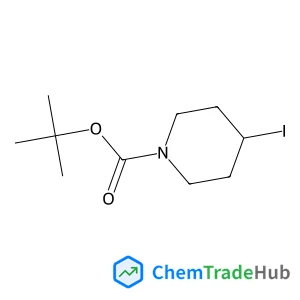
2-Methyl-2-propanyl 4-iodo-1-piperidinecarboxylate
CAS Number:
301673-14-3
Molecular Formula:
C10H18INO2
Recommended Suppliers





Disclaimer
This page provides academic journal information for reference and research purposes only. We are not affiliated with any journal publishers and do not handle publication submissions. For publication-related inquiries, please contact the respective journal publishers directly.
If you notice any inaccuracies in the information displayed, please contact us at support@chemtradehub.com. We will promptly review and address your concerns.