












On product state distributions in triatomic unimolecular reactions Part II. Processes governed by non-linear bending forces
Literature Information
Publication Date
2002-03-25
DOI
10.1039/B109739N
Impact Factor
3.676
Authors
P. Larrégaray, L. Bonnet, J. C. Rayez
View Original
Abstract
Recently, we derived a simple dynamically corrected statistical treatment of state distributions in the products of triatomic unimolecular reactions involving efficient energy transfers between rotation and translation motions en route to products. The reactions considered were those for which transfers are mainly due to the force responsible for the bending motions of the reagent molecule. Our treatment was initially devoted to processes involving a linear bending force in the region of the transition state. It is now extended to the case where this force is non-linear and is applied to the processes O2H (D, T) → O2 + H (D, T).
Related Literature
Selective oxidation of dimethyl ether to methyl formate over trifunctional MoO3–SnO2catalyst under mild conditions
Qingde Zhang, Yizhuo Han, Yisheng Tan
2013-03-19
Communication
DOI: 10.1039/C3GC40279G
A highly stable and active magnetically separable Pd nanocatalyst in aqueous phase heterogeneously catalyzed couplings
Mohammad Ali Zolfigol, Vahid Khakyzadeh, Ahmad Reza Moosavi-Zare, Abed Rostami, Abdolkarim Zare, Nasser Iranpoor, Mohammad Hassan Beyzavi, Rafael Luque
2013-05-15
Paper
DOI: 10.1039/C3GC40421H
Merging the ring opening of benzoxazoles with secondary amines and an iron-catalyzed oxidative cyclization towards the environmentally friendly synthesis of 2-aminobenzoxazoles
Daqian Xu, Wenfang Wang, Chengxia Miao, Qiaohong Zhang, Chungu Xia, Wei Sun
2013-08-06
Paper
DOI: 10.1039/C3GC41206G
A straightforward double coupling of furan moieties onto epoxidized triglycerides: synthesis of monomers based on two renewable resources
Antonio J. F. Carvalho
2013-04-18
Communication
DOI: 10.1039/C3GC40358K
Copper on chitosan: a recyclable heterogeneous catalyst for azide–alkyne cycloaddition reactions in water
R. B. Nasir Baig, Rajender S. Varma
2013-05-02
Communication
DOI: 10.1039/C3GC40401C
Thiazolium-functionalized polystyrene monolithic microreactors for continuous-flow umpolung catalysis
Olga Bortolini, Alberto Cavazzini, Paolo Dambruoso, Pier Paolo Giovannini, Lorenzo Caciolli, Alessandro Massi, Salvatore Pacifico, Daniele Ragno
2013-08-19
Paper
DOI: 10.1039/C3GC41284A
Conversion of fructose into 5-hydroxymethylfurfural and alkyl levulinates catalyzed by sulfonic acid-functionalized carbon materials
Jinzhu Chen, Xing Huang, Limin Chen, Longlong Ma, Xinjun Li
2013-08-06
Paper
DOI: 10.1039/C3GC41139G
Selective aqueous phase oxidation of 5-hydroxymethylfurfural to 2,5-furandicarboxylic acid over Pt/C catalysts: influence of the base and effect of bismuth promotion
Hicham Ait Rass, Nadine Essayem, Michèle Besson
2013-06-10
Paper
DOI: 10.1039/C3GC40727F
Lewis-base-promoted copper-based catalyst for highly efficient hydrogenation of dimethyl 1,4-cyclohexane dicarboxylate
Shaoyan Zhang, Guoli Fan, Feng Li
2013-07-16
Communication
DOI: 10.1039/C3GC40658J
Rhodium-catalyzed hydrogenation of olefins in γ-valerolactone-based ionic liquids
Andrea Strádi, Márk Molnár, Mihály Óvári, Gábor Dibó, Frank U. Richter, László T. Mika
2013-05-13
Communication
DOI: 10.1039/C3GC40360B
You might also like
Compound Q&A
What precautions should be taken when handling 4-Methyl-6-(trifluoromethyl)quinoline (CAS: 40716-16-3)?
When handling 4-Methyl-6-(trifluoromethyl)quinoline (CAS: 40716-16-3), safety go...
40716-16-34-Methyl-6-(trifluor...
Compound Q&A
What is 4-(3,5-Difluorophenyl)aniline (CAS: 405058-00-6)?
4-(3,5-Difluorophenyl)aniline is an aromatic organic compound with the CAS numbe...
405058-00-64-(3,5-Difluoropheny...
Compound Q&A
How is 5-{[4-(Trifluoromethyl)phenyl]sulfanyl}-1,2,3-thiadiazole-4-carboxylic acid (CAS: 338982-07-3) typically synthesized?
5-{[4-(Trifluoromethyl)phenyl]sulfanyl}-1,2,3-thiadiazole-4-carboxylic acid can ...
338982-07-35-{[4-(Trifluorometh...
Compound Q&A
What is the market or research trend for 4-Benzylaniline hydrochloride (CAS: 6317-57-3)?
The market for 4-Benzylaniline hydrochloride (CAS: 6317-57-3) is steadily growin...
6317-57-34-Benzylaniline hydr...
Compound Q&A
Is [3-(Diethylsulfamoyl)phenyl]boronic acid (CAS: 871329-58-7) safe?
[3-(Diethylsulfamoyl)phenyl]boronic acid is generally considered safe when handl...
871329-58-7[3-(Diethylsulfamoyl...
Compound Q&A
What are the main uses of 3-Bromo-2,5-dimethoxyaniline (CAS: 115929-62-9)?
3-Bromo-2,5-dimethoxyaniline is mainly used in the pharmaceutical and chemical i...
115929-62-93-Bromo-2,5-dimethox...
Compound Q&A
What regulatory guidelines apply to N-Methyl-1-(5-methyl-1H-indol-3-yl)methanamine (CAS: 915922-67-7)?
N-Methyl-1-(5-methyl-1H-indol-3-yl)methanamine (CAS: 915922-67-7) is subject to ...
915922-67-7N-Methyl-1-(5-methyl...
Compound Q&A
What industries use Carbamic acid, N-[(5S)-5,6-diamino-6-oxohexyl]-, 1,1-dimethylethyl ester (CAS: 24828-96-4)?
This compound is primarily used in the pharmaceutical industry for the synthesis...
24828-96-4Carbamic acid, N-[(5...
Compound Q&A
How should 2-Methyl-2-propanyl [(1S,3R)-3-aminocyclohexyl]carbamate (CAS: 1298101-47-9) be stored?
2-Methyl-2-propanyl [(1S,3R)-3-aminocyclohexyl]carbamate (CAS: 1298101-47-9) sho...
1298101-47-92-Methyl-2-propanyl ...
Compound Q&A
What industries use Ethyl 2-bromo-4,4,4-trifluorobutanoate (CAS: 367-33-9)?
Ethyl 2-bromo-4,4,4-trifluorobutanoate (CAS: 367-33-9) is utilized in the pharma...
367-33-9Ethyl 2-bromo-4,4,4-...
Source Journal
Physical Chemistry Chemical Physics

CiteScore:
5.5
Self-citation Rate:
10.3%
Articles per Year:
3036
Physical Chemistry Chemical Physics (PCCP) is an international journal co-owned by 19 physical chemistry and physics societies from around the world. This journal publishes original, cutting-edge research in physical chemistry, chemical physics and biophysical chemistry. To be suitable for publication in PCCP, articles must include significant innovation and/or insight into physical chemistry; this is the most important criterion that reviewers and Editors will judge against when evaluating submissions. The journal has a broad scope and welcomes contributions spanning experiment, theory, computation and data science. Topical coverage includes spectroscopy, dynamics, kinetics, statistical mechanics, thermodynamics, electrochemistry, catalysis, surface science, quantum mechanics, quantum computing and machine learning. Interdisciplinary research areas such as polymers and soft matter, materials, nanoscience, energy, surfaces/interfaces, and biophysical chemistry are welcomed if they demonstrate significant innovation and/or insight into physical chemistry. Joined experimental/theoretical studies are particularly appreciated when complementary and based on up-to-date approaches.
Recommended Compounds
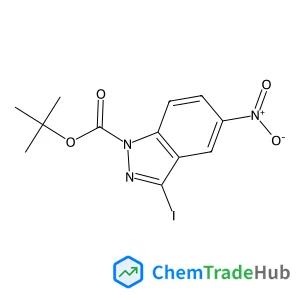
Tert-butyl 3-iodo-5-nitro-1H-indazole-1-carboxylate
CAS Number:
459133-69-8
Molecular Formula:
C12H12IN3O4

Recommended Suppliers






Disclaimer
This page provides academic journal information for reference and research purposes only. We are not affiliated with any journal publishers and do not handle publication submissions. For publication-related inquiries, please contact the respective journal publishers directly.
If you notice any inaccuracies in the information displayed, please contact us at support@chemtradehub.com. We will promptly review and address your concerns.