












The emission spectrum and the radiative lifetime of Eu3+ in luminescent lanthanide complexes
Literature Information
Publication Date
2002-03-22
DOI
10.1039/B107770H
Impact Factor
3.676
Authors
Martinus H. V. Werts, Ronald T. F. Jukes, Jan W. Verhoeven
View Original
Abstract
Although luminescent complexes of lanthanide ions and organic ligands have been studied intensively, relatively little attention has been paid to the natural (or ‘radiative’) lifetime of the lanthanide centered luminescent state in these systems. Here, the applicability of the well-known Judd–Ofelt theory to the emissive properties of Eu3+ complexes is investigated. Moreover, it is demonstrated experimentally that the radiative lifetime of the 5D0 excited state of Eu3+ can be calculated directly from its corrected emission spectrum, without using Judd–Ofelt theory. We also discuss briefly the possibility of finding the natural lifetimes of lanthanide ions other than Eu3+.
Related Literature
One-by-one hydrogenation, cross-coupling reaction, and Knoevenagel condensations catalyzed by PdCl2 and the downstream palladium residue
Hu Wang, Li Li, Xing-Feng Bai, Wen-Hui Deng, Zhan-Jiang Zheng, Ke-Fang Yang
2013-06-24
Communication
DOI: 10.1039/C3GC40991K
Base initiated depolymerization of polycarbonates to epoxide and carbon dioxide co-monomers: a computational study
Donald J. Darensbourg, Andrew D. Yeung, Sheng-Hsuan Wei
2013-04-09
Paper
DOI: 10.1039/C3GC40475G
Engaging isatins in solvent-free, sterically congested Passerini reaction
Trinadh Kaicharla, Santhivardhana Reddy Yetra, Tony Roy, Akkattu T. Biju
2013-04-02
Paper
DOI: 10.1039/C3GC40454D
Laser-driven heterogeneous catalysis: efficient amide formation catalysed by Au/SiO2 systems
Antonio Pineda, Leyre Gomez, Alina M. Balu, Victor Sebastian, Manuel Ojeda, Manuel Arruebo, Antonio A. Romero, Jesus Santamaria, Rafael Luque
2013-05-22
Communication
DOI: 10.1039/C3GC40166A
Organocatalytic 1,3-dipolar cycloaddition reactions of ketones and azides with water as a solvent
Dwun Kit Jonathan Yeung, Tao Gao, Jiayao Huang, Shaofa Sun, Haibing Guo, Jian Wang
2013-07-22
Communication
DOI: 10.1039/C3GC41126E
Photocatalysis on supported gold and silver nanoparticles under ultraviolet and visible light irradiation
Sarina Sarina, Eric R. Waclawik, Huaiyong Zhu
2013-05-10
Tutorial Review
DOI: 10.1039/C3GC40450A
Cellulose-derived superparamagnetic carbonaceous solid acid catalyst for cellulose hydrolysis in an ionic liquid or aqueous reaction system
Haixin Guo, Youfen Lian, Lulu Yan, Xinhua Qi, Richard Lee Smith, Jr.
2013-05-14
Paper
DOI: 10.1039/C3GC40433A
Copper on chitosan: a recyclable heterogeneous catalyst for azide–alkyne cycloaddition reactions in water
R. B. Nasir Baig, Rajender S. Varma
2013-05-02
Communication
DOI: 10.1039/C3GC40401C
Highly efficient iron(0) nanoparticle-catalyzed hydrogenation in water in flow
Go Hamasaka, Takao Osako, Yoichi M. A. Yamada, Chao-Jun Li, Audrey Moores
2013-06-27
Paper
DOI: 10.1039/C3GC40789F
Metal-containing zeolites as efficient catalysts for the transformation of highly valuable chiral biomass-derived products
Cecilia Paris, Manuel Moliner, Avelino Corma
2013-05-22
Paper
DOI: 10.1039/C3GC40267C
You might also like
Compound Q&A
What precautions should be taken when handling 4-Methyl-6-(trifluoromethyl)quinoline (CAS: 40716-16-3)?
When handling 4-Methyl-6-(trifluoromethyl)quinoline (CAS: 40716-16-3), safety go...
40716-16-34-Methyl-6-(trifluor...
Compound Q&A
What is 4-(3,5-Difluorophenyl)aniline (CAS: 405058-00-6)?
4-(3,5-Difluorophenyl)aniline is an aromatic organic compound with the CAS numbe...
405058-00-64-(3,5-Difluoropheny...
Compound Q&A
How is 5-{[4-(Trifluoromethyl)phenyl]sulfanyl}-1,2,3-thiadiazole-4-carboxylic acid (CAS: 338982-07-3) typically synthesized?
5-{[4-(Trifluoromethyl)phenyl]sulfanyl}-1,2,3-thiadiazole-4-carboxylic acid can ...
338982-07-35-{[4-(Trifluorometh...
Compound Q&A
What is the market or research trend for 4-Benzylaniline hydrochloride (CAS: 6317-57-3)?
The market for 4-Benzylaniline hydrochloride (CAS: 6317-57-3) is steadily growin...
6317-57-34-Benzylaniline hydr...
Compound Q&A
Is [3-(Diethylsulfamoyl)phenyl]boronic acid (CAS: 871329-58-7) safe?
[3-(Diethylsulfamoyl)phenyl]boronic acid is generally considered safe when handl...
871329-58-7[3-(Diethylsulfamoyl...
Compound Q&A
What are the main uses of 3-Bromo-2,5-dimethoxyaniline (CAS: 115929-62-9)?
3-Bromo-2,5-dimethoxyaniline is mainly used in the pharmaceutical and chemical i...
115929-62-93-Bromo-2,5-dimethox...
Compound Q&A
What regulatory guidelines apply to N-Methyl-1-(5-methyl-1H-indol-3-yl)methanamine (CAS: 915922-67-7)?
N-Methyl-1-(5-methyl-1H-indol-3-yl)methanamine (CAS: 915922-67-7) is subject to ...
915922-67-7N-Methyl-1-(5-methyl...
Compound Q&A
What industries use Carbamic acid, N-[(5S)-5,6-diamino-6-oxohexyl]-, 1,1-dimethylethyl ester (CAS: 24828-96-4)?
This compound is primarily used in the pharmaceutical industry for the synthesis...
24828-96-4Carbamic acid, N-[(5...
Compound Q&A
How should 2-Methyl-2-propanyl [(1S,3R)-3-aminocyclohexyl]carbamate (CAS: 1298101-47-9) be stored?
2-Methyl-2-propanyl [(1S,3R)-3-aminocyclohexyl]carbamate (CAS: 1298101-47-9) sho...
1298101-47-92-Methyl-2-propanyl ...
Compound Q&A
What industries use Ethyl 2-bromo-4,4,4-trifluorobutanoate (CAS: 367-33-9)?
Ethyl 2-bromo-4,4,4-trifluorobutanoate (CAS: 367-33-9) is utilized in the pharma...
367-33-9Ethyl 2-bromo-4,4,4-...
Source Journal
Physical Chemistry Chemical Physics

CiteScore:
5.5
Self-citation Rate:
10.3%
Articles per Year:
3036
Physical Chemistry Chemical Physics (PCCP) is an international journal co-owned by 19 physical chemistry and physics societies from around the world. This journal publishes original, cutting-edge research in physical chemistry, chemical physics and biophysical chemistry. To be suitable for publication in PCCP, articles must include significant innovation and/or insight into physical chemistry; this is the most important criterion that reviewers and Editors will judge against when evaluating submissions. The journal has a broad scope and welcomes contributions spanning experiment, theory, computation and data science. Topical coverage includes spectroscopy, dynamics, kinetics, statistical mechanics, thermodynamics, electrochemistry, catalysis, surface science, quantum mechanics, quantum computing and machine learning. Interdisciplinary research areas such as polymers and soft matter, materials, nanoscience, energy, surfaces/interfaces, and biophysical chemistry are welcomed if they demonstrate significant innovation and/or insight into physical chemistry. Joined experimental/theoretical studies are particularly appreciated when complementary and based on up-to-date approaches.
Recommended Compounds
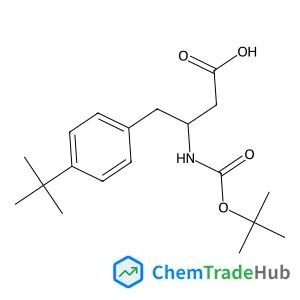
(S)-3-((tert-Butoxycarbonyl)amino)-4-(4-(tert-butyl)phenyl)butanoic acid
CAS Number:
403661-85-8
Molecular Formula:
C19H29NO4
Recommended Suppliers




Disclaimer
This page provides academic journal information for reference and research purposes only. We are not affiliated with any journal publishers and do not handle publication submissions. For publication-related inquiries, please contact the respective journal publishers directly.
If you notice any inaccuracies in the information displayed, please contact us at support@chemtradehub.com. We will promptly review and address your concerns.