












Interaction between probe molecules and zeolites. Part I: Pair-wise addition scheme applied to the calculation of the interaction energy of CO and N2 adsorbed in Na4Ca4A
Literature Information
Publication Date
2002-04-29
DOI
10.1039/B107243A
Impact Factor
3.676
Authors
A. V. Larin, L. Leherte, D. P. Vercauteren
View Original
Abstract
An important problem when studying the interaction between a CO probe molecule and a Na4Ca4A type zeolite is the estimation of the central repulsive coefficients versus the internuclear distance of CO. In particular, this dependence cannot be estimated in the case of the unstable linear “framework oxygen–CO molecule” pair due to the electrostatic repulsive interaction. Hence, we discuss the application of two approximate forms of this dependence either allowing or disregarding the repulsive contribution in the interval wherein the vibrational CO probability distribution cannot be neglected. The consequences of these approximations are compared through calculation of the interaction energy and band shift of CO adsorbed inside Na4Ca4A. The CO spatial parameters (semi-axes) are estimated by fitting both the band shift, corresponding to two different positions of CO relative to the zeolite, and the interaction energy values to the experimental data obtained at small coverage.
Related Literature
Thiazolium-functionalized polystyrene monolithic microreactors for continuous-flow umpolung catalysis
Olga Bortolini, Alberto Cavazzini, Paolo Dambruoso, Pier Paolo Giovannini, Lorenzo Caciolli, Alessandro Massi, Salvatore Pacifico, Daniele Ragno
2013-08-19
Paper
DOI: 10.1039/C3GC41284A
Conversion of fructose into 5-hydroxymethylfurfural and alkyl levulinates catalyzed by sulfonic acid-functionalized carbon materials
Jinzhu Chen, Xing Huang, Limin Chen, Longlong Ma, Xinjun Li
2013-08-06
Paper
DOI: 10.1039/C3GC41139G
Benzoylation for the recovery of structure directing agent (di-n-propylamine) from the process effluent of aluminophosphate synthesis
Nageswara N. Rao, Smita Masid
2013-04-26
Communication
DOI: 10.1039/C3GC40759D
Stereoselective organic reactions promoted by immobilized chiral catalysts in continuous flow systems
Alessandra Puglisi, Maurizio Benaglia, Valerio Chiroli
2013-05-01
Tutorial Review
DOI: 10.1039/C3GC40195B
Carboxylation of terminal alkynes at ambient CO2 pressure in ethylene carbonate
Bing Yu, Zhen-Feng Diao, Chun-Xiang Guo, Chun-Lai Zhong, Liang-Nian He, Ya-Nan Zhao, Qing-Wen Song, An-Hua Liu, Jin-Quan Wang
2013-07-01
Paper
DOI: 10.1039/C3GC40896E
A prototype device for evaporation in batch and flow chemical processes
Benjamin J. Deadman, Claudio Battilocchio, Eric Sliwinski, Steven V. Ley
2013-06-24
Communication
DOI: 10.1039/C3GC40967H
Graphene oxide as a facile acid catalyst for the one-pot conversion of carbohydrates into 5-ethoxymethylfurfural
Tiansheng Deng, Yingxiong Wang, Yongqin Qi, Xindong Mu, Xianglin Hou
2013-07-17
Communication
DOI: 10.1039/C3GC41109E
Laser-driven heterogeneous catalysis: efficient amide formation catalysed by Au/SiO2 systems
Antonio Pineda, Leyre Gomez, Alina M. Balu, Victor Sebastian, Manuel Ojeda, Manuel Arruebo, Antonio A. Romero, Jesus Santamaria, Rafael Luque
2013-05-22
Communication
DOI: 10.1039/C3GC40166A
Palladium-, ligand-, and solvent-free synthesis of ynones by the coupling of acyl chlorides and terminal alkynes in the presence of a reusable copper nanoparticle catalyst
Weijiang Sun, Yan Wang, Xuan Wu, Xiaoquan Yao
2013-07-17
Communication
DOI: 10.1039/C3GC40980E
You might also like
Compound Q&A
What precautions should be taken when handling 4-Methyl-6-(trifluoromethyl)quinoline (CAS: 40716-16-3)?
When handling 4-Methyl-6-(trifluoromethyl)quinoline (CAS: 40716-16-3), safety go...
40716-16-34-Methyl-6-(trifluor...
Compound Q&A
What is 4-(3,5-Difluorophenyl)aniline (CAS: 405058-00-6)?
4-(3,5-Difluorophenyl)aniline is an aromatic organic compound with the CAS numbe...
405058-00-64-(3,5-Difluoropheny...
Compound Q&A
How is 5-{[4-(Trifluoromethyl)phenyl]sulfanyl}-1,2,3-thiadiazole-4-carboxylic acid (CAS: 338982-07-3) typically synthesized?
5-{[4-(Trifluoromethyl)phenyl]sulfanyl}-1,2,3-thiadiazole-4-carboxylic acid can ...
338982-07-35-{[4-(Trifluorometh...
Compound Q&A
What is the market or research trend for 4-Benzylaniline hydrochloride (CAS: 6317-57-3)?
The market for 4-Benzylaniline hydrochloride (CAS: 6317-57-3) is steadily growin...
6317-57-34-Benzylaniline hydr...
Compound Q&A
Is [3-(Diethylsulfamoyl)phenyl]boronic acid (CAS: 871329-58-7) safe?
[3-(Diethylsulfamoyl)phenyl]boronic acid is generally considered safe when handl...
871329-58-7[3-(Diethylsulfamoyl...
Compound Q&A
What are the main uses of 3-Bromo-2,5-dimethoxyaniline (CAS: 115929-62-9)?
3-Bromo-2,5-dimethoxyaniline is mainly used in the pharmaceutical and chemical i...
115929-62-93-Bromo-2,5-dimethox...
Compound Q&A
What regulatory guidelines apply to N-Methyl-1-(5-methyl-1H-indol-3-yl)methanamine (CAS: 915922-67-7)?
N-Methyl-1-(5-methyl-1H-indol-3-yl)methanamine (CAS: 915922-67-7) is subject to ...
915922-67-7N-Methyl-1-(5-methyl...
Compound Q&A
What industries use Carbamic acid, N-[(5S)-5,6-diamino-6-oxohexyl]-, 1,1-dimethylethyl ester (CAS: 24828-96-4)?
This compound is primarily used in the pharmaceutical industry for the synthesis...
24828-96-4Carbamic acid, N-[(5...
Compound Q&A
How should 2-Methyl-2-propanyl [(1S,3R)-3-aminocyclohexyl]carbamate (CAS: 1298101-47-9) be stored?
2-Methyl-2-propanyl [(1S,3R)-3-aminocyclohexyl]carbamate (CAS: 1298101-47-9) sho...
1298101-47-92-Methyl-2-propanyl ...
Compound Q&A
What industries use Ethyl 2-bromo-4,4,4-trifluorobutanoate (CAS: 367-33-9)?
Ethyl 2-bromo-4,4,4-trifluorobutanoate (CAS: 367-33-9) is utilized in the pharma...
367-33-9Ethyl 2-bromo-4,4,4-...
Source Journal
Physical Chemistry Chemical Physics

CiteScore:
5.5
Self-citation Rate:
10.3%
Articles per Year:
3036
Physical Chemistry Chemical Physics (PCCP) is an international journal co-owned by 19 physical chemistry and physics societies from around the world. This journal publishes original, cutting-edge research in physical chemistry, chemical physics and biophysical chemistry. To be suitable for publication in PCCP, articles must include significant innovation and/or insight into physical chemistry; this is the most important criterion that reviewers and Editors will judge against when evaluating submissions. The journal has a broad scope and welcomes contributions spanning experiment, theory, computation and data science. Topical coverage includes spectroscopy, dynamics, kinetics, statistical mechanics, thermodynamics, electrochemistry, catalysis, surface science, quantum mechanics, quantum computing and machine learning. Interdisciplinary research areas such as polymers and soft matter, materials, nanoscience, energy, surfaces/interfaces, and biophysical chemistry are welcomed if they demonstrate significant innovation and/or insight into physical chemistry. Joined experimental/theoretical studies are particularly appreciated when complementary and based on up-to-date approaches.
Recommended Compounds
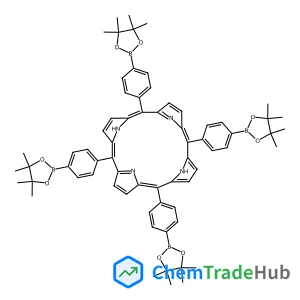
5,10,15,20-tetrakis(4-boronic acid pinacol ester phenyl) porphyrin
CAS Number:
1332748-00-1
Molecular Formula:
C68H74B4N4O8
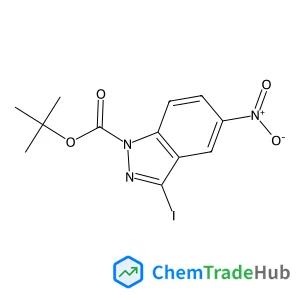
Tert-butyl 3-iodo-5-nitro-1H-indazole-1-carboxylate
CAS Number:
459133-69-8
Molecular Formula:
C12H12IN3O4
Recommended Suppliers





Disclaimer
This page provides academic journal information for reference and research purposes only. We are not affiliated with any journal publishers and do not handle publication submissions. For publication-related inquiries, please contact the respective journal publishers directly.
If you notice any inaccuracies in the information displayed, please contact us at support@chemtradehub.com. We will promptly review and address your concerns.