












Constructing molecular polygons using halogen bonding and bifurcated N-oxides
Literature Information
Publication Date
2013-09-27
DOI
10.1039/C3CE41887A
Impact Factor
3.545
Authors
Christer B. Aakeröy, Tharanga K. Wijethunga, John Desper
View Original
Abstract
Bifurcated halogen bonds constructed from N-oxides and complementary halogen-bond donors provide the basis for a synthetic strategy for the deliberate assembly of molecular polygons in the solid state. The donor- and acceptor sites were located on different molecular components and a co-crystallization approach furnished the desired architectures.
Related Literature
An impedance array biosensor for detection of multiple antibody–antigen interactions
Xiaobo Yu, Renji Lv, Zhenqiu Ma, Zhihong Liu, Yanhong Hao, Qingzhang Li, Danke Xu
2006-04-13
Paper
DOI: 10.1039/B517148B
A pragmatic and readily implemented quality control strategy for HPLC-MS and GC-MS-based metabonomic analysis
Timothy Sangster, Hilary Major, Robert Plumb, Amy J. Wilson, Ian D. Wilson
2006-08-15
Forum
DOI: 10.1039/B604498K
Application of N-PLS calibration to the simultaneous determination of Cu2+, Cd2+ and Pb2+ using peptide modified electrochemical sensors
Edith Chow, Diako Ebrahimi, J. Justin Gooding, D. Brynn Hibbert
2006-06-23
Paper
DOI: 10.1039/B604690H
Continuous two-dimensional field-flow fractionation: a novel technique for continuous separation and collection of macromolecules and particles
Pertti Vastamäki, Matti Jussila, Marja-Liisa Riekkola
2005-02-16
Education
DOI: 10.1039/B410046H
Nitrofuran antibiotic metabolites detected at parts per million concentrations in retina of pigs—a new matrix for enhanced monitoring of nitrofuran abuse
Kevin M. Cooper, D. Glenn Kennedy
2005-02-22
Communication
DOI: 10.1039/B418374F
Analytical chemistry of synthetic routes to psychoactive tryptamines Part III. Characterisation of the Speeter and Anthony route to N,N-dialkylated tryptamines using CI-IT-MS-MS
Simon D. Brandt, Sally Freeman, Ian A. Fleet, John F. Alder
2005-07-08
Paper
DOI: 10.1039/B504001A
Evaluation of complex spectral-pH three-way arrays by modified bilinear least-squares: determination of four different dyes in interfering systems
Nilda R. Marsili, Adriana Lista, Beatriz S. Fernandez Band, Héctor C. Goicoechea, Alejandro C. Olivieri
2005-07-28
Paper
DOI: 10.1039/B504378F
The STEP method (statistical test of equivalent pathways): application to pharmaceuticals
Mary L. Bandu, Heather Desaire
2005-10-10
Paper
DOI: 10.1039/B510559E
You might also like
Compound Q&A
What are the main uses of 1H-Indazole-6-carbonitrile (CAS: 141290-59-7)?
1H-Indazole-6-carbonitrile finds applications in pharmaceuticals, where it serve...
141290-59-71H-Indazole-6-carbon...
Compound Q&A
How should waste containing Dioctyl (2E)-2-butenedioate (CAS: 2997-85-5) be handled?
Waste containing Dioctyl (2E)-2-butenedioate (CAS: 2997-85-5) should be collecte...
2997-85-5Dioctyl (2E)-2-buten...
Compound Q&A
What industries use Sodium [(1,2-benzoxazol-3-ylmethyl)sulfonyl]azanide (CAS: 68291-98-5)?
Sodium [(1,2-benzoxazol-3-ylmethyl)sulfonyl]azanide is primarily used in pharmac...
68291-98-5Sodium [(1,2-benzoxa...
Compound Q&A
Are there alternatives to Dimethyl 4-(4,4,5,5-tetramethyl-1,3,2-dioxaborolan-2-yl)-2,6-pyridinedicarboxylate (CAS: 741709-66-0) in synthesis?
Dimethyl 4-(4,4,5,5-tetramethyl-1,3,2-dioxaborolan-2-yl)-2,6-pyridinedicarboxyla...
741709-66-0Dimethyl 4-(4,4,5,5-...
Compound Q&A
How should waste containing 2-Fluoro-6-hydrazinopyridine (CAS: 80714-39-2) be handled?
Waste containing 2-Fluoro-6-hydrazinopyridine (CAS: 80714-39-2) should be manage...
80714-39-22-Fluoro-6-hydrazino...
Compound Q&A
What is 6-Formyl-2-pyridinecarboxylic acid (CAS: 499214-11-8)?
6-Formyl-2-pyridinecarboxylic acid is an organic compound with the molecular for...
499214-11-86-Formyl-2-pyridinec...
Compound Q&A
What is the market or research trend for 3-(3,4-dimethoxyphenyl)-2,5-dimethyl-N-(2-morpholin-4-ylethyl)pyrazolo[1,5-a]pyrimidin-7-amine (CAS: 900874-91-1)?
Research trends for this compound indicate a focus on its potential applications...
900874-91-13-(3,4-dimethoxyphen...
Compound Q&A
How is 9H-Tribenzo[b,d,f]azepine (CAS: 29875-73-8) typically synthesized?
9H-Tribenzo[b,d,f]azepine is typically synthesized via a multi-step process invo...
29875-73-89H-Tribenzo[b,d,f]az...
Compound Q&A
How is 1-Cyclopropyl-7-ethoxy-6-fluoro-8-methoxy-4-oxo-1,4-dihydro-3-quinolinecarboxylic acid (CAS: 1797982-51-4) typically synthesized?
1-Cyclopropyl-7-ethoxy-6-fluoro-8-methoxy-4-oxo-1,4-dihydro-3-quinolinecarboxyli...
1797982-51-41-Cyclopropyl-7-etho...
Compound Q&A
How should waste containing Methyl 3-oxo-1,2,3,4-tetrahydro-6-quinoxalinecarboxylate (CAS: 671820-52-3) be handled?
Waste containing Methyl 3-oxo-1,2,3,4-tetrahydro-6-quinoxalinecarboxylate (CAS: ...
671820-52-3Methyl 3-oxo-1,2,3,4...
Source Journal
CrystEngComm

CiteScore:
5.5
Self-citation Rate:
7.7%
Articles per Year:
643
CrystEngComm is the forum for the design and understanding of crystalline materials. We welcome studies on the investigation of molecular behaviour within crystals, control of nucleation and crystal growth, engineering of crystal structures, and construction of crystalline materials with tuneable properties and functions. We publish hypothesis-driven research into… how crystal design affects thermodynamics, phase transitional behaviours, polymorphism, morphology control, solid state reactivity (crystal-crystal solution-crystal, and gas-crystal reactions), optoelectronics, ferroelectric materials, non-linear optics, molecular and bulk magnetism, conductivity and quantum computing, catalysis, absorption and desorption, and mechanical properties. Using Techniques and methods including… Single crystal and powder X-ray, electron, and neutron diffraction, solid-state spectroscopy, spectrometry, and microscopy, modelling and data mining, and empirical, semi-empirical and ab-initio theoretical evaluations. On crystalline and solid-state materials. We particularly welcome work on MOFs, coordination polymers, nanocrystals, host-guest and multi-component molecular materials. We also accept work on peptides and liquid crystals. All papers should involve the use or development of a design or optimisation strategy. Routine structural reports or crystal morphology descriptions, even when combined with an analysis of properties or potential applications, are generally considered to be outside the scope of the journal and are unlikely to be accepted.
Recommended Compounds
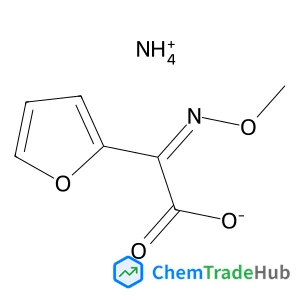
Ammonium (Z)-2-(furan-2-yl)-2-(methoxyimino)acetate
CAS Number:
97148-39-5
Molecular Formula:
C7H10N2O4

EthylenediaminetetraaceticacidcalciumDisodiumsalthydrate
CAS Number:
23411-34-9
Molecular Formula:
C10H16CaN2Na2O10
Recommended Suppliers




Disclaimer
This page provides academic journal information for reference and research purposes only. We are not affiliated with any journal publishers and do not handle publication submissions. For publication-related inquiries, please contact the respective journal publishers directly.
If you notice any inaccuracies in the information displayed, please contact us at support@chemtradehub.com. We will promptly review and address your concerns.