



The aqueous phase behavior of polyion–surfactant ion complex salts mixed with nonionic surfactants‡
Literature Information
Publication Date
2010-10-11
DOI
10.1039/C0CP01031F
Impact Factor
3.676
Authors
John Janiak, Lennart Piculell, Gerd Olofsson, Karin Schillén
View Original
Abstract
The aim of this work was to study intermolecular interactions in systems containing charged polyion (polyacrylate, PA−), charged surfactant (C16TA+) and nonionic surfactant (C12E5 or C12E8). To achieve this we have created four different phase diagrams using two different so-called complex salts, C16TAPA25 and C16TAPA6000, both consisting of positively charged surfactant (C16TA+) with polyacrylate (PA−) as counterions (no simple salt). The difference between the salts is the length of the polyion (25 or 6000 monomers). Both are insoluble in water. The results revealed that decreasing polyion length and increasing the PEO chain length of the nonionic surfactant were important factors for increasing the solubility of the complex salt. We also found that the curvature effects are quite small at low water content when gradually exchanging C12E8 for either one of the complex salts while there is a gradual change in curvature for the systems containing C12E5. Another interesting observation was the possibility for relatively large amounts of complex salt to be incorporated into a V1 (Ia3d, bicontinuous) phase in the C12E8-containing systems. This gives rise to several questions regarding arrangements and dynamics of the polyion in this phase. In the dilute regime several different liquid crystalline phases can coexist with a dilute liquid phase containing the nonionic surfactant.
Recommended Journals

Nature Medicine

Drug Discovery Today

Current Opinion in Solid State & Materials Science

Russian Journal of Organic Chemistry

Journal of Peptide Science

Crystallography Reports

Russian Journal of Bioorganic Chemistry

Chemistry Education Research and Practice

Journal of Natural Medicines

Organic Process Research & Development
Related Literature
A simple strategy to overcome concentration dependence of photoswitching properties in donor–acceptor Stenhouse adducts
Sean W. Connolly, Simon J. Holder, Helena J. Shepherd
2021-01-13
Paper
DOI: 10.1039/D0CP06312F
Exciton diffusion in solid solutions of luminescent lanthanide β-diketonates
Mingzhao Liu, Zhanlan Yang, Shifu Weng, Jinguang Wu
2020-12-07
Paper
DOI: 10.1039/D0CP04889E
An unbiased confirmation of the participating isomers of C2B5− in the formation of its photo-detachment spectra: a theoretical study
Abhishek Kumar, T. Rajagopala Rao, Rudraditya Sarkar
2020-12-08
Paper
DOI: 10.1039/D0CP04619A
An effective potential for Frenkel excitons
Bartosz Błasiak, Wojciech Bartkowiak, Robert W. Góra
2021-01-07
Paper
DOI: 10.1039/D0CP04636A
Kinetics of competing exchange of oxygen and water at the surface of functional oxides
Vincent Thoréton, Mathew Niania, John Kilner
2021-01-14
Paper
DOI: 10.1039/D0CP04953K
Complexity of a peroxidase–oxidase reaction model
Marcus J. B. Hauser, Lars F. Olsen
2021-01-06
Paper
DOI: 10.1039/D0CP06153K
A reliable and efficient resonance theory based on analysis of DFT wave functions
2020-12-18
Paper
DOI: 10.1039/D0CP06207C
Diffusion of the carbon dioxide–ethanol mixture in the extended critical region
René Spencer Chatwell, Gabriela Guevara-Carrion, Yuri Gaponenko, Valentina Shevtsova, Jadran Vrabec
2021-01-18
Paper
DOI: 10.1039/D0CP04985A
Broadband photomultiplication organic photodetectors
Meng-yao Liu, Jian Wang, Kai-xuan Yang, Ming Liu, Zi-jin Zhao, Fu-jun Zhang
2021-01-07
Paper
DOI: 10.1039/D0CP05811D
You might also like
Compound Q&A
How is Ethyl 4-chlorothieno[2,3-b]pyridine-5-carboxylate (CAS: 59713-58-5) typically synthesized?
Ethyl 4-chlorothieno[2,3-b]pyridine-5-carboxylate (CAS: 59713-58-5) can be synth...
59713-58-5Ethyl 4-chlorothieno...
Compound Q&A
What regulatory guidelines apply to 5-Methyl-1H-indole-3-carbaldehyde (CAS: 52562-50-2)?
5-Methyl-1H-indole-3-carbaldehyde (CAS: 52562-50-2) is subject to various regula...
52562-50-25-Methyl-1H-indole-3...
Compound Q&A
What are the physical and chemical properties of (1,3-Dimethyl-2,4-dioxo-1,2,3,4-tetrahydro-5-pyrimidinyl)boronic acid (CAS: 223418-73-3)?
(1,3-Dimethyl-2,4-dioxo-1,2,3,4-tetrahydro-5-pyrimidinyl)boronic acid is a white...
223418-73-3(1,3-Dimethyl-2,4-di...
Compound Q&A
How should waste containing Sulfocostunolide A (CAS: 1016983-51-9) be handled?
Waste containing Sulfocostunolide A (CAS: 1016983-51-9) should be handled with c...
1016983-51-9Sulfocostunolide A
Compound Q&A
What precautions should be taken when handling Murraxocin (CAS: 88478-44-8)?
When handling Murraxocin (CAS: 88478-44-8), ensure proper personal protective eq...
88478-44-8Murraxocin
Compound Q&A
What are the physical and chemical properties of Formvar (CAS: 63148-64-1)?
Formvar (CAS: 63148-64-1) is an alkyd resin characterized by a high molecular we...
63148-64-1Formvar(R)
Compound Q&A
Is (S)-4-benzyl-2-((benzyloxy)methyl)morpholine (CAS: 205242-66-6) safe?
(S)-4-benzyl-2-((benzyloxy)methyl)morpholine is generally safe when handled with...
205242-66-6(S)-4-benzyl-2-((ben...
Compound Q&A
What industries use Methyl 1-(5-bromo-2-pyrimidinyl)cyclopropanecarboxylate (CAS: 1447607-69-3)?
Methyl 1-(5-bromo-2-pyrimidinyl)cyclopropanecarboxylate (CAS: 1447607-69-3) is p...
1447607-69-3Methyl 1-(5-bromo-2-...
Compound Q&A
Is 2-Methyl-1-phenyl-1-propanamine hydrochloride (CAS: 24290-47-9) safe?
2-Methyl-1-phenyl-1-propanamine hydrochloride (CAS: 24290-47-9) is generally con...
24290-47-92-Methyl-1-phenyl-1-...
Compound Q&A
How is 3-(4-Bromophenyl)-2-methylpropanoic acid (CAS: 66735-01-1) typically synthesized?
3-(4-Bromophenyl)-2-methylpropanoic acid is synthesized through a multi-step pro...
66735-01-13-(4-Bromophenyl)-2-...
Source Journal
Physical Chemistry Chemical Physics

CiteScore:
5.5
Self-citation Rate:
10.3%
Articles per Year:
3036
Physical Chemistry Chemical Physics (PCCP) is an international journal co-owned by 19 physical chemistry and physics societies from around the world. This journal publishes original, cutting-edge research in physical chemistry, chemical physics and biophysical chemistry. To be suitable for publication in PCCP, articles must include significant innovation and/or insight into physical chemistry; this is the most important criterion that reviewers and Editors will judge against when evaluating submissions. The journal has a broad scope and welcomes contributions spanning experiment, theory, computation and data science. Topical coverage includes spectroscopy, dynamics, kinetics, statistical mechanics, thermodynamics, electrochemistry, catalysis, surface science, quantum mechanics, quantum computing and machine learning. Interdisciplinary research areas such as polymers and soft matter, materials, nanoscience, energy, surfaces/interfaces, and biophysical chemistry are welcomed if they demonstrate significant innovation and/or insight into physical chemistry. Joined experimental/theoretical studies are particularly appreciated when complementary and based on up-to-date approaches.
Recommended Compounds
![Sodium 6-amino-3-[(E)-{4-[(E)-(4-aminophenyl)diazenyl]-2-methoxy-5-methylphenyl}diazenyl]-4-hydroxy-2-naphthalenesulfonate structure](https://static.chemtradehub.com/structs/294/2945-96-2-092f.webp "Sodium 6-amino-3-[(E)-{4-[(E)-(4-aminophenyl)diazenyl]-2-methoxy-5-methylphenyl}diazenyl]-4-hydroxy-2-naphthalenesulfonate structure")
Sodium 6-amino-3-[(E)-{4-[(E)-(4-aminophenyl)diazenyl]-2-methoxy-5-methylphenyl}diazenyl]-4-hydroxy-2-naphthalenesulfonate
CAS Number:
2945-96-2
Molecular Formula:
C24H21N6NaO5S

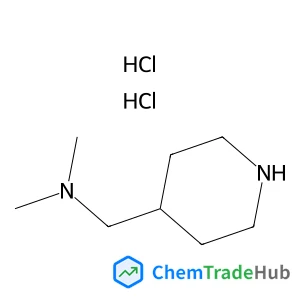
N,N-dimethyl(piperidin-4-yl)methanamine hydrochloride
CAS Number:
172281-72-0
Molecular Formula:
C8H20Cl2N2
Recommended Suppliers






Disclaimer
This page provides academic journal information for reference and research purposes only. We are not affiliated with any journal publishers and do not handle publication submissions. For publication-related inquiries, please contact the respective journal publishers directly.
If you notice any inaccuracies in the information displayed, please contact us at support@chemtradehub.com. We will promptly review and address your concerns.