












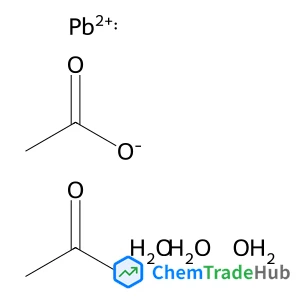
Site dilution of two-dimensional honeycomb molecular ferrimagnets AFeIIFeIII(C2O4)3 (A = (n-C4H9)N, P(C6H5)4)
Literature Information
Publication Date
2001-09-11
DOI
10.1039/B103999G
Impact Factor
3.676
Authors
View Original
Abstract
The effect of site dilution on the bulk magnetic properties of two-dimensional honeycomb ferrimagnets AFeIIFeIII(C2O4)3 (A = (n-C4H9)4N, P(C6H5)4) has been studied by substituting the FeII site with Zn and the FeIII site with Ga. In the (n-C4H9)4N compounds the critical temperature Tc falls to zero at a mole fraction of diamagnetic dopant (Zn or Ga) between 0.6 and 0.65. In the P(C6H5)4 compounds only 50% doping of FeIII with Ga is needed to suppress long-range order, probably because FeII vacancies are already present in the lattice. Monte Carlo calculations predict the quantitative variation of Tc with dilution, but experimentally the dopant has a smaller effect than predicted, possibly because the dopant ions are not randomly distributed.
Related Literature
Towards ultra small noble metal nanoparticles: testing Jellium model for ligand protected copper and silver M13 core nanoparticles
Ruibin Dong, Xiaoshuang Chen, Huxian Zhao, Xiaofang Wang, Haibo Shu, Zonglin Ding, Lu Wei
2011-01-05
Paper
DOI: 10.1039/C0CP00522C
Activity and stability of α-chymotrypsin in biocompatible ionic liquids: enzyme refolding by triethyl ammonium acetate
Pankaj Attri, Pannuru Venkatesu, Anil Kumar
2010-12-13
Paper
DOI: 10.1039/C0CP01291B
The role of calcium in membrane condensation and spontaneous curvature variations in model lipidic systems
Anan Yaghmur, Barbara Sartori, Michael Rappolt
2010-11-03
Paper
DOI: 10.1039/C0CP01036G
Electrochemical activation of molecular nitrogen at the Ir/YSZ interface
Ilia Valov, Bjoern Luerssen, Eva Mutoro, Luca Gregoratti, Roger A. De Souza, Thomas Bredow, Sebastian Günther, Alexei Barinov, Pavel Dudin, Manfred Martin, Jürgen Janek
2011-01-11
Paper
DOI: 10.1039/C0CP01024C
Which mechanism operates in the electron-transfer process at liquid/liquid interfaces?
Min Zhou, Shiyu Gan, Lijie Zhong, Xiandui Dong, Li Niu
2010-12-13
Paper
DOI: 10.1039/C0CP01692F
Bound states of the positron with nitrile species with a configuration interaction multi-component molecular orbital approach
Masanori Tachikawa, Yukiumi Kita, Robert J. Buenker
2010-12-10
Paper
DOI: 10.1039/C0CP01650K
Atmospheric chemistry of C2F5CH2OCH3 (HFE-365mcf)
D. L. Thomsen, V. F. Andersen, O. J. Nielsen, T. J. Wallington
2010-12-10
Paper
DOI: 10.1039/C0CP01609H
The impact of protonation and deprotonation of 3-methyl-2′-deoxyadenosine on N-glycosidic bond cleavage
Ali Ebrahimi, Mostafa Habibi-Khorassani, Sophia Bazzi
2011-01-26
Paper
DOI: 10.1039/C0CP01279C
Electronic structure calculations of low-lying electronic states of O3
Bingbing Suo, Daiqian Xie, Yibo Lei, Yubin Wang
2010-12-10
Paper
DOI: 10.1039/C0CP01300E
Structure and binding of the H4 histone tail and the effects of lysine 16 acetylation
Darren Yang, Gaurav Arya
2010-12-15
Paper
DOI: 10.1039/C0CP01487G
You might also like
Compound Q&A
What are the main uses of 1H-Indazole-6-carbonitrile (CAS: 141290-59-7)?
1H-Indazole-6-carbonitrile finds applications in pharmaceuticals, where it serve...
141290-59-71H-Indazole-6-carbon...
Compound Q&A
How should waste containing Dioctyl (2E)-2-butenedioate (CAS: 2997-85-5) be handled?
Waste containing Dioctyl (2E)-2-butenedioate (CAS: 2997-85-5) should be collecte...
2997-85-5Dioctyl (2E)-2-buten...
Compound Q&A
What industries use Sodium [(1,2-benzoxazol-3-ylmethyl)sulfonyl]azanide (CAS: 68291-98-5)?
Sodium [(1,2-benzoxazol-3-ylmethyl)sulfonyl]azanide is primarily used in pharmac...
68291-98-5Sodium [(1,2-benzoxa...
Compound Q&A
Are there alternatives to Dimethyl 4-(4,4,5,5-tetramethyl-1,3,2-dioxaborolan-2-yl)-2,6-pyridinedicarboxylate (CAS: 741709-66-0) in synthesis?
Dimethyl 4-(4,4,5,5-tetramethyl-1,3,2-dioxaborolan-2-yl)-2,6-pyridinedicarboxyla...
741709-66-0Dimethyl 4-(4,4,5,5-...
Compound Q&A
How should waste containing 2-Fluoro-6-hydrazinopyridine (CAS: 80714-39-2) be handled?
Waste containing 2-Fluoro-6-hydrazinopyridine (CAS: 80714-39-2) should be manage...
80714-39-22-Fluoro-6-hydrazino...
Compound Q&A
What is 6-Formyl-2-pyridinecarboxylic acid (CAS: 499214-11-8)?
6-Formyl-2-pyridinecarboxylic acid is an organic compound with the molecular for...
499214-11-86-Formyl-2-pyridinec...
Compound Q&A
What is the market or research trend for 3-(3,4-dimethoxyphenyl)-2,5-dimethyl-N-(2-morpholin-4-ylethyl)pyrazolo[1,5-a]pyrimidin-7-amine (CAS: 900874-91-1)?
Research trends for this compound indicate a focus on its potential applications...
900874-91-13-(3,4-dimethoxyphen...
Compound Q&A
How is 9H-Tribenzo[b,d,f]azepine (CAS: 29875-73-8) typically synthesized?
9H-Tribenzo[b,d,f]azepine is typically synthesized via a multi-step process invo...
29875-73-89H-Tribenzo[b,d,f]az...
Compound Q&A
How is 1-Cyclopropyl-7-ethoxy-6-fluoro-8-methoxy-4-oxo-1,4-dihydro-3-quinolinecarboxylic acid (CAS: 1797982-51-4) typically synthesized?
1-Cyclopropyl-7-ethoxy-6-fluoro-8-methoxy-4-oxo-1,4-dihydro-3-quinolinecarboxyli...
1797982-51-41-Cyclopropyl-7-etho...
Compound Q&A
How should waste containing Methyl 3-oxo-1,2,3,4-tetrahydro-6-quinoxalinecarboxylate (CAS: 671820-52-3) be handled?
Waste containing Methyl 3-oxo-1,2,3,4-tetrahydro-6-quinoxalinecarboxylate (CAS: ...
671820-52-3Methyl 3-oxo-1,2,3,4...
Source Journal
Physical Chemistry Chemical Physics

CiteScore:
5.5
Self-citation Rate:
10.3%
Articles per Year:
3036
Physical Chemistry Chemical Physics (PCCP) is an international journal co-owned by 19 physical chemistry and physics societies from around the world. This journal publishes original, cutting-edge research in physical chemistry, chemical physics and biophysical chemistry. To be suitable for publication in PCCP, articles must include significant innovation and/or insight into physical chemistry; this is the most important criterion that reviewers and Editors will judge against when evaluating submissions. The journal has a broad scope and welcomes contributions spanning experiment, theory, computation and data science. Topical coverage includes spectroscopy, dynamics, kinetics, statistical mechanics, thermodynamics, electrochemistry, catalysis, surface science, quantum mechanics, quantum computing and machine learning. Interdisciplinary research areas such as polymers and soft matter, materials, nanoscience, energy, surfaces/interfaces, and biophysical chemistry are welcomed if they demonstrate significant innovation and/or insight into physical chemistry. Joined experimental/theoretical studies are particularly appreciated when complementary and based on up-to-date approaches.
Recommended Compounds
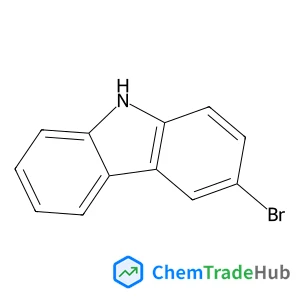

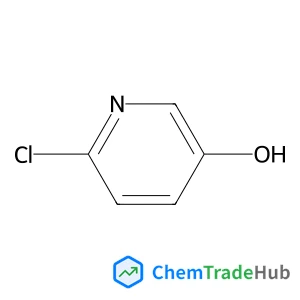
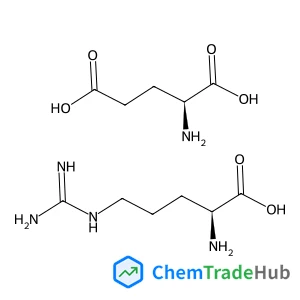
Recommended Suppliers




Disclaimer
This page provides academic journal information for reference and research purposes only. We are not affiliated with any journal publishers and do not handle publication submissions. For publication-related inquiries, please contact the respective journal publishers directly.
If you notice any inaccuracies in the information displayed, please contact us at support@chemtradehub.com. We will promptly review and address your concerns.