


Activity and stability of α-chymotrypsin in biocompatible ionic liquids: enzyme refolding by triethyl ammonium acetate
Literature Information
Publication Date
2010-12-13
DOI
10.1039/C0CP01291B
Impact Factor
3.676
Authors
Pankaj Attri, Pannuru Venkatesu, Anil Kumar
View Original
Abstract
In view the of wide scope of structural information of biomolecules in biocompatible ionic liquids (ILs) in various applications including chemical and biochemical, it is essential to study the productive preferential interactions between biological macromolecules and biocompatible ILs. We have therefore explored the stability and activity of α-chymotrypsin (CT) in the presence of five ILs from different families, such as triethyl ammonium acetate (TEAA), triethyl ammonium phosphate (TEAP) from ammonium salts, 1-benzyl-3-methylimidazolium chloride ([Bzmim][Cl]), 1-benzyl-3-methylimidazolium tetrafluoroborate ([Bzmim][BF4]) from imidazolium salts and tetra-butyl phosphonium bromide (TBPBr) from phosphonium families. Circular dichroism (CD) and UV–vis spectrophotometer experiments were used to study CT stabilization by ILs, related to the associated structural changes and enzyme activity studies, respectively. We observed that all ILs have a dominant contribution to the stabilization of CT. The stability and activity of CT depends on the structural arrangement of the ions of ILs. Our experimental results explicitly elucidate that more hydrophobic imidazolium and phosphonium cations carrying longer alkyl chains of ILs ([Bzmim][Cl], [Bzmim][BF4] and TBPBr) were weak stabilizers for CT, while small alkyl chain molecules of triethyl ammonium salts (TEAA and TEAP) are strong stabilizers and therefore more biocompatible for CT stability. Our CD and NMR measurements reveal that TEAA is a refolding additive for CT from a quenched thermal unfolded enzyme structure.
Recommended Journals

Journal of Peptide Science

Current Opinion in Solid State & Materials Science

Chemical Communications

Chemistry Education Research and Practice

Russian Journal of General Chemistry

Journal of Saudi Chemical Society

New Journal of Chemistry

Saudi Pharmaceutical Journal

Nature Medicine

Organic Process Research & Development
Related Literature
The spin-dependent transport properties of defected zigzag graphene nanoribbons with graphene nanobubbles
Yun Ni, Jia Li, Wei Tao, Hao Ding, Rui-Xue Li
2021-01-07
Paper
DOI: 10.1039/D0CP05640E
Bulk supercooled water versus adsorbed films on silica surfaces: specific heat by Monte Carlo simulation
J. Puibasset, P. Judeinstein, J.-M. Zanotti
2021-01-07
Paper
DOI: 10.1039/D0CP05387B
Anti-alignment driven dynamics in the excited states of molecules under strong fields
Ignacio R. Sola
2021-01-04
Paper
DOI: 10.1039/D0CP05692H
New insights on the ESIPT process based on solid-state data and state-of-the-art computational methods
Jean Nunes Laner, Henrique de Castro Silva Junior, Fabiano Severo Rodembusch, Eduardo Ceretta Moreira
2020-12-14
Paper
DOI: 10.1039/D0CP05502F
Liquid dibromomethane under pressure: a computational study
Bernadeta Jasiok, Mirosław Chorążewski, Eugene B. Postnikov, Claude Millot
2021-01-22
Paper
DOI: 10.1039/D0CP06458K
The Brønsted–Evans–Polanyi relationship in oxygen exchange of fuel cell cathode material SrCo0.9Ta0.1O3−δ with the gas phase
Sergey F. Bychkov, Mikhail P. Popov, Alexander P. Nemudry
2020-12-08
Paper
DOI: 10.1039/D0CP04856A
Accelerating atomistic simulations with piecewise machine-learned ab Initio potentials at a classical force field-like cost
Yaolong Zhang, Ce Hu, Bin Jiang
2020-11-16
Paper
DOI: 10.1039/D0CP05089J
Membrane packing defects in synaptic vesicles recruit complexin and synuclein
Jie Liu, Bing Bu, Michael Crowe, Dechang Li, Jiajie Diao, Baohua Ji
2020-12-18
Paper
DOI: 10.1039/D0CP03546G
You might also like
Compound Q&A
How is Ethyl 4-chlorothieno[2,3-b]pyridine-5-carboxylate (CAS: 59713-58-5) typically synthesized?
Ethyl 4-chlorothieno[2,3-b]pyridine-5-carboxylate (CAS: 59713-58-5) can be synth...
59713-58-5Ethyl 4-chlorothieno...
Compound Q&A
What regulatory guidelines apply to 5-Methyl-1H-indole-3-carbaldehyde (CAS: 52562-50-2)?
5-Methyl-1H-indole-3-carbaldehyde (CAS: 52562-50-2) is subject to various regula...
52562-50-25-Methyl-1H-indole-3...
Compound Q&A
What are the physical and chemical properties of (1,3-Dimethyl-2,4-dioxo-1,2,3,4-tetrahydro-5-pyrimidinyl)boronic acid (CAS: 223418-73-3)?
(1,3-Dimethyl-2,4-dioxo-1,2,3,4-tetrahydro-5-pyrimidinyl)boronic acid is a white...
223418-73-3(1,3-Dimethyl-2,4-di...
Compound Q&A
How should waste containing Sulfocostunolide A (CAS: 1016983-51-9) be handled?
Waste containing Sulfocostunolide A (CAS: 1016983-51-9) should be handled with c...
1016983-51-9Sulfocostunolide A
Compound Q&A
What precautions should be taken when handling Murraxocin (CAS: 88478-44-8)?
When handling Murraxocin (CAS: 88478-44-8), ensure proper personal protective eq...
88478-44-8Murraxocin
Compound Q&A
What are the physical and chemical properties of Formvar (CAS: 63148-64-1)?
Formvar (CAS: 63148-64-1) is an alkyd resin characterized by a high molecular we...
63148-64-1Formvar(R)
Compound Q&A
Is (S)-4-benzyl-2-((benzyloxy)methyl)morpholine (CAS: 205242-66-6) safe?
(S)-4-benzyl-2-((benzyloxy)methyl)morpholine is generally safe when handled with...
205242-66-6(S)-4-benzyl-2-((ben...
Compound Q&A
What industries use Methyl 1-(5-bromo-2-pyrimidinyl)cyclopropanecarboxylate (CAS: 1447607-69-3)?
Methyl 1-(5-bromo-2-pyrimidinyl)cyclopropanecarboxylate (CAS: 1447607-69-3) is p...
1447607-69-3Methyl 1-(5-bromo-2-...
Compound Q&A
Is 2-Methyl-1-phenyl-1-propanamine hydrochloride (CAS: 24290-47-9) safe?
2-Methyl-1-phenyl-1-propanamine hydrochloride (CAS: 24290-47-9) is generally con...
24290-47-92-Methyl-1-phenyl-1-...
Compound Q&A
How is 3-(4-Bromophenyl)-2-methylpropanoic acid (CAS: 66735-01-1) typically synthesized?
3-(4-Bromophenyl)-2-methylpropanoic acid is synthesized through a multi-step pro...
66735-01-13-(4-Bromophenyl)-2-...
Source Journal
Physical Chemistry Chemical Physics

CiteScore:
5.5
Self-citation Rate:
10.3%
Articles per Year:
3036
Physical Chemistry Chemical Physics (PCCP) is an international journal co-owned by 19 physical chemistry and physics societies from around the world. This journal publishes original, cutting-edge research in physical chemistry, chemical physics and biophysical chemistry. To be suitable for publication in PCCP, articles must include significant innovation and/or insight into physical chemistry; this is the most important criterion that reviewers and Editors will judge against when evaluating submissions. The journal has a broad scope and welcomes contributions spanning experiment, theory, computation and data science. Topical coverage includes spectroscopy, dynamics, kinetics, statistical mechanics, thermodynamics, electrochemistry, catalysis, surface science, quantum mechanics, quantum computing and machine learning. Interdisciplinary research areas such as polymers and soft matter, materials, nanoscience, energy, surfaces/interfaces, and biophysical chemistry are welcomed if they demonstrate significant innovation and/or insight into physical chemistry. Joined experimental/theoretical studies are particularly appreciated when complementary and based on up-to-date approaches.
Recommended Compounds

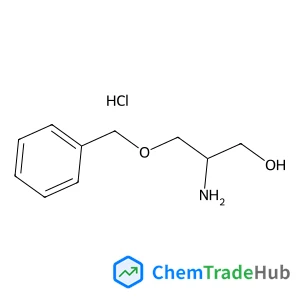
(R)-2-amino-3-(benzyloxy)propan-1-ol hydrochloride
CAS Number:
58577-95-0
Molecular Formula:
C10H16ClNO2
Recommended Suppliers





Disclaimer
This page provides academic journal information for reference and research purposes only. We are not affiliated with any journal publishers and do not handle publication submissions. For publication-related inquiries, please contact the respective journal publishers directly.
If you notice any inaccuracies in the information displayed, please contact us at support@chemtradehub.com. We will promptly review and address your concerns.