












Mercury-photosensitized reactions of cis-2-butene–ethanol and cis-2-butene–propylamine mixtures
Literature Information
Publication Date
2001-08-21
DOI
10.1039/B103661K
Impact Factor
3.676
Authors
Shunzo Yamamoto, Toshiki Kasamatsu, Yoshimi Sueishi
View Original
Abstract
The Hg(3P1)-photosensitized luminescence of propylamine (PA) and ethanol (ET) and the Hg(3P1)-photosensitized isomerization of cis-2-butene (cis-2B) were investigated in PA–cis-2B and ET–cis-2B mixtures under conditions of steady illumination at room temperature. The decreases in intensities of the luminescence from the HgPA* and HgET* complexes by the addition of cis-2B were much steeper than those expected by the competitive quenching of Hg(3P1) by PA (ET) and cis-2B. On the other hand, the decreases of the rate of isomerization of cis-2B by the additions of PA and ET were smaller than those expected by the competitive quenching by PA (ET) and cis-2B. The results for PA–cis-2B mixtures can be explained well by taking into account the additional reaction Hg(3P0) + cis-2B → Hg(1S0) + B* (B* is the triplet state of 2-butene). To explain the results for ET–cis-2B mixtures, it is necessary to add the further reaction HgET* + cis-2B → Hg(1S0) + ET + B*. Although the formation of HgCl was predominant and no cis–trans isomerization was observed in the Hg(3P1)-photosensitized reaction of cis- and trans-1,2-dichloroethene (DCE), we could follow the isomerization of DCE in the photosensitized reaction of DCE–ET ([DCE]0: [ET]0 = 1:100) mixture. These findings can also be explained by the reaction, HgET* + DCE → Hg(1S0) + ET + DCE*. This type of reaction was proposed for the first time.
Related Literature
CO bond cleavage on supported nano-gold during low temperature oxidation
Albert F. Carley, David J. Morgan, Nianxue Song, M. Wyn Roberts, Stuart H. Taylor, Jonathan K. Bartley, David J. Willock, Kara L. Howard, Graham J. Hutchings
2010-12-10
Paper
DOI: 10.1039/C0CP01852J
Enhanced photocatalytic activity of mesoporous TiO2 aggregates by embedding carbon nanotubes as electron-transfer channel
Jiaguo Yu, Tingting Ma, Shengwei Liu
2010-12-21
Paper
DOI: 10.1039/C0CP01139H
Bound states of the positron with nitrile species with a configuration interaction multi-component molecular orbital approach
Masanori Tachikawa, Yukiumi Kita, Robert J. Buenker
2010-12-10
Paper
DOI: 10.1039/C0CP01650K
Mapping the frontier electronic structures of triphenylamine based organic dyes at TiO2 interfaces
Maria Hahlin, Michael Odelius, Martin Magnuson, Erik M. J. Johansson, Stefan Plogmaker, Daniel P. Hagberg, Licheng Sun, Hans Siegbahn, Håkan Rensmo
2010-12-20
Paper
DOI: 10.1039/C0CP01491E
The role of hydrogen bonding in water–metal interactions
Adrien Poissier, Sriram Ganeshan, M. V. Fernández-Serra
2010-12-22
Paper
DOI: 10.1039/C0CP00994F
The role of calcium in membrane condensation and spontaneous curvature variations in model lipidic systems
Anan Yaghmur, Barbara Sartori, Michael Rappolt
2010-11-03
Paper
DOI: 10.1039/C0CP01036G
Translation-rotation energy levels of one H2 molecule inside the small, medium and large cages of the structure H clathrate hydrate
Álvaro Valdés, Geert-Jan Kroes
2010-12-16
Paper
DOI: 10.1039/C0CP01804J
‘Shape effects’ in metal oxide supported nanoscale goldcatalysts
Matthew B. Boucher, Simone Goergen, Nan Yi, Maria Flytzani-Stephanopoulos
2011-01-17
Paper
DOI: 10.1039/C0CP02009E
Ammonia IRMS-TPD measurements on Brønsted acidity of proton-formed SAPO-34
Katsuki Suzuki, Takuma Nishio, Naonobu Katada, German Sastre, Miki Niwa
2010-12-20
Paper
DOI: 10.1039/C0CP00961J
A novel lyotropic liquid crystal formed by triphilic star-polyphiles: hydrophilic/oleophilic/fluorophilic rods arranged in a 12.6.4. tiling‡
Liliana de Campo, Trond Varslot, Minoo J. Moghaddam, Jacob J. K. Kirkensgaard, Kell Mortensen, Stephen T. Hyde
2010-11-22
Paper
DOI: 10.1039/C0CP01201G
You might also like
Compound Q&A
What are the main uses of 1H-Indazole-6-carbonitrile (CAS: 141290-59-7)?
1H-Indazole-6-carbonitrile finds applications in pharmaceuticals, where it serve...
141290-59-71H-Indazole-6-carbon...
Compound Q&A
How should waste containing Dioctyl (2E)-2-butenedioate (CAS: 2997-85-5) be handled?
Waste containing Dioctyl (2E)-2-butenedioate (CAS: 2997-85-5) should be collecte...
2997-85-5Dioctyl (2E)-2-buten...
Compound Q&A
What industries use Sodium [(1,2-benzoxazol-3-ylmethyl)sulfonyl]azanide (CAS: 68291-98-5)?
Sodium [(1,2-benzoxazol-3-ylmethyl)sulfonyl]azanide is primarily used in pharmac...
68291-98-5Sodium [(1,2-benzoxa...
Compound Q&A
Are there alternatives to Dimethyl 4-(4,4,5,5-tetramethyl-1,3,2-dioxaborolan-2-yl)-2,6-pyridinedicarboxylate (CAS: 741709-66-0) in synthesis?
Dimethyl 4-(4,4,5,5-tetramethyl-1,3,2-dioxaborolan-2-yl)-2,6-pyridinedicarboxyla...
741709-66-0Dimethyl 4-(4,4,5,5-...
Compound Q&A
How should waste containing 2-Fluoro-6-hydrazinopyridine (CAS: 80714-39-2) be handled?
Waste containing 2-Fluoro-6-hydrazinopyridine (CAS: 80714-39-2) should be manage...
80714-39-22-Fluoro-6-hydrazino...
Compound Q&A
What is 6-Formyl-2-pyridinecarboxylic acid (CAS: 499214-11-8)?
6-Formyl-2-pyridinecarboxylic acid is an organic compound with the molecular for...
499214-11-86-Formyl-2-pyridinec...
Compound Q&A
What is the market or research trend for 3-(3,4-dimethoxyphenyl)-2,5-dimethyl-N-(2-morpholin-4-ylethyl)pyrazolo[1,5-a]pyrimidin-7-amine (CAS: 900874-91-1)?
Research trends for this compound indicate a focus on its potential applications...
900874-91-13-(3,4-dimethoxyphen...
Compound Q&A
How is 9H-Tribenzo[b,d,f]azepine (CAS: 29875-73-8) typically synthesized?
9H-Tribenzo[b,d,f]azepine is typically synthesized via a multi-step process invo...
29875-73-89H-Tribenzo[b,d,f]az...
Compound Q&A
How is 1-Cyclopropyl-7-ethoxy-6-fluoro-8-methoxy-4-oxo-1,4-dihydro-3-quinolinecarboxylic acid (CAS: 1797982-51-4) typically synthesized?
1-Cyclopropyl-7-ethoxy-6-fluoro-8-methoxy-4-oxo-1,4-dihydro-3-quinolinecarboxyli...
1797982-51-41-Cyclopropyl-7-etho...
Compound Q&A
How should waste containing Methyl 3-oxo-1,2,3,4-tetrahydro-6-quinoxalinecarboxylate (CAS: 671820-52-3) be handled?
Waste containing Methyl 3-oxo-1,2,3,4-tetrahydro-6-quinoxalinecarboxylate (CAS: ...
671820-52-3Methyl 3-oxo-1,2,3,4...
Source Journal
Physical Chemistry Chemical Physics

CiteScore:
5.5
Self-citation Rate:
10.3%
Articles per Year:
3036
Physical Chemistry Chemical Physics (PCCP) is an international journal co-owned by 19 physical chemistry and physics societies from around the world. This journal publishes original, cutting-edge research in physical chemistry, chemical physics and biophysical chemistry. To be suitable for publication in PCCP, articles must include significant innovation and/or insight into physical chemistry; this is the most important criterion that reviewers and Editors will judge against when evaluating submissions. The journal has a broad scope and welcomes contributions spanning experiment, theory, computation and data science. Topical coverage includes spectroscopy, dynamics, kinetics, statistical mechanics, thermodynamics, electrochemistry, catalysis, surface science, quantum mechanics, quantum computing and machine learning. Interdisciplinary research areas such as polymers and soft matter, materials, nanoscience, energy, surfaces/interfaces, and biophysical chemistry are welcomed if they demonstrate significant innovation and/or insight into physical chemistry. Joined experimental/theoretical studies are particularly appreciated when complementary and based on up-to-date approaches.
Recommended Compounds
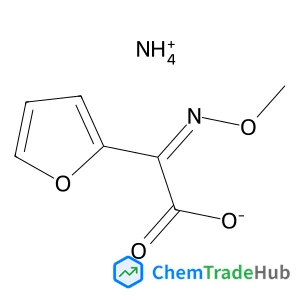
Ammonium (Z)-2-(furan-2-yl)-2-(methoxyimino)acetate
CAS Number:
97148-39-5
Molecular Formula:
C7H10N2O4



Recommended Suppliers






Disclaimer
This page provides academic journal information for reference and research purposes only. We are not affiliated with any journal publishers and do not handle publication submissions. For publication-related inquiries, please contact the respective journal publishers directly.
If you notice any inaccuracies in the information displayed, please contact us at support@chemtradehub.com. We will promptly review and address your concerns.