












The effect of gravity on the rate of a simple liquid-state reaction in a small, unstirred cylindrical vessel
Literature Information
Publication Date
2001-03-27
DOI
10.1039/B100542L
Impact Factor
3.676
Authors
David F. Fletcher
View Original
Abstract
The volume-averaged rate of a simple, liquid-state isomerisation reaction, initially at room temperature, inside an upright cylindrical container with a perfectly thermally conducting sidewall maintained at a constant elevated temperature has been followed theoretically, both in the presence and in the absence of gravity. Computational fluid dynamics modelling, using the finite-volume method, indicates that the net reaction progresses much faster in the presence of gravity. This accelerated rate of product formation is attributed to the effects of thermal convection currents, which cause more rapid heat transfer to the reaction vessel and are absent under conditions of zero gravity. The influence of natural convection on the spatial patterns of species concentration and of temperature is also illustrated in this article.
Related Literature
Pathways of amyloid-beta absorption and aggregation in a membranous environment
Abhilash Sahoo, Hongcheng Xu
2019-03-27
Paper
DOI: 10.1039/C9CP00040B
Impression of magnetic clusters, critical behavior and magnetocaloric effect in Fe3Al alloys
Shubhra Dash, Yu. V. Knyazev, Yu. I. Kuz’min, E. D. Baglasov, Bruno Weise, Pramod Kumar, M. Vasundhara, Ajit K. Patra
2019-05-14
Paper
DOI: 10.1039/C9CP01358J
First-principles study of NaxTiO2 with trigonal bipyramid structures: an insight into sodium-ion battery anode applications
Chol-Jun Yu, Kum-Chol Ri, Jing-Song Kim, Song-Nam Hong
2019-03-27
Paper
DOI: 10.1039/C9CP00267G
Voltammetric demonstration of thermally induced natural convection in aqueous solution
Danlei Li, Christopher Batchelor-McAuley, Lifu Chen, Richard G. Compton
2019-04-25
Paper
DOI: 10.1039/C9CP01913H
Ligand binding effects on the activation of the EGFR extracellular domain
2019-03-18
Paper
DOI: 10.1039/C8CP07496H
Charged nanoporous graphene membranes for water desalination
Chinh Thanh Nguyen, Ali Beskok
2019-04-15
Paper
DOI: 10.1039/C9CP01079C
Effects of temperature and pressure on the optical and vibrational properties of thermoelectric SnSe
Ilias Efthimiopoulos, Matthias Berg, Annika Bande, Ljiljana Puskar, Eglof Ritter, Wei Xu, Michele Ortolani, Martin Harms, Jan Müller, Sergio Speziale, Monika Koch-Müller, Yong Liu, Li-Dong Zhao, Ulrich Schade
2019-03-29
Paper
DOI: 10.1039/C9CP00897G
Actinyl cation–cation interactions in the gas phase: an accurate thermochemical study
Rulin Feng, Eric D. Glendening, Kirk A. Peterson
2019-03-22
Paper
DOI: 10.1039/C9CP00760A
Reaction mechanism between small-sized Ce clusters and water molecules II: an ab initio investigation on Cen (n = 1–3) + mH2O (m = 2–6)
Rulong Zhou, Shanshan Ma, Yang Yang, Dongdong Li, Bingyan Qu, Xiao Cheng Zeng
2019-04-04
Paper
DOI: 10.1039/C9CP01027K
You might also like
Compound Q&A
What are the main uses of 1H-Indazole-6-carbonitrile (CAS: 141290-59-7)?
1H-Indazole-6-carbonitrile finds applications in pharmaceuticals, where it serve...
141290-59-71H-Indazole-6-carbon...
Compound Q&A
How should waste containing Dioctyl (2E)-2-butenedioate (CAS: 2997-85-5) be handled?
Waste containing Dioctyl (2E)-2-butenedioate (CAS: 2997-85-5) should be collecte...
2997-85-5Dioctyl (2E)-2-buten...
Compound Q&A
What industries use Sodium [(1,2-benzoxazol-3-ylmethyl)sulfonyl]azanide (CAS: 68291-98-5)?
Sodium [(1,2-benzoxazol-3-ylmethyl)sulfonyl]azanide is primarily used in pharmac...
68291-98-5Sodium [(1,2-benzoxa...
Compound Q&A
Are there alternatives to Dimethyl 4-(4,4,5,5-tetramethyl-1,3,2-dioxaborolan-2-yl)-2,6-pyridinedicarboxylate (CAS: 741709-66-0) in synthesis?
Dimethyl 4-(4,4,5,5-tetramethyl-1,3,2-dioxaborolan-2-yl)-2,6-pyridinedicarboxyla...
741709-66-0Dimethyl 4-(4,4,5,5-...
Compound Q&A
How should waste containing 2-Fluoro-6-hydrazinopyridine (CAS: 80714-39-2) be handled?
Waste containing 2-Fluoro-6-hydrazinopyridine (CAS: 80714-39-2) should be manage...
80714-39-22-Fluoro-6-hydrazino...
Compound Q&A
What is 6-Formyl-2-pyridinecarboxylic acid (CAS: 499214-11-8)?
6-Formyl-2-pyridinecarboxylic acid is an organic compound with the molecular for...
499214-11-86-Formyl-2-pyridinec...
Compound Q&A
What is the market or research trend for 3-(3,4-dimethoxyphenyl)-2,5-dimethyl-N-(2-morpholin-4-ylethyl)pyrazolo[1,5-a]pyrimidin-7-amine (CAS: 900874-91-1)?
Research trends for this compound indicate a focus on its potential applications...
900874-91-13-(3,4-dimethoxyphen...
Compound Q&A
How is 9H-Tribenzo[b,d,f]azepine (CAS: 29875-73-8) typically synthesized?
9H-Tribenzo[b,d,f]azepine is typically synthesized via a multi-step process invo...
29875-73-89H-Tribenzo[b,d,f]az...
Compound Q&A
How is 1-Cyclopropyl-7-ethoxy-6-fluoro-8-methoxy-4-oxo-1,4-dihydro-3-quinolinecarboxylic acid (CAS: 1797982-51-4) typically synthesized?
1-Cyclopropyl-7-ethoxy-6-fluoro-8-methoxy-4-oxo-1,4-dihydro-3-quinolinecarboxyli...
1797982-51-41-Cyclopropyl-7-etho...
Compound Q&A
How should waste containing Methyl 3-oxo-1,2,3,4-tetrahydro-6-quinoxalinecarboxylate (CAS: 671820-52-3) be handled?
Waste containing Methyl 3-oxo-1,2,3,4-tetrahydro-6-quinoxalinecarboxylate (CAS: ...
671820-52-3Methyl 3-oxo-1,2,3,4...
Source Journal
Physical Chemistry Chemical Physics

CiteScore:
5.5
Self-citation Rate:
10.3%
Articles per Year:
3036
Physical Chemistry Chemical Physics (PCCP) is an international journal co-owned by 19 physical chemistry and physics societies from around the world. This journal publishes original, cutting-edge research in physical chemistry, chemical physics and biophysical chemistry. To be suitable for publication in PCCP, articles must include significant innovation and/or insight into physical chemistry; this is the most important criterion that reviewers and Editors will judge against when evaluating submissions. The journal has a broad scope and welcomes contributions spanning experiment, theory, computation and data science. Topical coverage includes spectroscopy, dynamics, kinetics, statistical mechanics, thermodynamics, electrochemistry, catalysis, surface science, quantum mechanics, quantum computing and machine learning. Interdisciplinary research areas such as polymers and soft matter, materials, nanoscience, energy, surfaces/interfaces, and biophysical chemistry are welcomed if they demonstrate significant innovation and/or insight into physical chemistry. Joined experimental/theoretical studies are particularly appreciated when complementary and based on up-to-date approaches.
Recommended Compounds

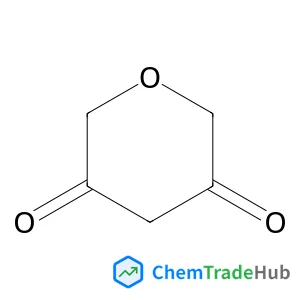
![4-Penten-1-yl 2-[(2-furylmethyl)(1H-imidazol-1-ylcarbonyl)amino]butanoate structure](https://static.chemtradehub.com/structs/101/101903-30-4-ac34.webp "4-Penten-1-yl 2-[(2-furylmethyl)(1H-imidazol-1-ylcarbonyl)amino]butanoate structure")
4-Penten-1-yl 2-[(2-furylmethyl)(1H-imidazol-1-ylcarbonyl)amino]butanoate
CAS Number:
101903-30-4
Molecular Formula:
C18H23N3O4
Recommended Suppliers



Disclaimer
This page provides academic journal information for reference and research purposes only. We are not affiliated with any journal publishers and do not handle publication submissions. For publication-related inquiries, please contact the respective journal publishers directly.
If you notice any inaccuracies in the information displayed, please contact us at support@chemtradehub.com. We will promptly review and address your concerns.