













Reaction mechanism between small-sized Ce clusters and water molecules II: an ab initio investigation on Cen (n = 1–3) + mH2O (m = 2–6)
Literature Information
Publication Date
2019-04-04
DOI
10.1039/C9CP01027K
Impact Factor
3.676
Authors
Rulong Zhou, Shanshan Ma, Yang Yang, Dongdong Li, Bingyan Qu, Xiao Cheng Zeng
View Original
Abstract
Possible reactions between the products of the three independent reactions involving a small Ce cluster and a single water molecule, Cen + H2O (n = 1–3), and an additional H2O molecule are systematically investigated. The ground-state isomers of the final products and the reaction pathways involving multiple water molecules are predicted. We find that under either ambient or UV-irradiation conditions, all the reactions can entail low energy barriers. In addition, the final products of the reaction between Cen and more than two H2O molecules are also predicted through an extensive structural search. The calculated reaction energies suggest that although small-sized Ce clusters can react with more than two water molecules, the reactions with one or two water molecules are dominant. The electronic structures of all the ground-state isomers and the corresponding oxidation states of Ce atoms in these isomers are computed and determined via the natural bond orbital (NBO) method. The results indicate that a single Ce atom and a Ce2 cluster can react with a maximum of four and six water molecules, respectively, while a Ce3 cluster can react with more than six water molecules. This comprehensive study offers an improved understanding of the mechanism underlying the reactions between a single Ce atom or a small Ce cluster and two or more H2O molecules. Knowledge obtained from this study can be helpful for the development of high-performance Ce-doped or Ce-based catalysts.
Related Literature
Synthesis of well-defined amphiphilic branched polyethylene-graft-poly (N-isopropylacrylamide) copolymers by coordination copolymerization in tandem with RAFT polymerization and their self-assembled vesicles
Ye Zhao, Haiyang Gao, Guodong Liang, Fangming Zhu, Qing Wu
2013-09-27
Paper
DOI: 10.1039/C3PY01289A
The use of a carbon paste electrode mixed with multiwalled carbon nanotube/electroactive polyimide composites as an electrode for sensing ascorbic acid
Tsao-Cheng Huang, Lu-Chen Yeh, Hsiu-Ying Huang, Zheng-Yong Nian, Yi-Chun Yeh, Yi-Chen Chou, Jui-Ming Yeh, Mei-Hui Tsai
2013-09-05
Paper
DOI: 10.1039/C3PY00787A
Synthesis of novel trithiocarbonate and allyl sulfide containing monomers
Christopher R. Fenoli
2013-08-14
Paper
DOI: 10.1039/C3PY00709J
Supramolecular polymer fabricated by click polymerization from supramonomer
Liulin Yang, Xiaoguang Liu, Xinxin Tan, Hui Yang, Zhiqiang Wang, Xi Zhang
2013-09-10
Communication
DOI: 10.1039/C3PY01161E
Click chemistry as a powerful and chemoselective tool for the attachment of targeting ligands to polymer drug carriers
Robert Pola, Alena Braunová, Richard Laga, Michal Pechar, Karel Ulbrich
2013-10-29
Paper
DOI: 10.1039/C3PY01376F
Chemically recyclable alternating copolymers with low polydispersity from conjugated/aromatic aldehydes and vinyl ethers: selective degradation to another monomer at ambient temperature
Yasushi Ishido, Arihiro Kanazawa, Shokyoku Kanaoka, Sadahito Aoshima
2013-08-12
Communication
DOI: 10.1039/C3PY00842H
Acetyl protected thiol methacrylic polymers as effective ligands to keep quantum dots in luminescent standby mode
Marta Liras, Isabel Quijada-Garrido, Marta Palacios-Cuesta, Sonia Muñoz-Durieux, Olga García
2013-08-30
Paper
DOI: 10.1039/C3PY00987D
Direct synthesis of poly(p-phenyleneethynylene)s from calcium carbide
Nopparat Thavornsin, Mongkol Sukwattanasinitt, Sumrit Wacharasindhu
2013-08-12
Communication
DOI: 10.1039/C3PY01068F
Synergistic effects of hydrophobicity and gas barrier properties on the anticorrosion property of PMMA nanocomposite coatings embedded with graphene nanosheets
Kung-Chin Chang, Wei-Fu Ji, Mei-Chun Lai, You-Rong Hsiao, Chien-Hua Hsu, Tsao-Li Chuang, Yen Wei, Jui-Ming Yeh, Wei-Ren Liu
2013-10-04
Paper
DOI: 10.1039/C3PY01178J
You might also like
Compound Q&A
What are the main uses of 1H-Indazole-6-carbonitrile (CAS: 141290-59-7)?
1H-Indazole-6-carbonitrile finds applications in pharmaceuticals, where it serve...
141290-59-71H-Indazole-6-carbon...
Compound Q&A
How should waste containing Dioctyl (2E)-2-butenedioate (CAS: 2997-85-5) be handled?
Waste containing Dioctyl (2E)-2-butenedioate (CAS: 2997-85-5) should be collecte...
2997-85-5Dioctyl (2E)-2-buten...
Compound Q&A
What industries use Sodium [(1,2-benzoxazol-3-ylmethyl)sulfonyl]azanide (CAS: 68291-98-5)?
Sodium [(1,2-benzoxazol-3-ylmethyl)sulfonyl]azanide is primarily used in pharmac...
68291-98-5Sodium [(1,2-benzoxa...
Compound Q&A
Are there alternatives to Dimethyl 4-(4,4,5,5-tetramethyl-1,3,2-dioxaborolan-2-yl)-2,6-pyridinedicarboxylate (CAS: 741709-66-0) in synthesis?
Dimethyl 4-(4,4,5,5-tetramethyl-1,3,2-dioxaborolan-2-yl)-2,6-pyridinedicarboxyla...
741709-66-0Dimethyl 4-(4,4,5,5-...
Compound Q&A
How should waste containing 2-Fluoro-6-hydrazinopyridine (CAS: 80714-39-2) be handled?
Waste containing 2-Fluoro-6-hydrazinopyridine (CAS: 80714-39-2) should be manage...
80714-39-22-Fluoro-6-hydrazino...
Compound Q&A
What is 6-Formyl-2-pyridinecarboxylic acid (CAS: 499214-11-8)?
6-Formyl-2-pyridinecarboxylic acid is an organic compound with the molecular for...
499214-11-86-Formyl-2-pyridinec...
Compound Q&A
What is the market or research trend for 3-(3,4-dimethoxyphenyl)-2,5-dimethyl-N-(2-morpholin-4-ylethyl)pyrazolo[1,5-a]pyrimidin-7-amine (CAS: 900874-91-1)?
Research trends for this compound indicate a focus on its potential applications...
900874-91-13-(3,4-dimethoxyphen...
Compound Q&A
How is 9H-Tribenzo[b,d,f]azepine (CAS: 29875-73-8) typically synthesized?
9H-Tribenzo[b,d,f]azepine is typically synthesized via a multi-step process invo...
29875-73-89H-Tribenzo[b,d,f]az...
Compound Q&A
How is 1-Cyclopropyl-7-ethoxy-6-fluoro-8-methoxy-4-oxo-1,4-dihydro-3-quinolinecarboxylic acid (CAS: 1797982-51-4) typically synthesized?
1-Cyclopropyl-7-ethoxy-6-fluoro-8-methoxy-4-oxo-1,4-dihydro-3-quinolinecarboxyli...
1797982-51-41-Cyclopropyl-7-etho...
Compound Q&A
How should waste containing Methyl 3-oxo-1,2,3,4-tetrahydro-6-quinoxalinecarboxylate (CAS: 671820-52-3) be handled?
Waste containing Methyl 3-oxo-1,2,3,4-tetrahydro-6-quinoxalinecarboxylate (CAS: ...
671820-52-3Methyl 3-oxo-1,2,3,4...
Source Journal
Physical Chemistry Chemical Physics

CiteScore:
5.5
Self-citation Rate:
10.3%
Articles per Year:
3036
Physical Chemistry Chemical Physics (PCCP) is an international journal co-owned by 19 physical chemistry and physics societies from around the world. This journal publishes original, cutting-edge research in physical chemistry, chemical physics and biophysical chemistry. To be suitable for publication in PCCP, articles must include significant innovation and/or insight into physical chemistry; this is the most important criterion that reviewers and Editors will judge against when evaluating submissions. The journal has a broad scope and welcomes contributions spanning experiment, theory, computation and data science. Topical coverage includes spectroscopy, dynamics, kinetics, statistical mechanics, thermodynamics, electrochemistry, catalysis, surface science, quantum mechanics, quantum computing and machine learning. Interdisciplinary research areas such as polymers and soft matter, materials, nanoscience, energy, surfaces/interfaces, and biophysical chemistry are welcomed if they demonstrate significant innovation and/or insight into physical chemistry. Joined experimental/theoretical studies are particularly appreciated when complementary and based on up-to-date approaches.
Recommended Compounds

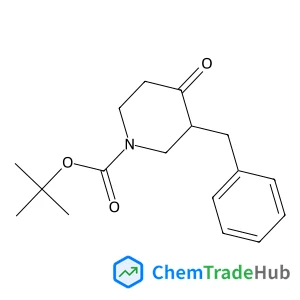
2-Methyl-2-propanyl 3-benzyl-4-oxo-1-piperidinecarboxylate
CAS Number:
193274-82-7
Molecular Formula:
C17H23NO3
Recommended Suppliers







Disclaimer
This page provides academic journal information for reference and research purposes only. We are not affiliated with any journal publishers and do not handle publication submissions. For publication-related inquiries, please contact the respective journal publishers directly.
If you notice any inaccuracies in the information displayed, please contact us at support@chemtradehub.com. We will promptly review and address your concerns.