


Surface and bulk structural response of Pt black upon its hydrogen treatment and catalytic reaction with n-hexane
Literature Information
Publication Date
2001-05-08
DOI
10.1039/B007837I
Impact Factor
3.676
Authors
Attila Wootsch
View Original
Abstract
Pt black has been studied by X-ray and ultraviolet photoelectron spectroscopies (XPS, UPS) and XRD after reduction, after presintering and after subjection to various in situ treatments. All samples contained carbon and oxygen impurities. Sintering decreased the abundance of C. Samples introduced from the air contained a large amount of oxygen whose amount dropped markedly upon keeping the Pt in UHV for several hours. XPS and UPS revealed considerable amounts of nondissociatively chemisorbed CO after this treatment. An in situ hydrogen treatment at 603 K decreased the O content further but increased the concentration of surface carbon. The Pt 4f regions showed some oxidized Pt both before and after sintering. Pt reached an almost clean metallic state after UHV treatment. This state seemed to remain unchanged after further manipulations. Hardly any electronic interaction could thus be observed between Pt and its main impurity: C, which was present mostly as graphite and CxHy polymer after treatment with n-hexane plus hydrogen. n-Hexane alone produced mostly “disordered” surface carbon species. The intensity of higher-order X-ray reflections of Pt was suppressed upon sintering. This anisotropy was reversed after in situ H2 treatments, inducing recrystallization with preferential formation of higher Miller-index planes, (220) and (311). These reflections were again suppressed after exposure to n-hexane. Thus, adsorbate-induced solid-state rearrangement occurred as a result of the interplay of surface and subsurface impurities. The catalytic reactions of n-hexane over Pt black subjected to different pretreatments were different: abundant (220) and (311) reflections promoting isomerisation, C5-cyclisation and also hydrogenolysis. Carbon accumulation decreased the “intrinsic” activity of the Pt fraction detected by XPS. Selectivities, in turn, were governed by the crystallite structure as well as by the presence of composite platinum–carbon sites. “ Disordered” surface carbon species poisoned all skeletal reactions and favoured dehydrogenation to hexenes.
Recommended Journals

Journal of the Indian Institute of Science

Critical Reviews in Solid State and Materials Sciences

Journal of Asian Natural Products Research

Main Group Chemistry

Atomization and Sprays

Bioorganic & Medicinal Chemistry Letters

Acta Metallurgica Sinica-English Letters

Colloid Journal

Electroanalysis

Chinese Journal of Chemistry
Related Literature
The first chemoselective tandem acylation of the Blaise reaction intermediate: a novel method for the synthesis of α-acyl-β-enamino esters, key intermediate for pyrazoles
Yu Sung Chun, Ki Kon Lee, Young Ok Ko, Hyunik Shin, Sang-gi Lee
2008-09-23
Communication
DOI: 10.1039/B813369G
Fabrication of chiral silver nanoparticles and chiral nanoparticulate film via organogel
Yuangang Li, Minghua Liu
2008-09-24
Communication
DOI: 10.1039/B812567H
Non-hydrolytic synthesis of mesoporous silica–titania catalysts for the mild oxidation of sulfur compounds with hydrogen peroxide
P. Hubert Mutin, Emil Dumitriu, François Fajula, André Vioux, Vasile Hulea
2008-09-18
Communication
DOI: 10.1039/B811668G
Glucose production from saccharides using layered transition metal oxide and exfoliated nanosheets as a water-tolerant solid acid catalyst
Atsushi Takagaki, Caio Tagusagawa, Kazunari Domen
2008-09-16
Communication
DOI: 10.1039/B810346A
Novel highly active FSM-16 supported molybdenum catalyst for hydrotreatment
Shelu Garg, Thallada Bhaskar, Kapil Soni, Gnanamani Muthu Kumaran, Akinori Muto, Yusaku Sakata, Gudimella Murali Dhar
2008-09-15
Communication
DOI: 10.1039/B809808E
A facile strategy to control polymer topology by variation of controlled radical polymerization mechanisms
Wen-Ming Wan, Cai-Yuan Pan
2008-09-30
Communication
DOI: 10.1039/B811618K
In vivo studies of a platinum(ii) metallointercalator
Dianne M. Fisher, Ronald R. Fenton, Janice R. Aldrich-Wright
2008-09-26
Communication
DOI: 10.1039/B811723C
Pre-programmed bicomponent porous networks at the solid–liquid interface: the low concentration regime
Carlos-Andres Palma, Massimo Bonini, Anna Llanes-Pallas, Thomas Breiner, Maurizio Prato
2008-09-18
Communication
DOI: 10.1039/B811534F
You might also like
Compound Q&A
What are the main uses of 1H-Indazole-6-carbonitrile (CAS: 141290-59-7)?
1H-Indazole-6-carbonitrile finds applications in pharmaceuticals, where it serve...
141290-59-71H-Indazole-6-carbon...
Compound Q&A
How should waste containing Dioctyl (2E)-2-butenedioate (CAS: 2997-85-5) be handled?
Waste containing Dioctyl (2E)-2-butenedioate (CAS: 2997-85-5) should be collecte...
2997-85-5Dioctyl (2E)-2-buten...
Compound Q&A
What industries use Sodium [(1,2-benzoxazol-3-ylmethyl)sulfonyl]azanide (CAS: 68291-98-5)?
Sodium [(1,2-benzoxazol-3-ylmethyl)sulfonyl]azanide is primarily used in pharmac...
68291-98-5Sodium [(1,2-benzoxa...
Compound Q&A
Are there alternatives to Dimethyl 4-(4,4,5,5-tetramethyl-1,3,2-dioxaborolan-2-yl)-2,6-pyridinedicarboxylate (CAS: 741709-66-0) in synthesis?
Dimethyl 4-(4,4,5,5-tetramethyl-1,3,2-dioxaborolan-2-yl)-2,6-pyridinedicarboxyla...
741709-66-0Dimethyl 4-(4,4,5,5-...
Compound Q&A
How should waste containing 2-Fluoro-6-hydrazinopyridine (CAS: 80714-39-2) be handled?
Waste containing 2-Fluoro-6-hydrazinopyridine (CAS: 80714-39-2) should be manage...
80714-39-22-Fluoro-6-hydrazino...
Compound Q&A
What is 6-Formyl-2-pyridinecarboxylic acid (CAS: 499214-11-8)?
6-Formyl-2-pyridinecarboxylic acid is an organic compound with the molecular for...
499214-11-86-Formyl-2-pyridinec...
Compound Q&A
What is the market or research trend for 3-(3,4-dimethoxyphenyl)-2,5-dimethyl-N-(2-morpholin-4-ylethyl)pyrazolo[1,5-a]pyrimidin-7-amine (CAS: 900874-91-1)?
Research trends for this compound indicate a focus on its potential applications...
900874-91-13-(3,4-dimethoxyphen...
Compound Q&A
How is 9H-Tribenzo[b,d,f]azepine (CAS: 29875-73-8) typically synthesized?
9H-Tribenzo[b,d,f]azepine is typically synthesized via a multi-step process invo...
29875-73-89H-Tribenzo[b,d,f]az...
Compound Q&A
How is 1-Cyclopropyl-7-ethoxy-6-fluoro-8-methoxy-4-oxo-1,4-dihydro-3-quinolinecarboxylic acid (CAS: 1797982-51-4) typically synthesized?
1-Cyclopropyl-7-ethoxy-6-fluoro-8-methoxy-4-oxo-1,4-dihydro-3-quinolinecarboxyli...
1797982-51-41-Cyclopropyl-7-etho...
Compound Q&A
How should waste containing Methyl 3-oxo-1,2,3,4-tetrahydro-6-quinoxalinecarboxylate (CAS: 671820-52-3) be handled?
Waste containing Methyl 3-oxo-1,2,3,4-tetrahydro-6-quinoxalinecarboxylate (CAS: ...
671820-52-3Methyl 3-oxo-1,2,3,4...
Source Journal
Physical Chemistry Chemical Physics

CiteScore:
5.5
Self-citation Rate:
10.3%
Articles per Year:
3036
Physical Chemistry Chemical Physics (PCCP) is an international journal co-owned by 19 physical chemistry and physics societies from around the world. This journal publishes original, cutting-edge research in physical chemistry, chemical physics and biophysical chemistry. To be suitable for publication in PCCP, articles must include significant innovation and/or insight into physical chemistry; this is the most important criterion that reviewers and Editors will judge against when evaluating submissions. The journal has a broad scope and welcomes contributions spanning experiment, theory, computation and data science. Topical coverage includes spectroscopy, dynamics, kinetics, statistical mechanics, thermodynamics, electrochemistry, catalysis, surface science, quantum mechanics, quantum computing and machine learning. Interdisciplinary research areas such as polymers and soft matter, materials, nanoscience, energy, surfaces/interfaces, and biophysical chemistry are welcomed if they demonstrate significant innovation and/or insight into physical chemistry. Joined experimental/theoretical studies are particularly appreciated when complementary and based on up-to-date approaches.
Recommended Compounds
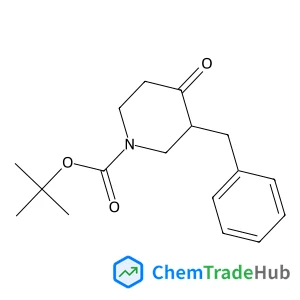
2-Methyl-2-propanyl 3-benzyl-4-oxo-1-piperidinecarboxylate
CAS Number:
193274-82-7
Molecular Formula:
C17H23NO3
![(3aS,6aS)-1-Methyloctahydropyrrolo[3,4-b]pyrrole structure](https://static.chemtradehub.com/structs/877/877212-98-1-9157.webp "(3aS,6aS)-1-Methyloctahydropyrrolo[3,4-b]pyrrole structure")
Recommended Suppliers





Disclaimer
This page provides academic journal information for reference and research purposes only. We are not affiliated with any journal publishers and do not handle publication submissions. For publication-related inquiries, please contact the respective journal publishers directly.
If you notice any inaccuracies in the information displayed, please contact us at support@chemtradehub.com. We will promptly review and address your concerns.