













The reactivity of NO2 and HONO on flame soot at ambient temperature: The influence of combustion conditions
Literature Information
Publication Date
2000-11-09
DOI
10.1039/B005680O
Impact Factor
3.676
Authors
Dominik Stadler, Michel J. Rossi
View Original
Abstract
The heterogeneous interaction of NO2 on decane and hexane soot generated in the laboratory was examined in a Knudsen reactor. Two different types of soot were produced using both fuels: Soot originating from a rich flame at a high fuel/oxygen ratio (‘grey’ soot) and soot generated from a lean flame at a low fuel/oxygen ratio (‘ black’ soot). The fuel/oxygen ratio is a key parameter influencing the conversion yields of NO2 into nitrous acid (HONO) and NO. For both types of soot a reaction mechanism was developed in which NO2 is first converted into HONO by a redox mechanism. For soot originating from a rich flame HONO is released at yields of up to 100% whereas decomposition of HONO on the surface of soot generated in a lean flame leads to significantly reduced HONO yields. HONO decomposes to NO which is instantaneously released and NO2 formed on a longer timescale. In addition, there is an adsorption pathway for both types of soot which leads to irreversible removal of NO2. Soot from a rich flame showed a HONO production of 4 × 10¹⁶ molecule mg−1 for both hexane and decane soot for a NO2 concentration of 7.6 × 10¹² molecule cm−3 integrated over 20 min. In contrast, hexane and decane soot generated in a lean flame do not form significant amounts of HONO. Instead, 2.7 × 10¹⁷ molecule mg−1 of NO at a NO2 concentration of 1.5 × 10¹⁴ molecule cm−3 are observed. Initial uptake coefficients (γ0) of up to 0.1 were measured for both types of soot. However, with increasing amounts of NO2 taken up, γ quickly decreases owing to saturation. After an uptake of 8 × 10¹³ molecule cm−2 of NO2, γ drops to 3 × 10⁻⁷ (‘grey’ decane soot) and 6 × 10⁻⁷ (‘black’ decane soot), respectively. A Soxhlet extraction of decane soot from a rich flame using tetrahydrofuran as a solvent also produced HONO on interaction with NO2 after evaporation of the solvent. This observation suggests that the compounds that are responsible for HONO production are part of the transferable organic fraction that is condensed on the elemental carbon backbone structure of soot.
Recommended Journals
Related Literature
t-Bu-Amphos–RhCl3·3H2O: a highly recyclable catalyst system for the cross-coupling of aldehydes and aryl- and alkenylboronic acids in aqueous solvents
Rongcai Huang, Kevin H. Shaughnessy
2005-08-03
Communication
DOI: 10.1039/B509406B
Injectable biodegradable hydrogels composed of hyaluronic acid–tyramine conjugates for drug delivery and tissue engineering
Motoichi Kurisawa, Joo Eun Chung, Yi Yan Yang, Shu Jun Gao, Hiroshi Uyama
2005-07-28
Communication
DOI: 10.1039/B506989K
Gold nanoparticle-based competitive colorimetric assay for detection of protein–protein interactions
Charng-Sheng Tsai, Ting-Bin Yu, Chao-Tsen Chen
2005-07-28
Communication
DOI: 10.1039/B507237A
A high throughput screening method for the selection of zeolites for binding cations
Edel M. Minogue, Tammy P. Taylor, Anthony K. Burrell, George J. Havrilla, Benjamin P. Warner, Michael T. Janicke
2005-07-26
Communication
DOI: 10.1039/B506044C
Solid-state 87Rb NMR signatures for rubidium cations bound to a G-quadruplex
Ramsey Ida, Gang Wu
2005-08-02
Communication
DOI: 10.1039/B505674H
Precise synthesis of poly(macromonomer)s containing sugars by repetitive ring-opening metathesis polymerisation
James J. Murphy, Kotohiro Nomura
2005-07-13
Communication
DOI: 10.1039/B506877K
Allosteric pitch length tuning of a dinuclear double helicate
Christian J. Baylies, John C. Jeffery, Tom A. Miller, Ryan Moon, Craig R. Rice, T. Riis-Johannessen
2005-07-21
Communication
DOI: 10.1039/B506199G
Photostability of a highly luminescent europium β-diketonate complex in imidazolium ionic liquids
Peter Nockemann, Eva Beurer, Kris Driesen, Rik Van Deun, Kristof Van Hecke, Luc Van Meervelt, Koen Binnemans
2005-08-03
Communication
DOI: 10.1039/B506915G
Ru(iv)-catalyzed isomerization of allylamines in water: A highly efficient procedure for the deprotection of N-allylic amines
Victorio Cadierno, Sergio E. García-Garrido, José Gimeno, Noel Nebra
2005-07-13
Communication
DOI: 10.1039/B506788J
You might also like
Compound Q&A
How should waste containing N-Methoxy-N-methyl-1,3-thiazole-5-carboxamide (CAS: 898825-89-3) be handled?
Waste containing N-Methoxy-N-methyl-1,3-thiazole-5-carboxamide (CAS: 898825-89-3...
898825-89-3N-Methoxy-N-methyl-1...
Compound Q&A
How should N-(4-Biphenylyl)dibenzo[b,d]furan-4-amine (CAS: 1318338-47-4) be stored?
N-(4-Biphenylyl)dibenzo[b,d]furan-4-amine should be stored in a tightly sealed c...
1318338-47-4N-(4-Biphenylyl)dibe...
Compound Q&A
What is the market or research trend for 3-Acetamido-5-amino-2,4,6-triiodobenzoic acid (CAS: 1713-07-1)?
The market for 3-Acetamido-5-amino-2,4,6-triiodobenzoic acid (CAS: 1713-07-1) is...
1713-07-13-Acetamido-5-amino-...
Compound Q&A
How should Benzyl 2-O-acetyl-3,4,6-tri-O-benzyl-beta-D-galactopyranoside (CAS: 61820-03-9) be stored?
Benzyl 2-O-acetyl-3,4,6-tri-O-benzyl-beta-D-galactopyranoside (CAS: 61820-03-9) ...
61820-03-9Benzyl 2-O-acetyl-3,...
Compound Q&A
What regulatory guidelines apply to 2-Ethylpiperazine dihydrochloride (CAS: 438050-52-3)?
2-Ethylpiperazine dihydrochloride (CAS: 438050-52-3) is regulated under the Glob...
438050-52-32-Ethylpiperazine di...
Compound Q&A
What regulatory guidelines apply to 1,1'-[1,3-Phenylenebis(methylene)]bis(3-methyl-1H-pyrrole-2,5-dione) (CAS: 119462-56-5)?
1,1'-[1,3-Phenylenebis(methylene)]bis(3-methyl-1H-pyrrole-2,5-dione) (CAS: 11946...
119462-56-51,1'-[1,3-Phenyleneb...
Compound Q&A
Are there alternatives to 5-Fluoro-2-(1-pyrrolidinyl)pyridine (CAS: 1287217-79-1) in synthesis?
Several alternatives can be used in the synthesis of 5-Fluoro-2-(1-pyrrolidinyl)...
1287217-79-15-Fluoro-2-(1-pyrrol...
Compound Q&A
What precautions should be taken when handling 1-((2R,3R,4R,5R)-5-((bis(4-methoxyphenyl)(phenyl)methoxy)methyl)-4-hydroxy-3-methoxytetrahydrofuran-2-yl)-5-methylpyrimidine-2,4(1H,3H)-dione (CAS: 153631-19-7)?
Proper personal protective equipment (PPE) must be worn when handling this compo...
153631-19-71-((2R,3R,4R,5R)-5-(...
Compound Q&A
What precautions should be taken when handling 6-Bromoimidazo[1,2-a]pyridin-8-amine (CAS: 676371-00-9)?
When handling 6-Bromoimidazo[1,2-a]pyridin-8-amine, it is important to wear appr...
676371-00-96-Bromoimidazo[1,2-a...
Compound Q&A
Are there alternatives to (2S,4R)-4-(4-Nitrobenzyl)pyrrolidine-2-carboxylic acid hydrochloride (CAS: 1049740-22-8) in synthesis?
Alternatives to (2S,4R)-4-(4-Nitrobenzyl)pyrrolidine-2-carboxylic acid hydrochlo...
1049740-22-8(2S,4R)-4-(4-Nitrobe...
Source Journal
Physical Chemistry Chemical Physics

CiteScore:
5.5
Self-citation Rate:
10.3%
Articles per Year:
3036
Physical Chemistry Chemical Physics (PCCP) is an international journal co-owned by 19 physical chemistry and physics societies from around the world. This journal publishes original, cutting-edge research in physical chemistry, chemical physics and biophysical chemistry. To be suitable for publication in PCCP, articles must include significant innovation and/or insight into physical chemistry; this is the most important criterion that reviewers and Editors will judge against when evaluating submissions. The journal has a broad scope and welcomes contributions spanning experiment, theory, computation and data science. Topical coverage includes spectroscopy, dynamics, kinetics, statistical mechanics, thermodynamics, electrochemistry, catalysis, surface science, quantum mechanics, quantum computing and machine learning. Interdisciplinary research areas such as polymers and soft matter, materials, nanoscience, energy, surfaces/interfaces, and biophysical chemistry are welcomed if they demonstrate significant innovation and/or insight into physical chemistry. Joined experimental/theoretical studies are particularly appreciated when complementary and based on up-to-date approaches.
Recommended Compounds
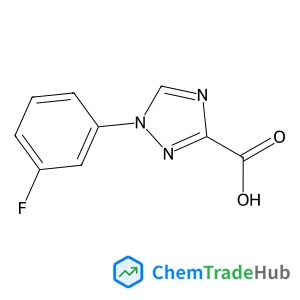
1-(3-Fluorophenyl)-1H-1,2,4-triazole-3-carboxylic acid
CAS Number:
1292369-51-7
Molecular Formula:
C9H6FN3O2
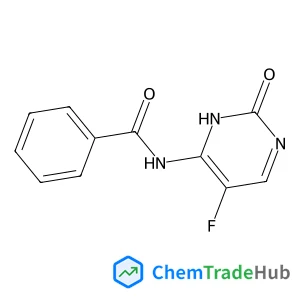
N-(5-Fluoro-2-oxo-2,3-dihydro-4-pyrimidinyl)benzamide
CAS Number:
10357-07-0
Molecular Formula:
C11H8FN3O2


Recommended Suppliers





Disclaimer
This page provides academic journal information for reference and research purposes only. We are not affiliated with any journal publishers and do not handle publication submissions. For publication-related inquiries, please contact the respective journal publishers directly.
If you notice any inaccuracies in the information displayed, please contact us at support@chemtradehub.com. We will promptly review and address your concerns.