












Infrared spectroscopy and microscopic imaging of stratum corneum models and skin. Invited Lecture
Literature Information
Publication Date
2000-09-18
DOI
10.1039/B003861J
Impact Factor
3.676
Authors
Richard Mendelsohn, Mark E. Rerek, David J. Moore
View Original
Abstract
The highly ordered ceramide-containing phases that constitute the barrier to permeability in the stratum corneum are well-suited for examination by IR spectroscopy, and the chain vibrations have been widely investigated in this context. The current study focuses on the much less studied Amide I and II vibrations from the polar headgroup region of two major ceramide classes, ceramide 2 (nonhydroxy fatty acid spingosine) and ceramide 5 (α-hydroxy fatty acid sphingosine) alone and in three-component stratum corneum models (ceramide–cholesterol–hexadecanoic acid 1:1:1). The slight differences in the chemical structures between these species produce remarkable differences in the H-bonding interactions and propensity for water penetration. The H-bonds in ceramide 2 are interlamellar in origin and are accessible to solvent at lower temperatures. Ceramide 5 H-bonds are also strong, but different in nature from those of ceramide 2; the evidence suggests an intralamellar orientation. Ceramide 5 also contrasts to ceramide 2 in that it is much more miscible with the other stratum corneum components. Distinct roles for each ceramide class in the stratum are suggested based on these observations. These studies have provided evidence that is consistent with the domain mosaic model of the skin lipid barrier structure proposed by Forslind (Acta Derm. Venereo., 1994, 74, 1). The application of array-detector based IR imaging to skin is described. The potential of this approach for monitoring the distribution of lipid and protein constituents in tissues at a spatial resolution of ∽6 μm in intact skin sections is demonstrated. In addition, the feasibility for mapping the distribution of topical applications on skin is demonstrated through IR images of the nitrile moiety in a sunscreen formulation containing 2-ethylhexyl-2-cyano-3,3-diphenyl acrylate. These images reveal a non-homogenous film. Understanding and visualizing the coherence, integrity, and homogeneity of such topical sunscreen films is critical to improving the function of these films for successful UV protection.
Related Literature
Synthesis and characterization of hyperbranched mesoporous silica SBA-15
Ji Zhu, Agnes Szegedi, Imre Kiricsi, Paul Alivisatos, Gabor A. Somorjai
2003-01-06
Communication
DOI: 10.1039/B210053C
A new organic superconductor, (DODHT)2BF4·H2O
Hiroyuki Nishikawa, Asami Machida, Takanobu Morimoto, Koichi Kikuchi, Takeshi Kodama, Isao Ikemoto, Jun-ichi Yamada, Harukazu Yoshino, Keizo Murata
2003-01-27
Communication
DOI: 10.1039/B211275B
Biocatalytic reduction of ketones by a semi-continuous flow process using supercritical carbon dioxide
Tomoko Matsuda, Kazunori Watanabe, Takashi Kamitanaka, Tadao Harada, Kaoru Nakamura
2003-04-22
Communication
DOI: 10.1039/B301452E
Reversible C–C bond formation: solid state structure of the aldol-like addition product of adamantanone to a 1,5-diazapentadienyllithium, and its solution state retro-aldol dissociation
Lee-Jon Ball, Anthony P. Dickie, Francis S. Mair, David A. Middleton, Robin G. Pritchard
2003-02-19
Communication
DOI: 10.1039/B211745B
The first organically templated 1D lithioberyllofluoride chain, [LiBe2F7][C4N2H12][H2O]1.5
Lee A. Gerrard, Mark T. Weller
2003-02-17
Communication
DOI: 10.1039/B210894A
Identification of novel sulfur-containing derivatives of chlorophyll a in a Recent sediment
Angela H. Squier, Dominic A. Hodgson, Brendan J. Keely
2003-02-10
Communication
DOI: 10.1039/B212243J
Bond energy M–C/H–C correlations: dual theoretical and experimental approach to the sensitivity of M–C bond strength to substituents
Eric Clot, Maria Besora, Feliu Maseras, Claire Mégret, Odile Eisenstein, Beatriz Oelckers, Robin N. Perutz
2003-01-24
Communication
DOI: 10.1039/B210036N
Enhancement of facilitated olefin transport by amino acid in silver–polymer complex membranes
Sang Wook Kang, Jong Hak Kim, Jongok Won, Kookheon Char, Yong Soo Kang
2003-02-25
Communication
DOI: 10.1039/B211933A
Site-selective RNA scission at two sites for precise genotyping of SNPs by mass spectrometry‡
Akinori Kuzuya, Ryo Mizoguchi, Fumi Morisawa, Makoto Komiyama
2003-02-25
Communication
DOI: 10.1039/B300368J
You might also like
Compound Q&A
What precautions should be taken when handling 4-(2-Furylmethyl)thiomorpholine 1,1-dioxide (CAS: 79206-94-3)?
When handling 4-(2-Furylmethyl)thiomorpholine 1,1-dioxide (CAS: 79206-94-3), it ...
79206-94-34-(2-Furylmethyl)thi...
Compound Q&A
What precautions should be taken when handling 4-Chloro-N-[2-(4-morpholinyl)ethyl]benzamide (CAS: 71320-77-9)?
When handling 4-Chloro-N-[2-(4-morpholinyl)ethyl]benzamide (CAS: 71320-77-9), it...
71320-77-94-Chloro-N-[2-(4-mor...
Compound Q&A
How should waste containing 2-[2-(2-Methoxyethoxy)ethoxy]ethyl 4-methylbenzenesulfonate (CAS: 62921-74-8) be handled?
Waste containing this compound (CAS: 62921-74-8) should be handled according to ...
62921-74-82-[2-(2-Methoxyethox...
Compound Q&A
How should waste containing (S)-Methyl 2-amino-3-cyclohexylpropanoate be handled?
Waste containing (S)-Methyl 2-amino-3-cyclohexylpropanoate should be collected i...
40056-18-6(S)-Methyl 2-amino-3...
Compound Q&A
How is 5-({4-[(2S,4R)-4-Hydroxy-2-methyltetrahydro-2H-pyran-4-yl]-2-thienyl}sulfanyl)-1-methyl-1,3-dihydro-2H-indol-2-one (CAS: 166882-70-8) typically synthesized?
This compound can be synthesized using a multi-step process involving the conjug...
166882-70-85-({4-[(2S,4R)-4-Hyd...
Compound Q&A
Are there alternatives to (2E)-3-(3,4-Dichlorophenyl)acrylic acid (CAS: 7312-27-8) in synthesis?
There are several alternatives to (2E)-3-(3,4-Dichlorophenyl)acrylic acid in syn...
7312-27-8(2E)-3-(3,4-Dichloro...
Compound Q&A
How should Ethyl 6-(2-nitrophenyl)imidazo[2,1-b][1,3]thiazole-3-carboxylate (CAS: 925437-84-9) be stored?
Ethyl 6-(2-nitrophenyl)imidazo[2,1-b][1,3]thiazole-3-carboxylate (CAS: 925437-84...
925437-84-9Ethyl 6-(2-nitrophen...
Compound Q&A
How should waste containing 2-(1,3-Thiazol-2-yl)ethanamine (CAS: 18453-07-1) be handled?
Waste containing 2-(1,3-Thiazol-2-yl)ethanamine (CAS: 18453-07-1) should be coll...
18453-07-12-(1,3-Thiazol-2-yl)...
Compound Q&A
How is Methyl 5-iodo-2-methylbenzoate (CAS: 103440-54-6) typically synthesized?
Methyl 5-iodo-2-methylbenzoate can be synthesized through the iodination of meth...
103440-54-6Methyl 5-iodo-2-meth...
Compound Q&A
How is 5-Chloro[1,2,4]triazolo[1,5-a]pyridine (CAS: 1427399-34-5) typically synthesized?
5-Chloro[1,2,4]triazolo[1,5-a]pyridine is commonly synthesized via the condensat...
1427399-34-55-Chloro[1,2,4]triaz...
Source Journal
Physical Chemistry Chemical Physics

CiteScore:
5.5
Self-citation Rate:
10.3%
Articles per Year:
3036
Physical Chemistry Chemical Physics (PCCP) is an international journal co-owned by 19 physical chemistry and physics societies from around the world. This journal publishes original, cutting-edge research in physical chemistry, chemical physics and biophysical chemistry. To be suitable for publication in PCCP, articles must include significant innovation and/or insight into physical chemistry; this is the most important criterion that reviewers and Editors will judge against when evaluating submissions. The journal has a broad scope and welcomes contributions spanning experiment, theory, computation and data science. Topical coverage includes spectroscopy, dynamics, kinetics, statistical mechanics, thermodynamics, electrochemistry, catalysis, surface science, quantum mechanics, quantum computing and machine learning. Interdisciplinary research areas such as polymers and soft matter, materials, nanoscience, energy, surfaces/interfaces, and biophysical chemistry are welcomed if they demonstrate significant innovation and/or insight into physical chemistry. Joined experimental/theoretical studies are particularly appreciated when complementary and based on up-to-date approaches.
Recommended Compounds
![N-[(Benzyloxy)carbonyl]serine structure](https://static.chemtradehub.com/structs/276/2768-56-1-77f7.webp "N-[(Benzyloxy)carbonyl]serine structure")
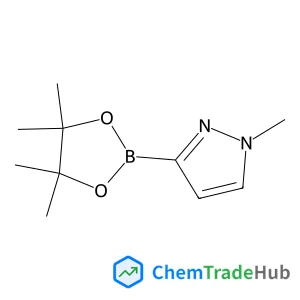
1-Methyl-3-(4,4,5,5-tetramethyl-1,3,2-dioxaborolan-2-yl)-1H-pyrazole
CAS Number:
1020174-04-2
Molecular Formula:
C10H17BN2O2
Recommended Suppliers





Disclaimer
This page provides academic journal information for reference and research purposes only. We are not affiliated with any journal publishers and do not handle publication submissions. For publication-related inquiries, please contact the respective journal publishers directly.
If you notice any inaccuracies in the information displayed, please contact us at support@chemtradehub.com. We will promptly review and address your concerns.