












![N-[(9H-Fluoren-9-ylmethoxy)carbonyl]serine structure](https://static.chemtradehub.com/structs/737/73724-45-5-b0dc.webp "N-[(9H-Fluoren-9-ylmethoxy)carbonyl]serine structure")
Adsorption and diffusion of repulsively interacting particles on a triangular lattice
Literature Information
Publication Date
2000-06-30
DOI
10.1039/B002575P
Impact Factor
3.676
Authors
F. Nieto, A. A. Tarasenko
View Original
Abstract
We analyze the collective surface diffusion behavior of atoms adsorbed on a two-dimensional lattice-gas model with triangular symmetry in the presence of a second order phase transition. For this purpose we have studied several physical quantities which are required in the description of diffusion. The average energy per adsorbed particle, the mean square coverage fluctuations and jump diffusion coefficient have been evaluated by using the real space renormalization group (RSRG) and the Monte Carlo (MC) method. We have also calculated the tracer diffusion coefficient as well as the tracer correlation factor by MC simulations. It is shown that the precision of the RSRG technique depends not only on the number of sites in the block but also on its symmetry. The most accurate results have been obtained for the comparatively small cluster used in the present work containing 21 lattice sites. Despite the fact that both methods, RSRG and MC, constitute very different approaches, the correspondence of the numerical data is surprisingly good. It is also shown that drastic changes in the surface diffusion coefficients occur when the lateral interactions force ordering of the adatoms ia a second order phase transition.
Related Literature
Nanoindentation for probing the mechanical behavior of molecular crystals–a review of the technique and how to use it
Jae-il Jang
2013-09-12
Highlight
DOI: 10.1039/C3CE41266K
Ortho esters and dialkoxycarbenium ions: reactivity, stability, structure, and new synthetic applications
Review Article
DOI: 10.1039/CS9871600075
Patterns of reactions: a card sort task to investigate students’ organization of organic chemistry reactions
Kelli R. Galloway, Min Wah Leung, Alison B. Flynn
2018-07-16
Paper
DOI: 10.1039/C8RP00120K
Protein encapsulation: a new approach for improving the capability of small-molecule fluorogenic probes
Ying Shang, Na Li, Tingting Liu, Bo-Han Li, Kunqian Yu, Yi Zang, James T. Brewster, II, Maria L. Odyniec, Maria Weber, Steven D. Bull, Jia Li, Tony D. James, Xiao-Peng He, He Tian
2019-11-27
Edge Article
DOI: 10.1039/C9SC03961A
Rhône-Poulenc Lecture. The origin of the specificity in the recognition of oligosaccharides by proteins
Review Article
DOI: 10.1039/CS9891800347
Mechanistic insights into copper-catalyzed aerobic oxidative coupling of N–N bonds
Michael C. Ryan, Yeon Jung Kim, James B. Gerken, Fei Wang, Michael M. Aristov, Joseph R. Martinelli, Shannon S. Stahl
2019-12-10
Edge Article
DOI: 10.1039/C9SC04305E
A sildenafil cocrystal based on acetylsalicylic acid exhibits an enhanced intrinsic dissolution rate
Miroslav Žegarac, Edislav Lekšić, Maja Devčić Bogdanović, Dejan-Krešimir Bučar, Miljenko Dumić, Ernest Meštrović
2013-10-09
Communication
DOI: 10.1039/C3CE42013B
Correction: Laser cleavable probes for in situ multiplexed glycan detection by single cell mass spectrometry
Xi Huang, Huihui Liu, Jiyun Wang, Caiqiao Xiong
2020-01-09
Correction
DOI: 10.1039/C9SC90270H
You might also like
Compound Q&A
What are the main uses of 1H-Indazole-6-carbonitrile (CAS: 141290-59-7)?
1H-Indazole-6-carbonitrile finds applications in pharmaceuticals, where it serve...
141290-59-71H-Indazole-6-carbon...
Compound Q&A
How should waste containing Dioctyl (2E)-2-butenedioate (CAS: 2997-85-5) be handled?
Waste containing Dioctyl (2E)-2-butenedioate (CAS: 2997-85-5) should be collecte...
2997-85-5Dioctyl (2E)-2-buten...
Compound Q&A
What industries use Sodium [(1,2-benzoxazol-3-ylmethyl)sulfonyl]azanide (CAS: 68291-98-5)?
Sodium [(1,2-benzoxazol-3-ylmethyl)sulfonyl]azanide is primarily used in pharmac...
68291-98-5Sodium [(1,2-benzoxa...
Compound Q&A
Are there alternatives to Dimethyl 4-(4,4,5,5-tetramethyl-1,3,2-dioxaborolan-2-yl)-2,6-pyridinedicarboxylate (CAS: 741709-66-0) in synthesis?
Dimethyl 4-(4,4,5,5-tetramethyl-1,3,2-dioxaborolan-2-yl)-2,6-pyridinedicarboxyla...
741709-66-0Dimethyl 4-(4,4,5,5-...
Compound Q&A
How should waste containing 2-Fluoro-6-hydrazinopyridine (CAS: 80714-39-2) be handled?
Waste containing 2-Fluoro-6-hydrazinopyridine (CAS: 80714-39-2) should be manage...
80714-39-22-Fluoro-6-hydrazino...
Compound Q&A
What is 6-Formyl-2-pyridinecarboxylic acid (CAS: 499214-11-8)?
6-Formyl-2-pyridinecarboxylic acid is an organic compound with the molecular for...
499214-11-86-Formyl-2-pyridinec...
Compound Q&A
What is the market or research trend for 3-(3,4-dimethoxyphenyl)-2,5-dimethyl-N-(2-morpholin-4-ylethyl)pyrazolo[1,5-a]pyrimidin-7-amine (CAS: 900874-91-1)?
Research trends for this compound indicate a focus on its potential applications...
900874-91-13-(3,4-dimethoxyphen...
Compound Q&A
How is 9H-Tribenzo[b,d,f]azepine (CAS: 29875-73-8) typically synthesized?
9H-Tribenzo[b,d,f]azepine is typically synthesized via a multi-step process invo...
29875-73-89H-Tribenzo[b,d,f]az...
Compound Q&A
How is 1-Cyclopropyl-7-ethoxy-6-fluoro-8-methoxy-4-oxo-1,4-dihydro-3-quinolinecarboxylic acid (CAS: 1797982-51-4) typically synthesized?
1-Cyclopropyl-7-ethoxy-6-fluoro-8-methoxy-4-oxo-1,4-dihydro-3-quinolinecarboxyli...
1797982-51-41-Cyclopropyl-7-etho...
Compound Q&A
How should waste containing Methyl 3-oxo-1,2,3,4-tetrahydro-6-quinoxalinecarboxylate (CAS: 671820-52-3) be handled?
Waste containing Methyl 3-oxo-1,2,3,4-tetrahydro-6-quinoxalinecarboxylate (CAS: ...
671820-52-3Methyl 3-oxo-1,2,3,4...
Source Journal
Physical Chemistry Chemical Physics

CiteScore:
5.5
Self-citation Rate:
10.3%
Articles per Year:
3036
Physical Chemistry Chemical Physics (PCCP) is an international journal co-owned by 19 physical chemistry and physics societies from around the world. This journal publishes original, cutting-edge research in physical chemistry, chemical physics and biophysical chemistry. To be suitable for publication in PCCP, articles must include significant innovation and/or insight into physical chemistry; this is the most important criterion that reviewers and Editors will judge against when evaluating submissions. The journal has a broad scope and welcomes contributions spanning experiment, theory, computation and data science. Topical coverage includes spectroscopy, dynamics, kinetics, statistical mechanics, thermodynamics, electrochemistry, catalysis, surface science, quantum mechanics, quantum computing and machine learning. Interdisciplinary research areas such as polymers and soft matter, materials, nanoscience, energy, surfaces/interfaces, and biophysical chemistry are welcomed if they demonstrate significant innovation and/or insight into physical chemistry. Joined experimental/theoretical studies are particularly appreciated when complementary and based on up-to-date approaches.
Recommended Compounds
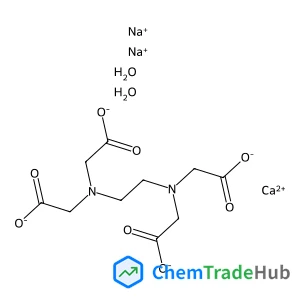
EthylenediaminetetraaceticacidcalciumDisodiumsalthydrate
CAS Number:
23411-34-9
Molecular Formula:
C10H16CaN2Na2O10

Recommended Suppliers





Disclaimer
This page provides academic journal information for reference and research purposes only. We are not affiliated with any journal publishers and do not handle publication submissions. For publication-related inquiries, please contact the respective journal publishers directly.
If you notice any inaccuracies in the information displayed, please contact us at support@chemtradehub.com. We will promptly review and address your concerns.