












Patterns of reactions: a card sort task to investigate students’ organization of organic chemistry reactions
Literature Information
Publication Date
2018-07-16
DOI
10.1039/C8RP00120K
Impact Factor
0
Authors
Kelli R. Galloway, Min Wah Leung, Alison B. Flynn
View Original
Abstract
Research has shown that within a traditional organic chemistry curriculum, organic chemistry students struggle to develop deep conceptual understanding of reactions and attribute little meaning to the electron-pushing formalism. At the University of Ottawa, a new curriculum was developed for organic chemistry in which students are taught the language of the electron-pushing formalism prior to learning about specific reactions. Reactions are then organized by governing pattern of mechanism rather than by functional group and are taught in a gradient of complexity. To investigate how students are making connections across reactions within the new curriculum, a card sort task was developed. The card sort task consisted of 25 cards, each depicting the reactants and solvent for a reaction taught during the two-semester organic chemistry sequence. The first part of the task asked participants to sort 15 of 25 cards into categories. Then, participants were given the 10 remaining cards to incorporate into categories with the previous 15. Participants were asked to explain the characteristics of each category and their sorting process. Students (N = 16) in an organic chemistry course were interviewed while enrolled in the second semester course. We analyzed the students’ sorts based on which cards were sorted frequently together, the underlying characteristics used to form the categories, and the participants’ sorting processes. Participants created categories based on different levels of interpreting the reactions on the cards, with levels ranging from recognizing identical structural features to identifying similar types of mechanisms. Based on this study, if we want students to develop mechanistic thinking, we think students need to be more explicitly directed to the patterns present in organic reaction mechanisms and given opportunities to uncover and identify patterns on their own, during both summative and formative assessments.
Related Literature
Charging of ionic liquid surfaces under X-ray irradiation: the measurement of absolute binding energies by XPS
Ignacio J. Villar-Garcia, Emily F. Smith, Alasdair W. Taylor, Fulian Qiu, Kevin R. J. Lovelock, Robert G. Jones, Peter Licence
2010-12-13
Paper
DOI: 10.1039/C0CP01587C
Structure and binding of the H4 histone tail and the effects of lysine 16 acetylation
Darren Yang, Gaurav Arya
2010-12-15
Paper
DOI: 10.1039/C0CP01487G
The impact of protonation and deprotonation of 3-methyl-2′-deoxyadenosine on N-glycosidic bond cleavage
Ali Ebrahimi, Mostafa Habibi-Khorassani, Sophia Bazzi
2011-01-26
Paper
DOI: 10.1039/C0CP01279C
Theoretical study of the source-drain current and gate leakage current to understand the graphene field-effect transistors
Cui Yu, Hongmei Liu, Wenbin Ni, Nengyue Gao, Jianwei Zhao, Haoli Zhang
2011-01-14
Paper
DOI: 10.1039/C0CP01026J
New nanostructured heterogeneous catalysts with increased selectivity and stability
Ilkeun Lee, Manuel A. Albiter, Qiao Zhang, Jianping Ge, Yadong Yin, Francisco Zaera
2010-11-22
Perspective
DOI: 10.1039/C0CP01688H
2D silver nanocrystal ordering modulated by various substrates and revealed using oxygen plasma treatment
Emilie Klecha, Imad Arfaoui, Johannes Richardi, Dorothée Ingert, Marie-Paule Pileni
2010-12-17
Paper
DOI: 10.1039/C0CP01237H
Temperature dependence of the surfactant film bending elasticity in a bicontinuous sugar surfactant based microemulsion: a quasielastic scattering study
Stefan Wellert, Matthias Karg, Olaf Holderer, André Richardt, Thomas Hellweg
2010-12-10
Paper
DOI: 10.1039/C0CP02044C
The role of calcium in membrane condensation and spontaneous curvature variations in model lipidic systems
Anan Yaghmur, Barbara Sartori, Michael Rappolt
2010-11-03
Paper
DOI: 10.1039/C0CP01036G
Intracule functional models. V. Recurrence relations for two-electron integrals in position and momentum space
Joshua W. Hollett, Peter M. W. Gill
2010-12-20
Paper
DOI: 10.1039/C0CP02154G
You might also like
Compound Q&A
What are the main uses of 1H-Indazole-6-carbonitrile (CAS: 141290-59-7)?
1H-Indazole-6-carbonitrile finds applications in pharmaceuticals, where it serve...
141290-59-71H-Indazole-6-carbon...
Compound Q&A
How should waste containing Dioctyl (2E)-2-butenedioate (CAS: 2997-85-5) be handled?
Waste containing Dioctyl (2E)-2-butenedioate (CAS: 2997-85-5) should be collecte...
2997-85-5Dioctyl (2E)-2-buten...
Compound Q&A
What industries use Sodium [(1,2-benzoxazol-3-ylmethyl)sulfonyl]azanide (CAS: 68291-98-5)?
Sodium [(1,2-benzoxazol-3-ylmethyl)sulfonyl]azanide is primarily used in pharmac...
68291-98-5Sodium [(1,2-benzoxa...
Compound Q&A
Are there alternatives to Dimethyl 4-(4,4,5,5-tetramethyl-1,3,2-dioxaborolan-2-yl)-2,6-pyridinedicarboxylate (CAS: 741709-66-0) in synthesis?
Dimethyl 4-(4,4,5,5-tetramethyl-1,3,2-dioxaborolan-2-yl)-2,6-pyridinedicarboxyla...
741709-66-0Dimethyl 4-(4,4,5,5-...
Compound Q&A
How should waste containing 2-Fluoro-6-hydrazinopyridine (CAS: 80714-39-2) be handled?
Waste containing 2-Fluoro-6-hydrazinopyridine (CAS: 80714-39-2) should be manage...
80714-39-22-Fluoro-6-hydrazino...
Compound Q&A
What is 6-Formyl-2-pyridinecarboxylic acid (CAS: 499214-11-8)?
6-Formyl-2-pyridinecarboxylic acid is an organic compound with the molecular for...
499214-11-86-Formyl-2-pyridinec...
Compound Q&A
What is the market or research trend for 3-(3,4-dimethoxyphenyl)-2,5-dimethyl-N-(2-morpholin-4-ylethyl)pyrazolo[1,5-a]pyrimidin-7-amine (CAS: 900874-91-1)?
Research trends for this compound indicate a focus on its potential applications...
900874-91-13-(3,4-dimethoxyphen...
Compound Q&A
How is 9H-Tribenzo[b,d,f]azepine (CAS: 29875-73-8) typically synthesized?
9H-Tribenzo[b,d,f]azepine is typically synthesized via a multi-step process invo...
29875-73-89H-Tribenzo[b,d,f]az...
Compound Q&A
How is 1-Cyclopropyl-7-ethoxy-6-fluoro-8-methoxy-4-oxo-1,4-dihydro-3-quinolinecarboxylic acid (CAS: 1797982-51-4) typically synthesized?
1-Cyclopropyl-7-ethoxy-6-fluoro-8-methoxy-4-oxo-1,4-dihydro-3-quinolinecarboxyli...
1797982-51-41-Cyclopropyl-7-etho...
Compound Q&A
How should waste containing Methyl 3-oxo-1,2,3,4-tetrahydro-6-quinoxalinecarboxylate (CAS: 671820-52-3) be handled?
Waste containing Methyl 3-oxo-1,2,3,4-tetrahydro-6-quinoxalinecarboxylate (CAS: ...
671820-52-3Methyl 3-oxo-1,2,3,4...
Source Journal
Chemistry Education Research and Practice

CiteScore:
4.8
Self-citation Rate:
38.5%
Articles per Year:
67
Chemistry Education Research and Practice (CERP) is the journal for teachers, researchers and other practitioners at all levels of chemistry education. It is published free of charge electronically four times a year, thanks to sponsorship by the Royal Society of Chemistry's Education Division. Coverage includes the following: Research, and reviews of research, in chemistry education Evaluations of effective innovative practice in the teaching of chemistry In-depth analyses of issues of direct relevance to chemistry education The objectives of the journal: To provide researchers with the means to publish their work in full in a journal exclusively dedicated to chemistry education To offer teachers of chemistry at all levels a place where they can share effective ideas and methods for the teaching and learning of chemistry To bridge the gap between the two groups so that researchers will have their results seen by those who could benefit from using them, and practitioners will gain from encountering the ideas and results of those who have made a particular study of the learning process
Recommended Compounds
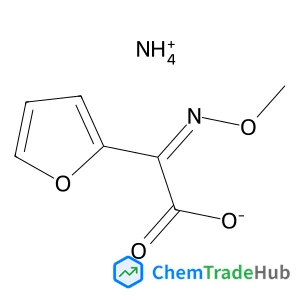
Ammonium (Z)-2-(furan-2-yl)-2-(methoxyimino)acetate
CAS Number:
97148-39-5
Molecular Formula:
C7H10N2O4
Recommended Suppliers






Disclaimer
This page provides academic journal information for reference and research purposes only. We are not affiliated with any journal publishers and do not handle publication submissions. For publication-related inquiries, please contact the respective journal publishers directly.
If you notice any inaccuracies in the information displayed, please contact us at support@chemtradehub.com. We will promptly review and address your concerns.