












C-terminal peptide sequencing using acetylated peptides with MSn in a quadrupole ion trap
Literature Information
Publication Date
2000-03-17
DOI
10.1039/A908950K
Impact Factor
4.616
Authors
Anne H. Payne, J. Holly Chelf, Gary L. Glish
View Original
Abstract
MS/MS has been used to sequence peptides and small proteins for a number of years. This method allows one to isolate the peptide of interest, which makes it possible to analyze impure samples and unseparated mixtures, such as protein digests. Collision-induced dissociation (CID) of the selected peptide ion generates the product ions that provide sequence information. However, often the MS/MS spectrum does not provide adequate information for complete sequence determination. The quadrupole ion trap has the capability to do multiple stages of mass spectrometry, MSn, which can increase the information available to determine the peptide sequence. A regular and predictable dissociation pattern for peptides further simplifies this analysis. By forming predominantly one type of ion, ambiguity is removed as to whether the ion is N- or C-terminal. This pattern can also be advantageous in that ion intensity remains concentrated for the next stage of MS/MS. In this work, a method to take advantage of the MSn capabilities of the quadrupole ion trap by controlling the dissociation pathways is explored. Dissociation is altered by acetylating the N-terminus of the peptide. MSn of a variety of acetylated peptides is used to determine the effects of the identity of the C-terminal residue and the length of the peptide on the dissociation pathways observed.
Related Literature
Oversolubility in the microvicinity of solid–solution interfaces
Isabelle Bergonzi, Lionel Mercury, Patrick Simon, Frédéric Jamme, Kirill Shmulovich
2016-04-27
Paper
DOI: 10.1039/C5CP08012F
Fabrication of mixed phase TiO2 heterojunction nanorods and their enhanced photoactivities
Saptarshi Ghosh, Nitin Chattopadhyay
2016-05-10
Paper
DOI: 10.1039/C6CP00486E
High critical field NbC superconductor on carbon spheres
Kaustav Bhattacharjee, Satya Prakash Pati
2016-05-05
Paper
DOI: 10.1039/C6CP01771A
Controlling electronic effects and intermolecular packing in contorted polyaromatic hydrocarbons (c-PAHs): towards high mobility field effect transistors
Kalishankar Bhattacharyya, Titas Kumar Mukhopadhyay, Ayan Datta
2016-05-05
Paper
DOI: 10.1039/C6CP02387H
Fractional electron number, temperature, and perturbations in chemical reactions
Paul W. Ayers
2016-04-29
Paper
DOI: 10.1039/C6CP00939E
Mechanisms and energetics for N-glycosidic bond cleavage of protonated adenine nucleosides: N3 protonation induces base rotation and enhances N-glycosidic bond stability
R. R. Wu, M. T. Rodgers
2016-05-20
Paper
DOI: 10.1039/C6CP01445C
A tryptophan-containing fluorescent intramolecular complex as a designer peptidic proton sensor
V. Haridas, Anita Yadav, Sakshi Sharma, Siddharth Pandey
2016-05-04
Paper
DOI: 10.1039/C6CP01912A
First-principles study of thermal properties of borophene
Hongyi Sun, Qingfang Li, X. G. Wan
2016-05-03
Paper
DOI: 10.1039/C6CP02029A
Connectivity matters – ultrafast isomerization dynamics of bisazobenzene photoswitches
Chavdar Slavov, Chong Yang, Luca Schweighauser, Chokri Boumrifak, Andreas Dreuw, Hermann A. Wegner, Josef Wachtveitl
2016-03-09
Paper
DOI: 10.1039/C6CP00603E
Low electron-polar optical phonon scattering as a fundamental aspect of carrier mobility in methylammonium lead halide CH3NH3PbI3 perovskites
A. Filippetti, A. Mattoni, C. Caddeo, M. I. Saba, P. Delugas
2016-05-09
Paper
DOI: 10.1039/C6CP01402J
You might also like
Compound Q&A
Is 4-Benzyl-2,2-dimethylmorpholine (CAS: 84761-04-6) safe?
4-Benzyl-2,2-dimethylmorpholine is generally considered safe when handled under ...
84761-04-64-Benzyl-2,2-dimethy...
Compound Q&A
What is (5,6-Dimethoxy-3-pyridinyl)boronic acid (CAS: 1346526-61-1)?
(5,6-Dimethoxy-3-pyridinyl)boronic acid is a chemical compound with the molecula...
1346526-61-1(5,6-Dimethoxy-3-pyr...
Compound Q&A
How is 1,1,3,3-Tetramethyl-1,3-bis(2-methyl-2-propanyl)disiloxane (CAS: 67875-55-2) typically synthesized?
1,1,3,3-Tetramethyl-1,3-bis(2-methyl-2-propanyl)disiloxane is synthesized throug...
67875-55-21,1,3,3-Tetramethyl-...
Compound Q&A
What are the main uses of (2R,4S)-1-Boc-4-methylpyrrolidine-2-carboxylic acid (CAS: 1018818-04-6)?
(2R,4S)-1-Boc-4-methylpyrrolidine-2-carboxylic acid is primarily used as a build...
1018818-04-6(2R,4S)-1-Boc-4-meth...
Compound Q&A
What precautions should be taken when handling 2,3-Dichloroacrylonitrile (CAS: 22410-58-8)?
When handling 2,3-Dichloroacrylonitrile, it is crucial to wear appropriate perso...
22410-58-82,3-Dichloroacryloni...
Compound Q&A
How should (S)-1-(o-Tolyl)ethanamine hydrochloride (CAS: 1332832-16-2) be stored?
(S)-1-(o-Tolyl)ethanamine hydrochloride should be stored in a cool, dry place to...
1332832-16-2(S)-1-(o-Tolyl)ethan...
Compound Q&A
What are the physical and chemical properties of Benzyl [1-(hydroxyamino)-1-imino-2-methyl-2-propanyl]carbamate (CAS: 518047-98-8)?
Benzyl [1-(hydroxyamino)-1-imino-2-methyl-2-propanyl]carbamate (CAS: 518047-98-8...
518047-98-8Benzyl [1-(hydroxyam...
Compound Q&A
What industries use 2-Methyloxazole-5-carbaldehyde (CAS: 885273-42-7)?
2-Methyloxazole-5-carbaldehyde is used in the pharmaceutical industry for the sy...
885273-42-72-Methyloxazole-5-ca...
Compound Q&A
What is the market or research trend for 2-Methyl-2-propanyl 4-[(1S)-1-hydroxyethyl]-1-piperidinecarboxylate (CAS: 389889-82-1)?
The market for 2-Methyl-2-propanyl 4-[(1S)-1-hydroxyethyl]-1-piperidinecarboxyla...
389889-82-12-Methyl-2-propanyl ...
Compound Q&A
Is 1-Butyl-3-methylpyridinium bromide (CAS: 26576-85-2) safe?
1-Butyl-3-methylpyridinium bromide is generally considered safe for laboratory u...
26576-85-21-Butyl-3-methylpyri...
Source Journal
Analyst

CiteScore:
7.8
Self-citation Rate:
5.6%
Articles per Year:
653
Analyst publishes analytical and bioanalytical research that reports premier fundamental discoveries and inventions, and the applications of those discoveries, unconfined by traditional discipline barriers.
Recommended Compounds

2-Bromo-1-(bromomethyl)-3-(trifluoromethyl)benzene
CAS Number:
1214372-35-6
Molecular Formula:
C8H5Br2F3
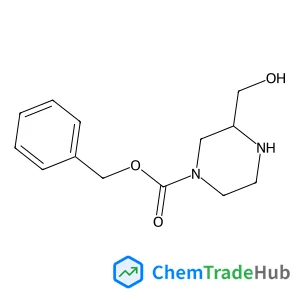
Benzyl 3-(hydroxymethyl)-1-piperazinecarboxylate
CAS Number:
191739-40-9
Molecular Formula:
C13H18N2O3
Recommended Suppliers





Disclaimer
This page provides academic journal information for reference and research purposes only. We are not affiliated with any journal publishers and do not handle publication submissions. For publication-related inquiries, please contact the respective journal publishers directly.
If you notice any inaccuracies in the information displayed, please contact us at support@chemtradehub.com. We will promptly review and address your concerns.