













Exploring the applicability of classical mechanics in H2 scattering and reaction at metal surfaces
Literature Information
Publication Date
2000-01-07
DOI
10.1039/A908386C
Impact Factor
3.676
Authors
View Original
Abstract
The ability of classical mechanics to provide acceptable dissociation probabilities and reflectivities for the reaction of H2 at a single surface site is examined. We find that the initial vibrational state dependence of the dissociation probability at high incident energies is well-reproduced, allowing us to develop an explanation of the results using classical trajectories. The precise details of the motion in the PES elbow are found to be crucial. Extending our analysis to reflectivities, we find reasonable agreement between classical and quantum vibrational state-resolved results, permitting again an analysis in terms of the classical trajectories.
Related Literature
Carbon dot-based colorimetric sensor array for the discrimination of different water samples
Masoud Shariati-Rad, Zahra Ghorbani
2019-10-11
Paper
DOI: 10.1039/C9AY01439J
NMR-based metabolomics and fluxomics: developments and future prospects
2020-03-02
Critical Review
DOI: 10.1039/D0AN00142B
A new ‘turn-on’ and reversible fluorescent sensor for Al3+ detection and live cell imaging
JianHua Wang, LiHen Feng, JianBin Chao, Yu Wang, ShaoMin Shuang
2019-10-03
Paper
DOI: 10.1039/C9AY01438A
Noninvasive blood glucose detection using a quantum cascade laser
Shazzad Rassel, Chao Xu, Steven Zhang, Dayan Ban
2020-02-11
Critical Review
DOI: 10.1039/C9AN02354B
Au@SiO2 core–shell nanoparticles for laser desorption/ionization time of flight mass spectrometry
Xiaoqing Zhu, Lianglan Wu, Divyesh C. Mungra, Sijing Xia, Jin Zhu
2012-03-13
Paper
DOI: 10.1039/C2AN35074B
An integrating strategy for serum metabolomics and microarray analysis to expand the understanding of diet-induced obesity
Wuping Liu, Jingjing Xu, Tao Dai, Guiping Shen, Jianghua Feng
2021-06-15
Paper
DOI: 10.1039/D1AY00821H
Micromachined multigroove silicon ATR FT-IR internal reflection elements for chemical imaging of microfluidic devices
Stuart T. Read, Garth Wells, Michael Jacobs, Scott M. Rosendahl, Sven Achenbach, Ian J. Burgess
2019-10-24
Paper
DOI: 10.1039/C9AY02248A
You might also like
Compound Q&A
How is Ethyl 4-chlorothieno[2,3-b]pyridine-5-carboxylate (CAS: 59713-58-5) typically synthesized?
Ethyl 4-chlorothieno[2,3-b]pyridine-5-carboxylate (CAS: 59713-58-5) can be synth...
59713-58-5Ethyl 4-chlorothieno...
Compound Q&A
What regulatory guidelines apply to 5-Methyl-1H-indole-3-carbaldehyde (CAS: 52562-50-2)?
5-Methyl-1H-indole-3-carbaldehyde (CAS: 52562-50-2) is subject to various regula...
52562-50-25-Methyl-1H-indole-3...
Compound Q&A
What are the physical and chemical properties of (1,3-Dimethyl-2,4-dioxo-1,2,3,4-tetrahydro-5-pyrimidinyl)boronic acid (CAS: 223418-73-3)?
(1,3-Dimethyl-2,4-dioxo-1,2,3,4-tetrahydro-5-pyrimidinyl)boronic acid is a white...
223418-73-3(1,3-Dimethyl-2,4-di...
Compound Q&A
How should waste containing Sulfocostunolide A (CAS: 1016983-51-9) be handled?
Waste containing Sulfocostunolide A (CAS: 1016983-51-9) should be handled with c...
1016983-51-9Sulfocostunolide A
Compound Q&A
What precautions should be taken when handling Murraxocin (CAS: 88478-44-8)?
When handling Murraxocin (CAS: 88478-44-8), ensure proper personal protective eq...
88478-44-8Murraxocin
Compound Q&A
What are the physical and chemical properties of Formvar (CAS: 63148-64-1)?
Formvar (CAS: 63148-64-1) is an alkyd resin characterized by a high molecular we...
63148-64-1Formvar(R)
Compound Q&A
Is (S)-4-benzyl-2-((benzyloxy)methyl)morpholine (CAS: 205242-66-6) safe?
(S)-4-benzyl-2-((benzyloxy)methyl)morpholine is generally safe when handled with...
205242-66-6(S)-4-benzyl-2-((ben...
Compound Q&A
What industries use Methyl 1-(5-bromo-2-pyrimidinyl)cyclopropanecarboxylate (CAS: 1447607-69-3)?
Methyl 1-(5-bromo-2-pyrimidinyl)cyclopropanecarboxylate (CAS: 1447607-69-3) is p...
1447607-69-3Methyl 1-(5-bromo-2-...
Compound Q&A
Is 2-Methyl-1-phenyl-1-propanamine hydrochloride (CAS: 24290-47-9) safe?
2-Methyl-1-phenyl-1-propanamine hydrochloride (CAS: 24290-47-9) is generally con...
24290-47-92-Methyl-1-phenyl-1-...
Compound Q&A
How is 3-(4-Bromophenyl)-2-methylpropanoic acid (CAS: 66735-01-1) typically synthesized?
3-(4-Bromophenyl)-2-methylpropanoic acid is synthesized through a multi-step pro...
66735-01-13-(4-Bromophenyl)-2-...
Source Journal
Physical Chemistry Chemical Physics

CiteScore:
5.5
Self-citation Rate:
10.3%
Articles per Year:
3036
Physical Chemistry Chemical Physics (PCCP) is an international journal co-owned by 19 physical chemistry and physics societies from around the world. This journal publishes original, cutting-edge research in physical chemistry, chemical physics and biophysical chemistry. To be suitable for publication in PCCP, articles must include significant innovation and/or insight into physical chemistry; this is the most important criterion that reviewers and Editors will judge against when evaluating submissions. The journal has a broad scope and welcomes contributions spanning experiment, theory, computation and data science. Topical coverage includes spectroscopy, dynamics, kinetics, statistical mechanics, thermodynamics, electrochemistry, catalysis, surface science, quantum mechanics, quantum computing and machine learning. Interdisciplinary research areas such as polymers and soft matter, materials, nanoscience, energy, surfaces/interfaces, and biophysical chemistry are welcomed if they demonstrate significant innovation and/or insight into physical chemistry. Joined experimental/theoretical studies are particularly appreciated when complementary and based on up-to-date approaches.
Recommended Compounds
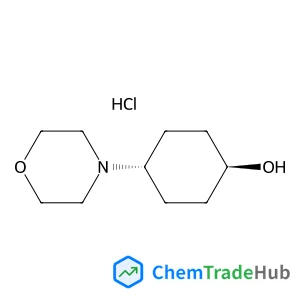
trans-4-(4-Morpholinyl)cyclohexanol hydrochloride (1:1)
CAS Number:
1588441-09-1
Molecular Formula:
C10H20ClNO2
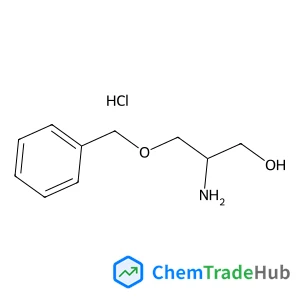
(R)-2-amino-3-(benzyloxy)propan-1-ol hydrochloride
CAS Number:
58577-95-0
Molecular Formula:
C10H16ClNO2
Recommended Suppliers




Disclaimer
This page provides academic journal information for reference and research purposes only. We are not affiliated with any journal publishers and do not handle publication submissions. For publication-related inquiries, please contact the respective journal publishers directly.
If you notice any inaccuracies in the information displayed, please contact us at support@chemtradehub.com. We will promptly review and address your concerns.