












Perfluorocarboxylic acid counter ion enhanced extraction of aqueous alkali metal ions with supercritical carbon dioxide
Literature Information
Publication Date
DOI
10.1039/A904873A
Impact Factor
4.616
Authors
View Original
Abstract
Supercritical carbon dioxide (scCO2) extraction of alkali metal ions from aqueous solutions (K+, Na+∶1.7 × 10⁻⁴ mol dm–3) with crown ethers [18-crown-6 (18C6), cis-dicyclohexyl-18-crown-6 (DC18C6), 15-crown-5 (15C5)] as ligands was investigated at 40 °C and 8–18 MPa. Ligands were chosen that form 1∶1 (cation–ligand) complexes with the alkali metal ions. The recovery for potassium ion was 1–2% with 18C6, and was insensitive to pressure. In the presence of an additive, pentadecafluorooctanoic acid (HPFOA), the recovery for potassium ion could be increased to 43–54%. This is because the HPFOA has CO2-philic fluoroalkyl chains and also easily generates counter ions for the metal–ligand complex. Similar behavior was also observed when DC18C6 ligand was used, although the recovery relative to 18C6 was lower. The recovery for sodium ion was 5–15% with 18C6 and HPFOA and 20–40% when 15C5 or DC18C6 ligands with HPFOA were used. For these cases, the increased recoveries for sodium ion can be attributed to the smaller cavity sizes of the 15C5 and the hydrophobicity of DC18C6 ligands, in addition to the HPFOA counter ion effect. The extraction mechanism is considered to involve as cation–ligand complex formation, HPFOA dissociation and HPFOA anion interaction with the complex as counter ion. Based on the mechanism, a chemical equilibrium model was developed which confirmed that the extracted complexes (alkali metal ion–ligand–counter ion) for all systems were monomeric (1∶1∶1). These results show that alkali metals can be extracted with scCO2 using ligands and further that the recovery of the metals can be greatly increased by adding a substance that can supply a CO2-philic counter ion.
Related Literature
Adsorption selectivity of sugars toward hydrous zirconium(IV) and hydrous iron(III) oxide surfaces
Masami Kanao Koshikawa, Toshitaka Hori
2000-03-06
Paper
DOI: 10.1039/A908159C
Recent development of functional aliphatic polycarbonates for the construction of amphiphilic polymers
Yu Dai, Xiaojin Zhang
2017-11-09
Review Article
DOI: 10.1039/C7PY01815K
Thermal stability of carbonyl radicals Part I. Straight-chain and branched C4 and C5 acyl radicals
S. Jagiella, H. G. Libuda, F. Zabel
2000-03-01
Paper
DOI: 10.1039/A909557H
Facile synthesis of advanced gradient polymers with sequence control using furan-protected maleimide as a comonomer
Xue Gu, Liuqiao Zhang, Ying Li, Wei Zhang, Jian Zhu, Zhengbiao Zhang
2018-02-12
Communication
DOI: 10.1039/C7PY02125A
Thermosensitive polynorbornene poly(ethylene oxide) nanoparticles loaded with oligoDNAs: an innovative approach for acting on cancer-associated pain
L. Pichavant, M. J. López-González, A. Favereaux, V. Héroguez
2017-12-12
Paper
DOI: 10.1039/C7PY01889D
EQCM studies of polypyrrole films. Part 2. Exposure to aqueous sodium tosylate solutions under thermodynamically non-permselective conditions
Stanley Bruckenstein, Krystyna Brzezinska, A. Robert Hillman
2000-03-02
Paper
DOI: 10.1039/A908719B
A mannose-conjugated multi-layered polymeric nanocarrier system for controlled and targeted release on alveolar macrophages
Rajendran Amarnath Praphakar, Harshavardhan Shakila, Vijayan N. Azger Dusthackeer, Murugan A. Munusamy, Suresh Kumar, Mariappan Rajan
2017-12-04
Paper
DOI: 10.1039/C7PY02000G
You might also like
Compound Q&A
How is Ethyl 4-chlorothieno[2,3-b]pyridine-5-carboxylate (CAS: 59713-58-5) typically synthesized?
Ethyl 4-chlorothieno[2,3-b]pyridine-5-carboxylate (CAS: 59713-58-5) can be synth...
59713-58-5Ethyl 4-chlorothieno...
Compound Q&A
What regulatory guidelines apply to 5-Methyl-1H-indole-3-carbaldehyde (CAS: 52562-50-2)?
5-Methyl-1H-indole-3-carbaldehyde (CAS: 52562-50-2) is subject to various regula...
52562-50-25-Methyl-1H-indole-3...
Compound Q&A
What are the physical and chemical properties of (1,3-Dimethyl-2,4-dioxo-1,2,3,4-tetrahydro-5-pyrimidinyl)boronic acid (CAS: 223418-73-3)?
(1,3-Dimethyl-2,4-dioxo-1,2,3,4-tetrahydro-5-pyrimidinyl)boronic acid is a white...
223418-73-3(1,3-Dimethyl-2,4-di...
Compound Q&A
How should waste containing Sulfocostunolide A (CAS: 1016983-51-9) be handled?
Waste containing Sulfocostunolide A (CAS: 1016983-51-9) should be handled with c...
1016983-51-9Sulfocostunolide A
Compound Q&A
What precautions should be taken when handling Murraxocin (CAS: 88478-44-8)?
When handling Murraxocin (CAS: 88478-44-8), ensure proper personal protective eq...
88478-44-8Murraxocin
Compound Q&A
What are the physical and chemical properties of Formvar (CAS: 63148-64-1)?
Formvar (CAS: 63148-64-1) is an alkyd resin characterized by a high molecular we...
63148-64-1Formvar(R)
Compound Q&A
Is (S)-4-benzyl-2-((benzyloxy)methyl)morpholine (CAS: 205242-66-6) safe?
(S)-4-benzyl-2-((benzyloxy)methyl)morpholine is generally safe when handled with...
205242-66-6(S)-4-benzyl-2-((ben...
Compound Q&A
What industries use Methyl 1-(5-bromo-2-pyrimidinyl)cyclopropanecarboxylate (CAS: 1447607-69-3)?
Methyl 1-(5-bromo-2-pyrimidinyl)cyclopropanecarboxylate (CAS: 1447607-69-3) is p...
1447607-69-3Methyl 1-(5-bromo-2-...
Compound Q&A
Is 2-Methyl-1-phenyl-1-propanamine hydrochloride (CAS: 24290-47-9) safe?
2-Methyl-1-phenyl-1-propanamine hydrochloride (CAS: 24290-47-9) is generally con...
24290-47-92-Methyl-1-phenyl-1-...
Compound Q&A
How is 3-(4-Bromophenyl)-2-methylpropanoic acid (CAS: 66735-01-1) typically synthesized?
3-(4-Bromophenyl)-2-methylpropanoic acid is synthesized through a multi-step pro...
66735-01-13-(4-Bromophenyl)-2-...
Source Journal
Analyst

CiteScore:
7.8
Self-citation Rate:
5.6%
Articles per Year:
653
Analyst publishes analytical and bioanalytical research that reports premier fundamental discoveries and inventions, and the applications of those discoveries, unconfined by traditional discipline barriers.
Recommended Compounds
![4-{1-[4-(4,4,5,5-Tetramethyl-1,3,2-dioxaborolan-2-yl)phenyl]cyclopropyl}morpholine structure](https://static.chemtradehub.com/structs/120/1206594-08-2-7afb.webp "4-{1-[4-(4,4,5,5-Tetramethyl-1,3,2-dioxaborolan-2-yl)phenyl]cyclopropyl}morpholine structure")
4-{1-[4-(4,4,5,5-Tetramethyl-1,3,2-dioxaborolan-2-yl)phenyl]cyclopropyl}morpholine
CAS Number:
1206594-08-2
Molecular Formula:
C19H28BNO3
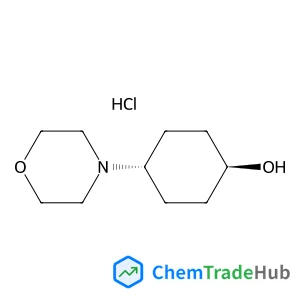
trans-4-(4-Morpholinyl)cyclohexanol hydrochloride (1:1)
CAS Number:
1588441-09-1
Molecular Formula:
C10H20ClNO2
Recommended Suppliers






Disclaimer
This page provides academic journal information for reference and research purposes only. We are not affiliated with any journal publishers and do not handle publication submissions. For publication-related inquiries, please contact the respective journal publishers directly.
If you notice any inaccuracies in the information displayed, please contact us at support@chemtradehub.com. We will promptly review and address your concerns.